Replacing Electric Radiators with an Air-to-Air Heat Pump in a Paris-Area Apartment: Feasibility, Capacity and Savings

L'équipe Proclimo
12 Oct 2026 - 08 min read
In a Paris-area building constructed between 1960 and 1990, the scenario is almost always the same: electric convector heaters or radiant panels screwed in beneath the windows, a meter that spins wildly from November to March, and an electricity bill that becomes the home's single largest running cost. Direct electric heating has a hard efficiency ceiling: 1 kWh consumed = 1 kWh of heat, no more.
A reversible air-to-air heat pump radically changes the equation. With a seasonal COP (SCOP) of 4, that same kWh of electricity delivers roughly 4 kWh of heat into the room. And because it works both ways, it simultaneously solves the question of summer comfort, which has become critical in Paris and the inner suburbs.
The remaining question is whether your apartment is genuinely suited to it. Not every home is eligible, and the project often runs into two concrete obstacles: space for the outdoor unit and the distribution of heat between rooms. Here's how to decide before committing any money.
Why electric convectors cost so much
A convector doesn't "create" energy: it converts electricity into heat through the Joule effect. Based on ADEME benchmarks, a 65 m² Paris-area apartment with average insulation typically consumes between 7,000 and 11,000 kWh per year for direct electric heating alone.
At the regulated electricity sales tariff, around €0.20/kWh including tax according to the tariff changes published by the Commission de régulation de l'énergie (CRE), that amounts to €1,400 to €2,200 per year just for heating.
Convectors come with three well-known drawbacks:
- heat stratification (warm at the ceiling, cold at your feet);
- dried-out air and a feeling of discomfort that pushes you to turn up the thermostat;
- zero thermal inertia, hence constant on/off cycling and high peak power draw.
What an air-to-air heat pump actually changes
An air-to-air heat pump doesn't produce heat: it moves it. It extracts thermal energy from the outside air — even at 0 °C or −5 °C — and releases it indoors through one or more wall-mounted, floor-console or cassette units.
The order of magnitude of the savings
| Item | Electric convectors | Air-to-air heat pump (SCOP 4) |
|---|---|---|
| Efficiency | ~100 % | ~400 % |
| Heating consumption, 65 m² | 7,000 – 11,000 kWh/year | 1,900 – 3,000 kWh/year |
| Annual cost (€0.20/kWh) | €1,400 – €2,200 | €380 – €600 |
| Summer cooling | no | yes |
Real-world savings most often fall between 55 and 70 % on the heating line item. They don't reach 75 % because the heat pump loses efficiency in severe cold and because unequipped rooms remain electrically heated. In a well-configured apartment, the return on investment generally lands between 6 and 10 years, shortened by the reduced 5.5 % VAT rate now applicable to high-performance air-to-air heat pumps (see our article on financing an air-to-air heat pump).
One point that's often overlooked: a heat pump reduces consumption, but not necessarily your subscribed power rating. If you sized your contract at 9 or 12 kVA because of the convectors, switching to a heat pump sometimes lets you step down a tier — a few dozen euros of subscription fees saved every year.
The three feasibility questions to settle first
1. Where will the outdoor unit go?
This is sticking point number one in an apartment. The outdoor unit requires:
- 80 cm to 1 m of clearance in front of the discharge grille;
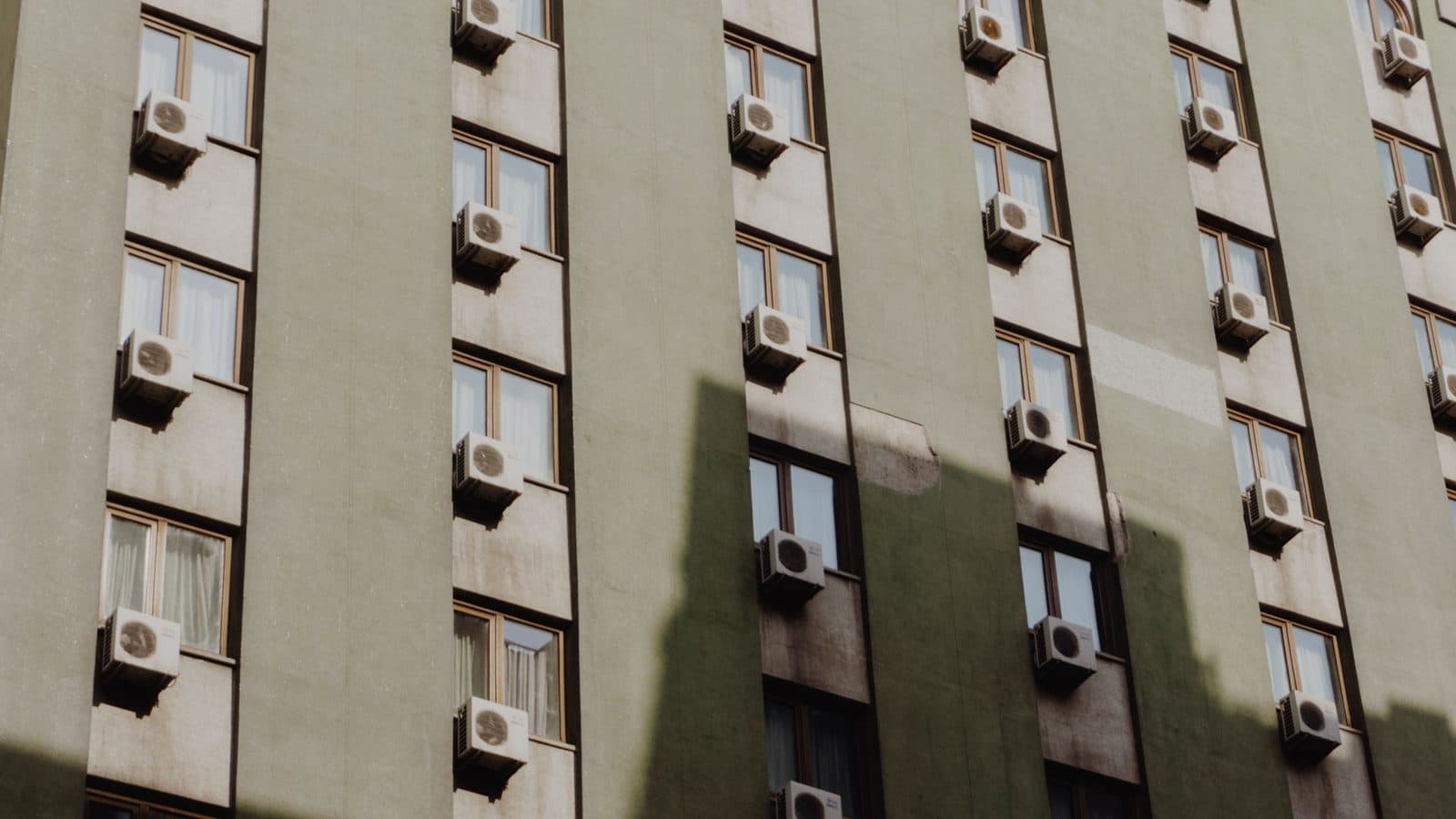
- a solid mounting point: balcony, loggia, terrace, inner courtyard, or wall bracket;
- a way to drain the condensate (in heating mode, defrost cycles produce it abundantly, sometimes 1 to 2 litres per hour).
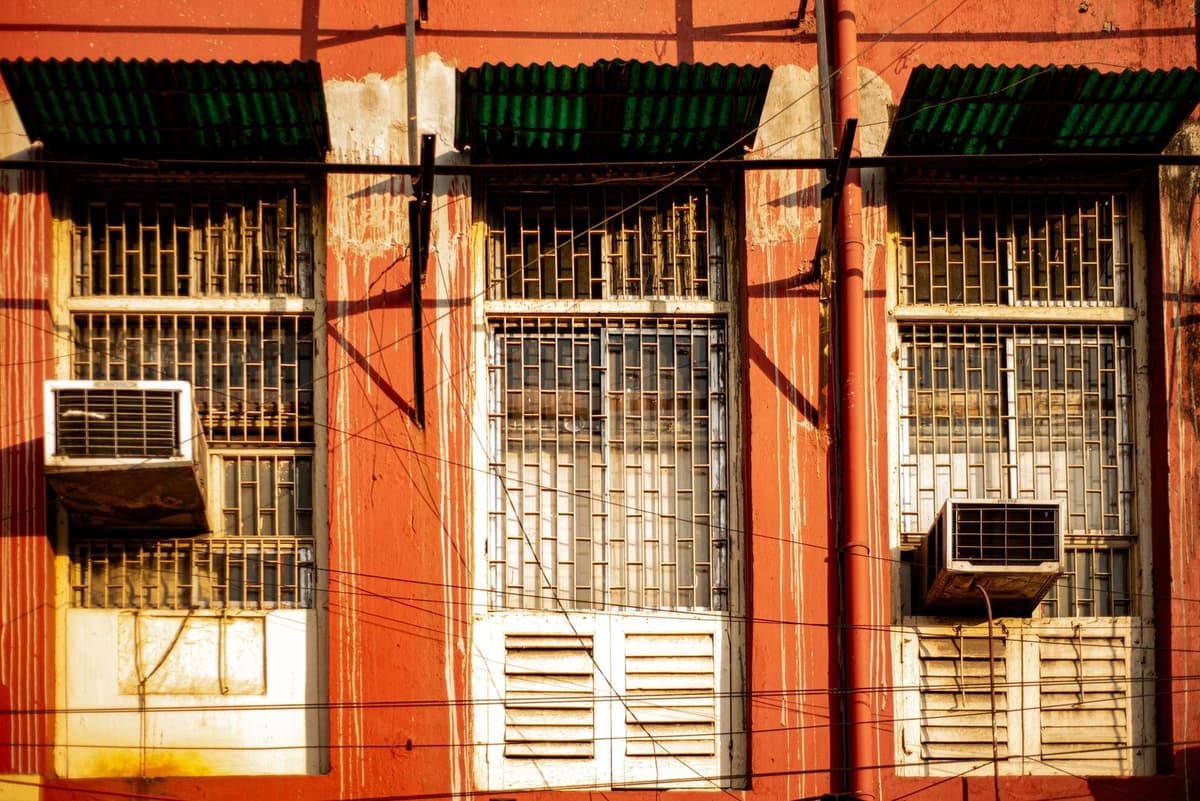
Configurations that work well: a continuous balcony, a loggia, a rear courtyard, an accessible roof terrace. Difficult configurations: a street-facing window in a protected district, a Haussmann-style façade visible from the public thoroughfare, a tiny courtyard with strong sound reflection.
If no solution exists, read our comparison on how to air-condition an apartment without an outdoor unit: wall-mounted monobloc units can sometimes get around the problem, with more limited heating performance.
2. How will the heat circulate?
A wall-mounted unit heats by forced convection. It doesn't pass through partition walls. Three possible scenarios:
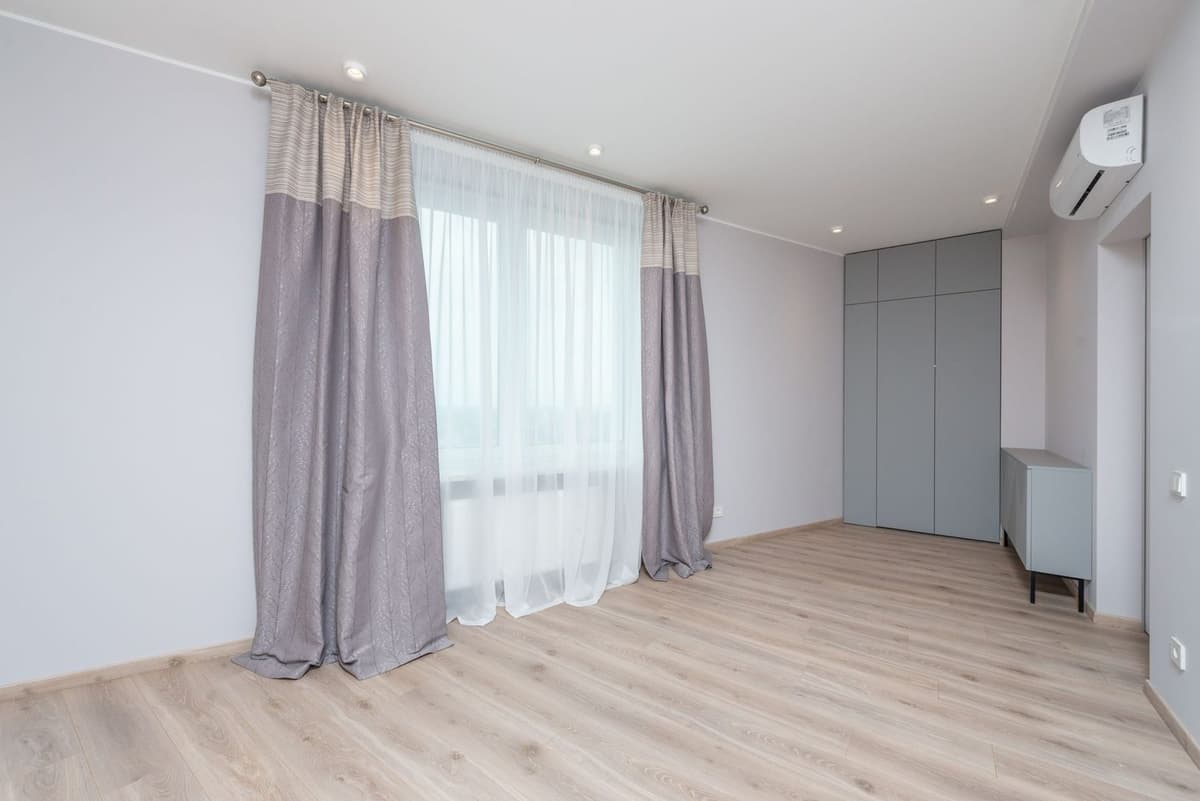
- Living room open to the kitchen: a single well-placed unit can cover 35 to 50 m². An excellent candidate.
- Bedrooms closed off along a hallway: you either need one unit per bedroom (multi-split), or you keep a convector as backup — often the most sensible choice for an 11 m² bedroom occupied only at night.
- Heavily partitioned apartment with small rooms: a multi-split becomes expensive (4 or 5 indoor units), and ducted systems are only feasible if there are suspended ceilings or a hallway with a drop ceiling.
The most common strategy in the Île-de-France region: equip the living room and one or two bedrooms, and keep recent convectors in secondary rooms (bathroom, small bedroom, entryway). In the bathroom, an electric inertia towel rail remains the right answer anyway, for humidity and electrical safety reasons.
3. What capacity?
The classic mistake is oversizing "just to be safe." An over-powered unit cycles constantly, wears out faster and consumes more. The usual benchmarks for a properly insulated Paris-area apartment are around 70 to 100 W/m² for heating, to be adjusted according to the floor level, orientation, window quality and whether neighbouring units are heated.
For the detailed method, see our guide on the room-by-room kW calculation method. Two points specific to replacing convectors:
- the installed convector capacity (often 100 to 120 W/m²) is not a reliable basis for calculation: it was generally fitted without any study;
- in heating mode, a heat pump's useful output drops as the outdoor temperature falls. Check the technical data sheet for the output delivered at −7 °C, not just at +7 °C.
Homeowners' association: what to secure before signing
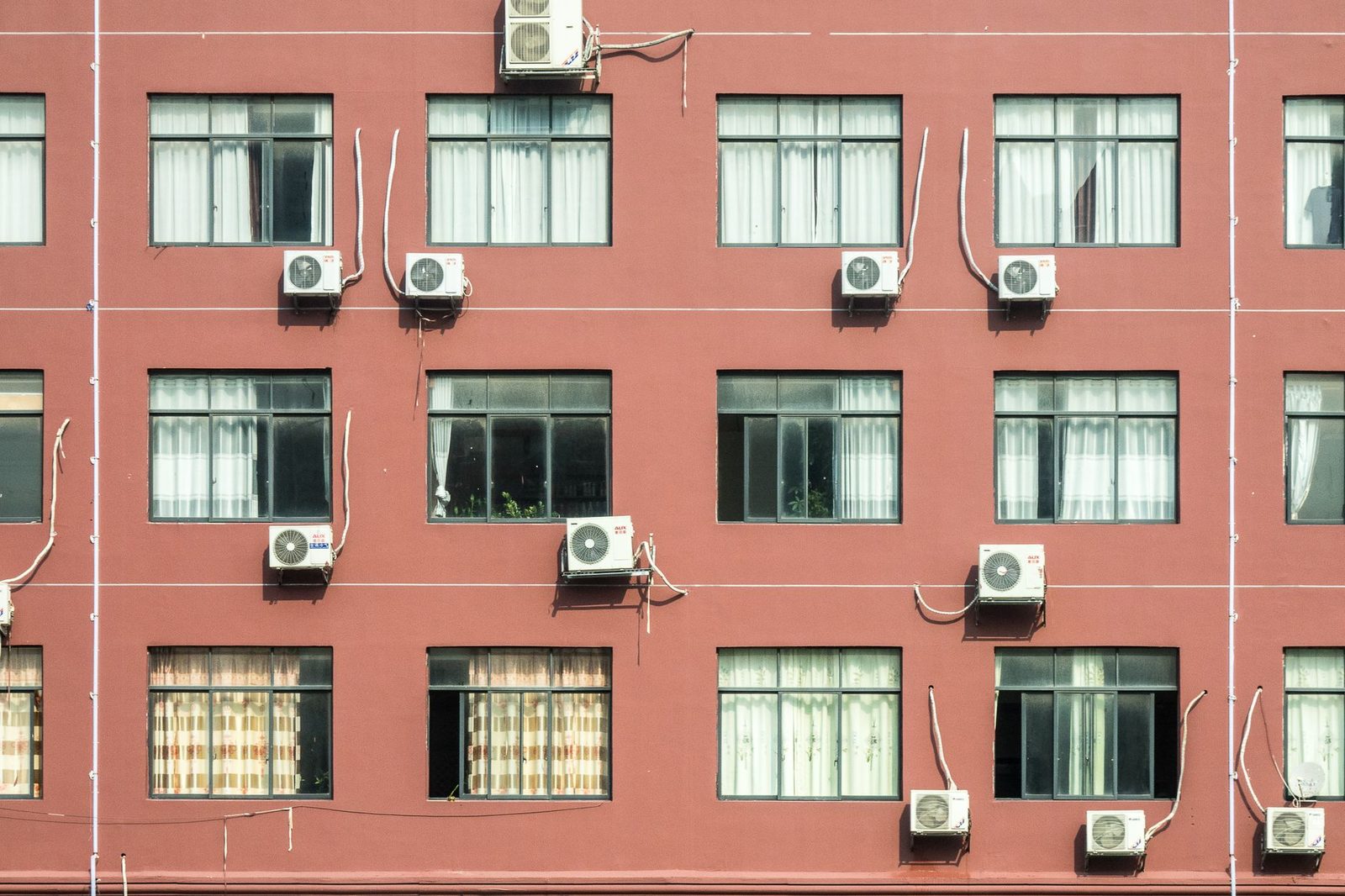
In virtually every case, installing an outdoor unit affects the common areas (façade, partially shared balcony, drilling through a load-bearing wall). Approval from the general meeting is therefore required.
Points to anticipate:
- Read the building's bylaws before requesting any quote: some clauses prohibit any modification to the exterior appearance.
- Check the local planning rules and protected perimeters: in Paris, a building in a protected district or visible from the public thoroughfare often requires a prior declaration at the town hall, and sometimes an opinion from the Architecte des Bâtiments de France.
- Prepare a technical file: layout plan, sound power rating of the outdoor unit (in dB(A)), type of fixings, routing of the refrigerant lines, condensate drainage method.
- Address the noise question head-on: recent units drop below 50 dB(A) at nominal operation, and permissible noise emergence levels are governed by the French public health code.
One argument that lands well at a general meeting: replacing convectors with a heat pump reduces the power drawn on the building's electrical riser in winter, which is rather favourable for the shared installations.
The full procedure is set out in our guide on installing air conditioning in a multi-unit building.
If you're a tenant
A tenant cannot authorise drilling through a façade on their own. You need the landlord's written consent, and the landlord will submit the request to the general meeting themselves. Bear in mind, though, that replacing worn-out convectors is often in the landlord's interest, particularly for the property's energy performance rating (DPE).
The details that make or break day-to-day comfort
Placement of the indoor units
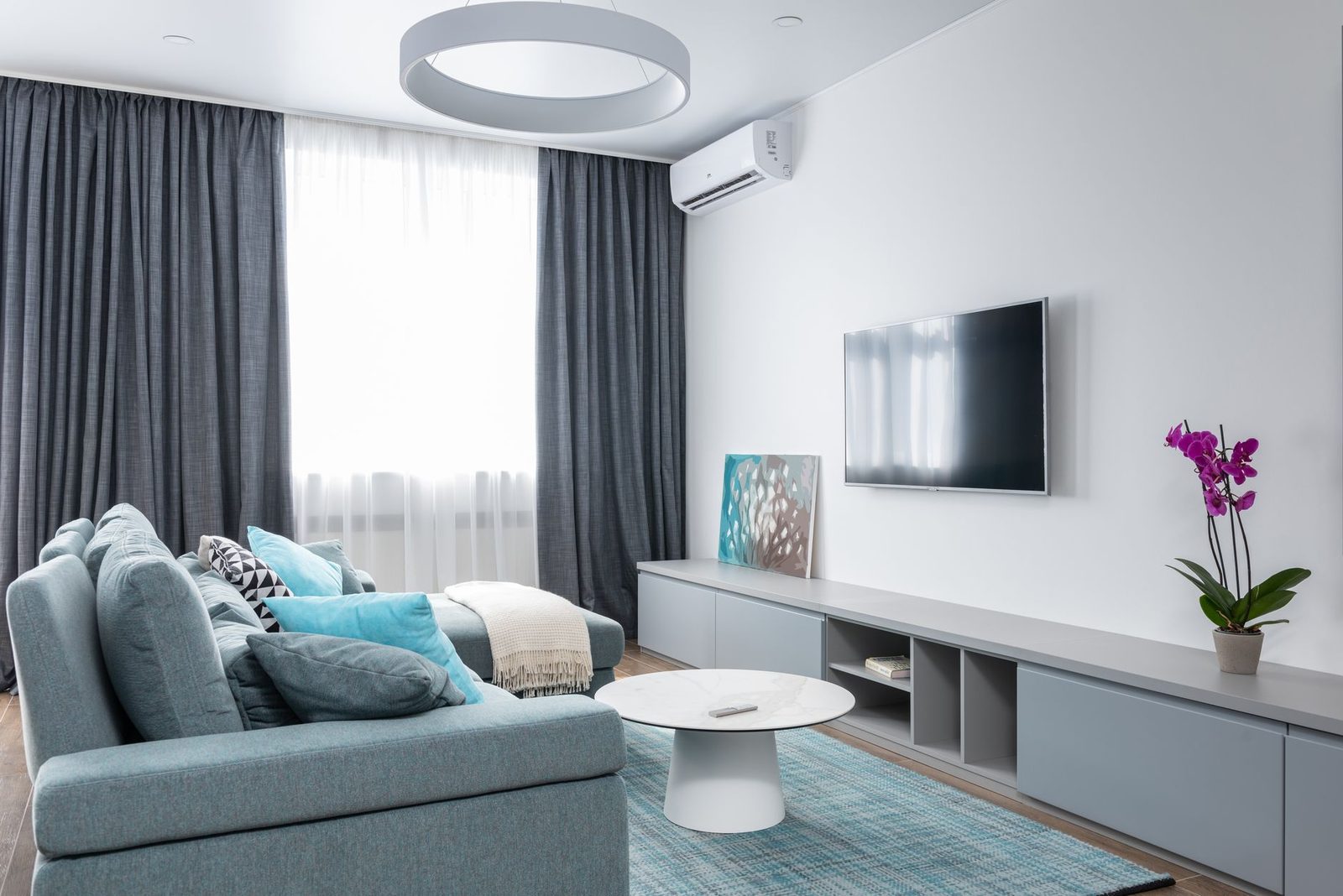
A wall unit blowing directly onto a sofa or a bed is a guaranteed failure. In heating mode, aim the airflow towards the living area, in the lower part of the room, using the adjustable louvres, and choose a position that avoids direct draughts.
In a living room with a high ceiling, a low-mounted floor console installed where the old convector used to be often feels better than a high wall unit: the heat rises from floor level.
Control settings
This is where the real savings are made. A heat pump likes continuous operation at low output, not large swings. A few rules:
- a stable setpoint of 19 to 20 °C in living areas, 17 °C in bedrooms;
- no abrupt daily shutdown and restart: simply dropping 2 °C is enough when you're out;
- a connected thermostat compatible with the installed brand lets you fine-tune scheduling and track consumption room by room.
To objectively verify that the setpoint matches what you actually feel, an indoor thermometer and hygrometer placed in the middle of the room is better than the wall unit's own sensor, which sits high up and is therefore biased.
Maintenance, which is no longer optional
A heat pump that heats all season long moves far more air than an air conditioner used two months a summer. The filters clog quickly.
- Clean the filters every 3 to 4 weeks during the heating season: a pass with the vacuum cleaner, then dry them completely. A set of compatible replacement filters means you don't have to leave the unit out of service while they dry.
- Check that the condensate drains properly, especially on the outdoor unit in winter (risk of ice forming under the drain pan).
- Annual professional visit: leak-tightness check for the relevant equipment, pressure readings, heat exchanger cleaning. See our air conditioning maintenance and cleaning services.
For the details of what you can do yourself, our article on cleaning your air conditioner at the start of winter describes the full protocol.
A realistic budget for a Paris-area apartment
The ranges observed in the Île-de-France region, installation included, with recognised-brand equipment and a qualified installer:
| Configuration | Indicative budget (incl. tax) |
|---|---|
| Single-split, living room (3.5 kW) | €2,200 – €3,500 |
| Dual-split, living room + 1 bedroom | €3,500 – €5,500 |
| Triple-split / quad-split | €5,500 – €9,000 |
| Partial ducted system (existing suspended ceiling) | €8,000 – €14,000 |
On top of these figures come the possible Paris-area surcharges: cherry picker or scaffolding, drilling through a thick wall, routing lines in trunking along the façade, street-use permits. Have them itemised line by line; our article on the 12 lines to check on an air conditioning quote serves as a reading grid.
A few useful and often forgotten extras: a decorative trunking extension to neatly conceal the indoor line runs, and anti-vibration mounts for the outdoor unit if it's sitting on a balcony slab — that's the detail that prevents complaints from the neighbours.
Should you rip everything out at once?
No, and it's rarely even advisable. A gradual transition works very well:
- Year 1: equip the living room and the most frequently used room. That's where 60 to 70 % of heating consumption sits.
- Observe a full season: record actual consumption, identify which rooms remain uncomfortable.
- Year 2 or 3: add a unit if needed, or replace the last convectors with controllable inertia models.
Keep the existing convectors as backup during the first year, even if you no longer use them: they serve as a safety net during severe cold spells and while the heat pump is out of service for any reason. They cost nothing when switched off.
In summary
| Your situation | Verdict |
|---|---|
| Open-plan living room + balcony or loggia | Very favourable project, single- or dual-split |
| 2-3 main rooms, accessible inner courtyard | Favourable, multi-split, pay close attention to acoustics |
| Heavily partitioned apartment, small rooms | Lower profitability, equip partially |
| Protected façade, no exterior space available | Look at a wall-mounted monobloc first |
| Tenant without the landlord's consent | Postpone the project or pursue it with the owner |
Replacing convectors with an air-to-air heat pump is one of the few renovations that improves your winter bill, your summer comfort and your home's energy performance rating (DPE) all at once. But it isn't a decision to make from a catalogue: feasibility is judged on site, by looking at the façade, the partition walls and the electrical panel.
Our teams carry out a technical site visit anywhere in the Île-de-France region before making any proposal: measuring surfaces and heat losses, identifying available outdoor space, checking the electrical panel and preparing the homeowners' association file. You can view our air conditioning and air-to-air heat pump installation services, our advice and support service, or request a technical site visit directly online.
Need an air conditioning solution?