Back to school 2026: €200m fund to air-condition schools — what parents, councils and teachers need to know

The Proclimo Team
21 Jul 2026 - 08 min read
With the 2026 back-to-school season approaching, France faces a double challenge: air-conditioning schools and improving indoor air quality (IAQ) in classrooms. After the summer of 2026, marked by several heatwaves of historic intensity, the government has announced an exceptional €200 million fund dedicated to equipping schools that do not yet have air conditioning, prioritising reversible systems (heat pumps) that are more energy-efficient. At the same time, the Ministry of Health reminded everyone in July 2026 of the IAQ monitoring obligations in school establishments: continuous measurement of CO2, PM2.5 and formaldehyde, with data published on a public portal. Here is the Proclimo breakdown for councils, facility managers, head teachers, parents and teaching staff.
Why air conditioning in schools is becoming a priority
A back-to-school season under the sign of heat
Summer 2026 has been the hottest ever recorded in mainland France, with an average temperature +2.8°C above the 1991-2020 baseline. The June 2026 heatwave kept 35 departments on red alert and 41 on orange alert; a second episode in early July sent the Paris thermometer to 41°C on 21 July 2026, beating the capital's previous record by 1.5°C. According to ADEME and Météo-France, the frequency of heatwaves has tripled since 1990, with the average duration rising from 5 to 12 days.
Children are particularly exposed: their thermoregulation is less effective, they sweat little and forget to drink. The French National Agency for Food, Environmental and Occupational Health & Safety (Anses) recommends keeping classrooms below 26°C during hot periods. Beyond 30°C, pupils' concentration drops by 20 to 30%, according to several education research studies.
A school estate lagging on summer comfort
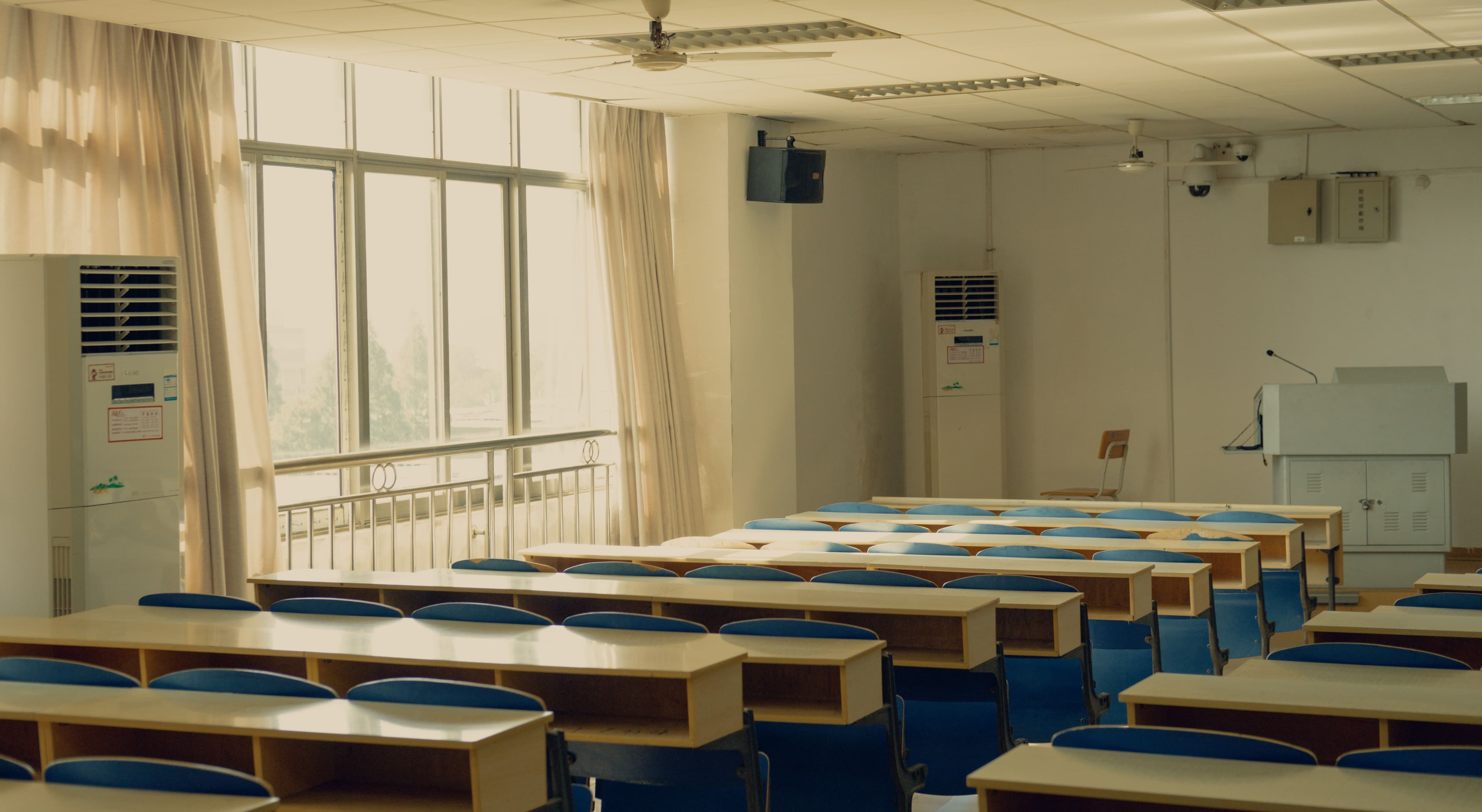
France has 55,000 primary schools and 7,000 secondary schools (collèges), the majority of which were built before 1990 with a winter heating logic, not summer cooling. The French Court of Audit (Cour des comptes) estimated in 2024 that only one in three state schools was equipped with a cooling system, and often with energy-hungry, noisy mobile air conditioners. The situation is even more strained in tarmac playgrounds, where surface temperatures exceed 50°C in full sun.
info
The €200m fund is part of a wider €2.3 billion plan announced by the government to adapt the country to heatwaves: urban greening, thermal renovation of care homes, creation of cool islands. Schools are the first priority worksite, before summer 2027.
The exceptional €200m fund: who is eligible, how much, for what?
The content of the announcement
The €200m fund, financed by the state and operated by regional prefects, aims to fund the installation of air conditioning and cooling solutions in state schools (nursery, primary, secondary). It has been calibrated to cover as a priority schools located in departments identified as high-heat zones (recurrent orange or red alert) and establishments with no cooling system at all.
Eligible equipment
The fund's specifications are deliberately oriented towards reversible heat pumps rather than mobile air conditioners, for two reasons:
- Energy efficiency: a reversible air-to-air heat pump consumes 3 to 4 times less electricity than a mobile air conditioner for the same cooling delivered.
- Versatility: the same unit will heat in winter and cool in summer, optimising the investment for school buildings used all year round.
Eligible equipment includes:
- Reversible air-to-air heat pumps (single-split, multi-split, ducted);
- Geothermal heat pumps for higher-capacity projects;
- Air mixing and hybrid ventilation;
- IAQ measurement stations (CO2, PM2.5, formaldehyde sensors);
- H13 or H14 HEPA air purifiers with a UV-C lamp as a complement.
How much per school?
The envelope is managed by the regional prefectures after reviewing applications submitted by communes, inter-municipalities or departments (for secondary schools). The average amount observed on the first applications ranges between €15,000 and €80,000 per school depending on the size of the establishment and the nature of the works. The remaining cost for the commune is around 20 to 30% after subsidy.
warning
The fund is time-limited and operated through calls for projects. Communes that submit a complete application in September-October 2026 are prioritised. Beyond that, the envelope may be exhausted and applications pushed back to 2027.
The reminder of IAQ obligations: CO2, PM2.5, formaldehyde
What the Ministry of Health says
In July 2026, the Ministry of Health published a reminder of the IAQ monitoring obligations in establishments receiving sensitive public (schools, nurseries, care homes, hospitals). Schools must now:
- Continuously measure concentrations of carbon dioxide (CO2), of fine particulate matter PM2.5 and of formaldehyde;
- Publish the data on a public portal accessible to parents and teachers;
- Trigger corrective actions when thresholds are exceeded (ventilation, filtration, alert message).
Thresholds to know
| Pollutant | Watch threshold | Regulatory threshold | Health effects |
|---|---|---|---|
| CO2 | 800 ppm | 1,300 ppm | Drowsiness, reduced concentration, headaches |
| PM2.5 | 12 µg/m³ (annual average) | 25 µg/m³ | Asthma, allergies, respiratory irritation |
| Formaldehyde | 30 µg/m³ | 100 µg/m³ (WHO guideline value) | Eye, nose and throat irritation, allergic sensitisation |
A Santé publique France study, published in August 2026, confirms that children attending schools equipped with air purifiers showed in 2025-2026 a 25% reduction in cold episodes and a 15% reduction in asthma attacks, compared with non-equipped schools.
The central role of ventilation
Mechanical ventilation (VMC) and opening windows remain the first barrier against the build-up of CO2 and pollutants. But in polluted urban areas (near boulevards, motorways, industrial zones), opening windows lets in more NO2 and fine particles than it removes in CO2. The solution: a dual-flow mechanical ventilation (VMC double flux) with HEPA filtration, which renews the air without opening windows.
Reversible air conditioning or mobile air conditioner: which to choose?
The comparison
| Criterion | Reversible heat pump | Mobile air conditioner |
|---|---|---|
| Purchase cost | €1,500 to €6,000 per unit (installation included) | €300 to €800 |
| Annual running cost | €80 to €200 (very economical) | €200 to €400 |
| Noise | 22 to 35 dB(A) indoors | 50 to 65 dB(A) |
| Versatility | Heating + cooling | Cooling only |
| Maintenance | Annual RGE check | Filter cleaning every month |
| Eligible subsidies | Energy saving certificates, 5.5% VAT, zero-interest eco-loan | None |
| Lifespan | 15 to 20 years | 5 to 8 years |
| Environmental footprint | 3 to 4 kWh of heat per kWh of electricity | Energy-hungry, R32 refrigerant |
Why the government is pushing reversible heat pumps
Three reasons explain the government's choice:
- Energy sobriety: in this era of ecological transition, energy efficiency has become an eligibility criterion. The EPBD 2024/1275 directive requires a gradual phase-out of fossil fuel equipment and a reduction in energy consumption in public buildings.
- Stacking of subsidies: the 5.5% VAT on reversible heat pumps (since 18 July 2026), the Coup de Pouce energy saving certificates and the zero-interest eco-loan (éco-PTZ) help reduce the remaining cost. See our article on the 5.5% VAT on reversible air conditioning and the one on approved heat pumps and the Coup de Pouce bonus.
- Comfort and health: a reversible heat pump installed by an RGE professional does not blow directly onto the children (provided the indoor units are correctly oriented), maintains a homogeneous temperature in the classroom, and filters the air thanks to an integrated filter. The opposite of a mobile air conditioner, which creates a cold draught that spreads colds and sore throats.
The Proclimo checklist for a school ready for back-to-school
1. Measure to prioritise
Before any investment, have the air quality and temperature measured in every classroom. This allows you to:
- Identify the hottest classrooms (west-facing façades, top floors, glazed surfaces);
- Spot overcrowded rooms where CO2 rises quickly;
- Map the sources of formaldehyde (new furniture, particle boards, paints).
2. Activate passive solutions
Before installing air conditioning, deploy the free or low-cost levers:
- External solar shading: adjustable louvres, overhangs, outdoor blinds;
- Playground greening: trees and pergolas, which can lower the felt temperature by 3 to 5°C;
- Night flushing: open windows at night, close them during the day;
- Cool roof (reflective paint on roofs): lowers the surface temperature by 20 to 40°C.
3. Install the reversible heat pump in priority classrooms
For classrooms that exceed 28°C during heatwave episodes, the reversible air-to-air heat pump is the most suitable solution. Best practices:
- Have a thermal audit carried out by an RGE QualiPAC + QualiClim refrigeration engineer to size the capacity;
- Favour a ducted system for large classrooms or the canteen (silent, discreet, even air distribution);
- Choose a minimum A++ energy class (SEER and SCOP) to benefit from the 5.5% VAT and energy saving certificates;
- Have it installed by an RGE installer such as Proclimo, to secure the subsidies and the ten-year guarantee.
4. Deploy HEPA air purifiers
For establishments located in polluted urban areas or for classrooms hosting asthmatic or allergic children, a H13/H14 HEPA air purifier paired with a UV-C lamp effectively complements ventilation. Plan for one unit per classroom of 30 to 50 m², with air renewal every 10 to 15 minutes.
5. Install IAQ sensors and publish the data
CO2, PM2.5 and formaldehyde sensors now cost between €150 and €500 each. A network of 8 to 12 sensors in an average school represents an investment of €2,000 to €5,000, which is largely eligible for the €200m fund. The data can be displayed on the school's home page or on an online dashboard accessible to parents.
6. Anticipate annual maintenance
Air conditioning and purifiers must be serviced regularly, in accordance with the regulations on mandatory maintenance:
- Filter cleaning every 3 to 6 months;
- HEPA filter replacement every 12 to 18 months;
- Annual refrigerant leak check (mandatory for units with more than 2 kg of refrigerant);
- Performance check (SEER, SCOP) at the start of the hot season.
Frequently asked questions
My child has asthma. Is air conditioning at school recommended? Yes, provided it is properly set and maintained. A correctly installed and filtered reversible heat pump is even recommended by paediatric pneumologists for asthmatic children, because it filters pollens, PM2.5 and dust mites and maintains a stable temperature without direct draughts.
Are air purifiers really effective? Yes, provided you choose an H13 or H14 HEPA model suited to the room volume (renewal every 10-15 minutes), leave it running continuously, and replace the filter at the recommended frequency. The 2026 Santé publique France study showed a 25% reduction in colds and a 15% reduction in asthma attacks in equipped schools.
How do I know if my school is eligible for the €200m fund? The fund is operated by the regional prefectures after reviewing applications submitted by communes or inter-municipalities. If you are a parent, contact the town hall or your commune's education department to find out how the application is progressing. If you are a facility manager, contact the DSDEN (Departmental Directorate of National Education Services) or the departmental council (for secondary schools).
Does the fund also finance private schools? The initial communications from the Ministry of National Education target state schools as a priority. Contracted private schools may be eligible if they are part of a local educational project (PEDT) and the commune is a partner. Check with your prefecture.
When does the 2026 back-to-school season take place? The 2026 back-to-school season is set for Monday 1 September 2026 for pupils. The teacher pre-term is traditionally the preceding Friday. For the new equipment to be operational, installation must be completed by the end of August 2026.
Does Proclimo work in school establishments? Yes. Proclimo supports town halls, departmental councils, private facility managers and care homes in Île-de-France on the installation of reversible air conditioning, the fitting of HEPA air purifiers, the installation of IAQ sensors and the annual maintenance. We review subsidy applications, size the equipment, and deliver a complete technical file for the prefecture.
Act with Proclimo before back-to-school
The 2026 back-to-school season needs to be prepared now. The €200m fund is open, but regional envelopes will be allocated on a first-come, first-served basis. For a school ready to welcome pupils in good conditions — thermal comfort and air quality — every week counts.
Proclimo, an RGE QualiPAC + QualiClim installer in Île-de-France, supports town halls, departmental councils and school facility managers across the full chain:
- Summer comfort and IAQ audit: temperature, CO2, PM2.5 and formaldehyde measurement, technical diagnosis, preliminary framing of the subsidy application.
- Reversible air conditioning installation: single-split, multi-split, ducted; RGE sizing, ten-year guarantee, 5.5% VAT / energy saving certificate file.
- H13/H14 HEPA air purifier and IAQ sensor installation: supply, fitting, connection to an online dashboard.
- Annual maintenance contract for schools and public-access buildings: RGE-compatible servicing, refrigerant leak checks, HEPA filter replacement, IAQ monitoring.
- Emergency repair 7 days a week: intervention within 24 to 96 hours in Île-de-France for existing equipment.
Contact Proclimo for a free express audit of your school — or book your intervention online to be operational by the pre-term on 29 August 2026. Our team works in Île-de-France, in compliance with the regulations on mandatory maintenance, the 2025 heat decree and the IAQ obligations of the Ministry of Health.
Sources: Ministry of National Education — School adaptation plan for heatwaves 2026 · Santé publique France — Impact study of air purifiers in schools 2026 · Ministry of Health — Reminder of IAQ obligations in sensitive public-access buildings, July 2026 · ADEME — Summer comfort in school buildings · Météo-France — Summer 2026 review · Anses — Health recommendations during heatwaves · Cour des comptes — 2024 annual report on the state of the school estate · Santé publique France — Heatwave bulletin of 21 July 2026.
Need an air conditioning solution?