Air Conditioning and Neighbors: How to Avoid Conflicts and Follow the Law in 2026

L'équipe Proclimo
17 Aug 2026 - 04 min read
The summer of 2026 has confirmed a major trend: air conditioning is no longer a luxury, but a necessity for many households facing more frequent heatwaves. However, while the thermal benefit is immediate for the user, the impact on the neighbor can be quite different. The constant hum of a compressor, hot air blowing toward an adjacent terrace, or the visual impact of a poorly placed outdoor unit are all triggers for neighborhood disputes.
Installing an air conditioning system or an air-to-air heat pump (PAC) is not just about choosing the most efficient model or taking advantage of tax credits. It is also about ensuring that the installation complies with the legal framework and the rules of good neighborliness to avoid long and costly administrative procedures. Between public health codes and Local Urbanism Plans (PLU), homeowners must navigate with caution.
Noise: The Primary Point of Friction
Noise is, by far, the main cause of disputes related to air conditioning. What you perceive as a slight hum in your living room can become an unbearable nuisance for a neighbor whose bedroom overlooks your outdoor unit.
The Concept of "Abnormal Neighborhood Disturbance"
In French law, even if your device complies with manufacturer standards, it can be judged as creating an "abnormal neighborhood disturbance" if the noise is excessive, repetitive, or occurs at inappropriate hours (at night, for example). Case law is not based solely on decibels, but on the actual inconvenience caused.
To limit this risk, the choice of location is crucial. Avoid placing the outdoor unit directly against a neighbor's party wall. Installing anti-vibration pads under the outdoor group drastically reduces the transmission of vibrations into the building's structure, thereby limiting acoustic nuisances for upper floors or neighboring apartments.
Noise Thresholds and the Public Health Code
The Public Health Code regulates "neighborhood noise." During nighttime (generally between 10 p.m. and 7 a.m.), the sound emergence (the difference between ambient noise and noise with the device running) must not exceed a certain threshold. If a neighbor complains, the city hall can mandate a formal report or request an acoustic expertise.
Administrative Obligations: City Hall and Urban Planning
It is often wrongly assumed that installing a split system is a trivial act that requires no formalities. This is a mistake that can lead to a mandatory removal of the device or even a fine.
Prior Declaration (DP)
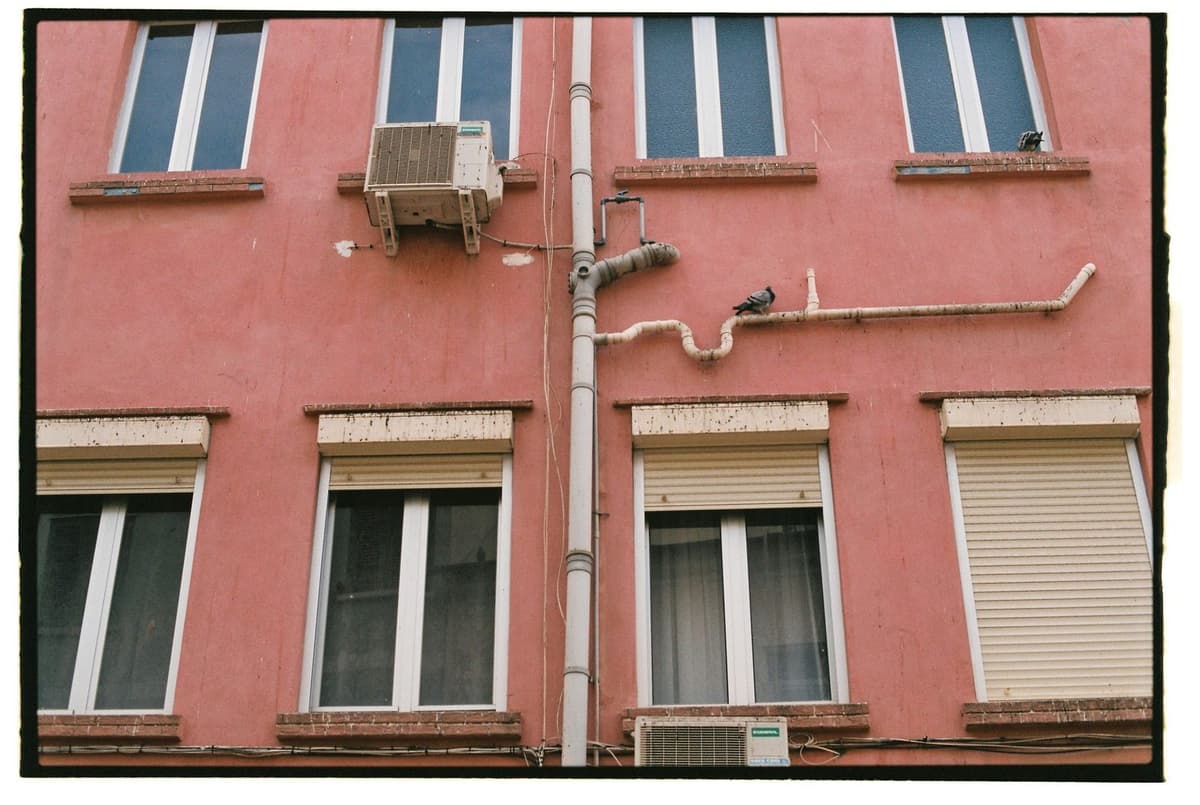
Installing an outdoor unit modifies the exterior appearance of the building. As such, it is almost systematically subject to a prior declaration of works at the city hall. Your municipality's Local Urbanism Plan (PLU) may impose specific constraints: the color of the device, prohibition of installation on certain facades (particularly listed facades or those visible from the public road), or minimum distances from boundary lines.
The Special Case of Protected Zones
If you live within the perimeter of a historical monument or in a zone protected by the Bâtiments de France (ABF), the rules are even stricter. The Architect of the Bâtiments de France may require the unit to be hidden by a specific AC cover or moved to the rear of the building to avoid distorting the urban landscape.
For those who wish to precisely document their steps or understand the subtleties of urban planning law, consulting a real estate legal guide can be useful to avoid procedural errors.
Condominiums: Internal Regulations Prevail
In an apartment, the city hall is not your only point of contact. The co-ownership regulations are the contractual document that defines what you can and cannot do with common areas (facades, balconies, roofs).
Approval from the General Assembly
Installing an outdoor unit generally requires the approval of the general assembly of co-owners, as it impacts the aesthetics of the building and uses a common area (the load-bearing wall). A vote at the General Assembly (GA) is therefore essential. If you install your equipment without this agreement, the syndicate may demand its immediate removal at your expense.
Managing Condensates
A point often overlooked and a source of major conflict: the drainage of condensation water. It is strictly forbidden to let condensates drip freely onto the facade or, worse, onto the balcony of the neighbor below. Installing a drainage pipe connected to a wastewater drain is the standard. Otherwise, using a condensate lift pump allows the water to be routed to the nearest drainage point without damaging walls or disturbing neighbors.
Practical Tips for Maintaining Social Peace
Beyond the law, diplomacy remains the best tool for avoiding disputes. A warned neighbor is a neighbor less inclined to file a complaint.
Proactive Communication
Before even signing the quote with your installer, inform your neighbors. Explain the choice of model (highlighting the low noise level), the planned location, and the measures you are taking to limit nuisances. Even offer to let them see the proposed location.
Maintenance: A Guarantee of Silence
Poorly maintained air conditioning is noisy air conditioning. Clogged fins or loose fasteners increase vibrations and fan noise. Rigorous annual maintenance, including cleaning filters and checking supports, ensures that your device does not become a nuisance over time.
To maintain a healthy environment and prevent dust from accumulating in your indoor units, the regular use of a compact handheld vacuum to clean accessible filters is highly recommended between professional visits.
Summary of Vigilance Points
To recap, here is the dashboard for a conflict-free installation:
| Point of Vigilance | Required Action | Risk if Forgotten |
|---|---|---|
| Noise | Anti-vibration pads + silent model | Complaint for abnormal neighborhood disturbance |
| Urban Planning | Prior Declaration (DP) at city hall | Fine or mandatory removal |
| Condominium | Vote at General Assembly (GA) | Syndicate action for removal |
| Condensates | Channeled drainage or lift pump | Facade degradation / Conflict with neighbor below |
| Neighborhood | Prior communication and diplomacy | Relational tensions and legal disputes |
Conclusion: Comfort Should Not Be a Battle
Installing air conditioning or an air-to-air heat pump in 2026 should be thought of as a global project. Interior thermal comfort cannot be built at the expense of another's acoustic or visual comfort. By scrupulously respecting administrative procedures and investing in nuisance-reduction accessories, you transform a risk of conflict into an exemplary installation.
Remember that choosing an RGE-certified installer is also a safeguard: a qualified professional knows the acoustic standards and local urban planning obligations. They will be able to advise you on the best location to reconcile energy efficiency and sound discretion. To further optimize your interior without overloading your devices, installing thermal blackout blinds remains the ideal complement to reduce the thermal load and limit the operating time of the outdoor compressor, and therefore, the noise for your neighbors.
Need an air conditioning solution?