How Much Does Air Conditioning Really Cost on Your Electricity Bill in 2026?

L'équipe Proclimo
19 Aug 2026 - 08 min read
Summer 2026 is drawing to a close, and with it comes the moment of truth: the bill. For the many households that have had a reversible split system or an air-to-air heat pump for less than two years, this is the first full cooling season — and the first time they look at their consumption statement with genuine apprehension.
Yet the figures doing the rounds are remarkably useless. You read that "an air conditioner costs between €50 and €400 a year", which is rather like saying a car uses between 3 and 20 litres per 100 km. The truth is that the cost of your air conditioning is perfectly calculable, provided you know four parameters — and two of them depend solely on your settings.
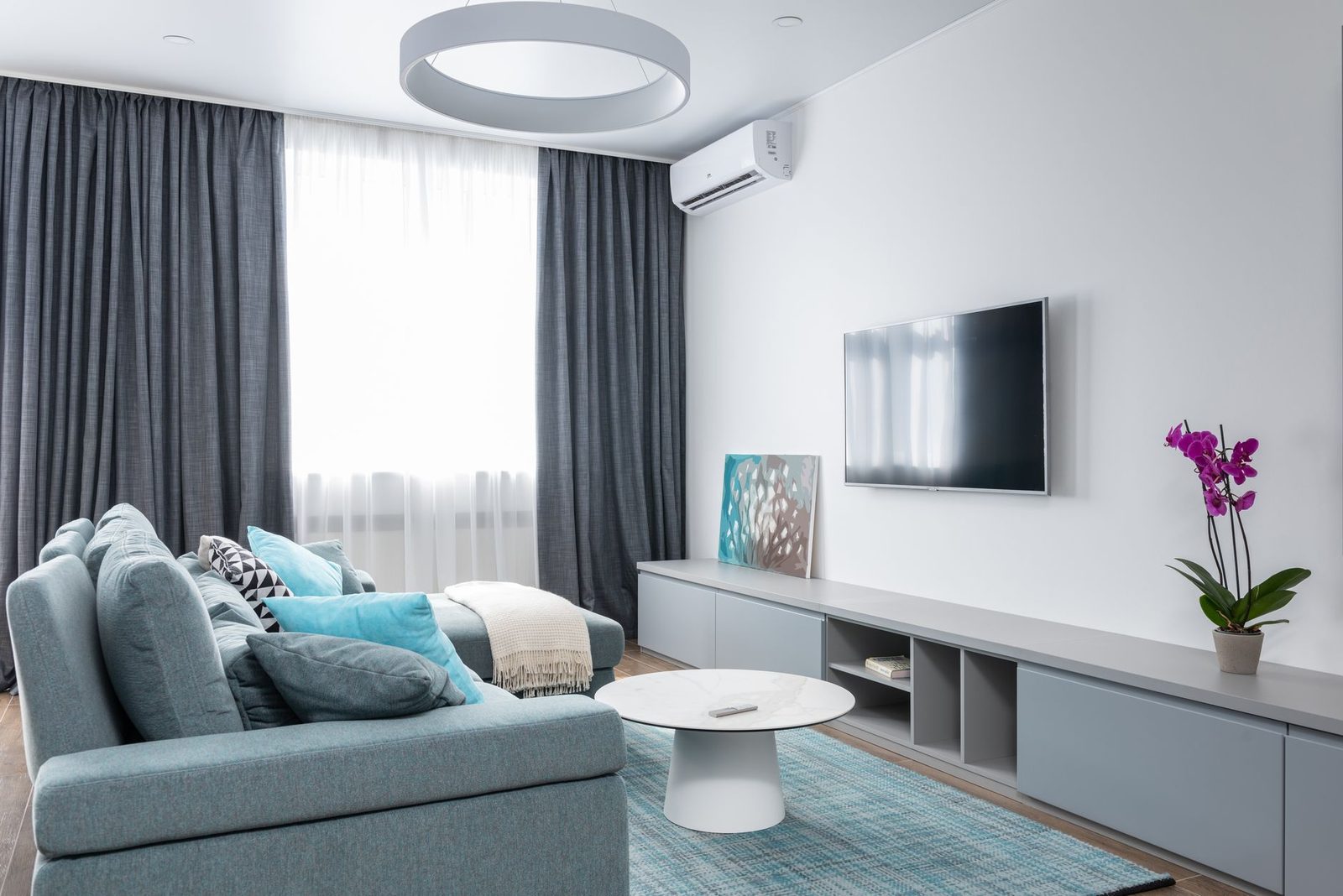
The only calculation that matters: power input × hours × price per kWh
The first thing to understand, because it accounts for 90% of estimating errors: cooling capacity is not electricity consumption.
When a product sheet advertises a "3.5 kW" air conditioner, that refers to the cooling output delivered into the room, not the power drawn from the meter. A modern R-32 split system delivers on average 3 to 4 times more cooling energy than it consumes in electricity. The figure to look for on the energy label is the power input (or rated electrical power), also expressed in kW, and it generally sits between 0.8 and 1.2 kW for a split rated at 3.5 kW of cooling.
The calculation then becomes straightforward:
Consumption (kWh) = average power input (kW) × actual running hours (h)
Cost (€) = consumption (kWh) × price per kWh incl. tax
The next trap is those "actual running hours". An Inverter air conditioner doesn't run flat out continuously: it ramps up hard during the pull-down phase (15 to 40 minutes depending on insulation), then modulates at around 30 to 50% of its capacity to hold the setpoint. Over an 8-hour night, a bedroom split therefore rarely consumes more than 2.5 to 4 kWh, not 8 × 1 kW.
SEER, the only efficiency indicator worth looking at
SEER (Seasonal Energy Efficiency Ratio) measures seasonal efficiency in cooling mode: it compares the cooling produced across a whole season with the electricity consumed over the same period. It is the regulatory figure shown on the European energy label, defined by Regulation 626/2011 and its ecodesign framework.
| Energy class (cooling) | SEER | Interpretation |
|---|---|---|
| A+++ | ≥ 8.5 | Excellent, premium equipment |
| A++ | 6.1 – 8.5 | Standard for good 2026 models |
| A+ | 5.6 – 6.1 | Acceptable, current entry level |
| A | 5.1 – 5.6 | Dated or poorly sized equipment |
| B and below | < 5.1 | Portable monobloc, old split |
In practical terms: a SEER of 8 means that for every 1 kWh of electricity, the unit produces 8 kWh of cooling. A SEER of 4 (typical of a portable monobloc air conditioner) produces half as much for the same price. Over a season, the difference in bill between an A+++ unit and a supermarket monobloc easily exceeds €100 for comparable use.
What that means in euros over the 2026 season
Let's take the regulated electricity tariff, which after the TURPE revision and the 2026 tariff changes sits at around €0.20 to €0.22 per kWh including tax on the Base option for most households. Exact tariffs are published by the Commission de régulation de l'énergie (CRE) and reproduced on the site of the médiateur national de l'énergie; always check the price shown on your own payment schedule, as market offers vary by 15% in either direction.
| Configuration | Typical use | Seasonal consumption | Cost in 2026 |
|---|---|---|---|
| 2.5 kW bedroom split | 8 h/night, 60 nights | 130 – 190 kWh | €28 – 42 |
| 3.5 kW living room split | 6 h/day, 70 days | 200 – 320 kWh | €44 – 70 |
| 3-room multi-split | family summer use | 450 – 750 kWh | €99 – 165 |
| Ducted air-to-air heat pump, 100 m² | whole house, hot summer | 800 – 1,400 kWh | €176 – 308 |
| Portable monobloc air conditioner | 6 h/day, 40 days | 250 – 350 kWh | €55 – 77 |
Two lessons stand out. First, a properly sized fixed split costs less to run than a portable air conditioner people assume is "economical" because it only costs €300 to buy: the monobloc exhausts hot air through a hose passing out of a partly open window, which creates negative pressure and continuously draws in hot outside air. Its real-world efficiency is disastrous.
Second, even a whole-house installation stays within an order of magnitude below what many people fear — provided it is operated intelligently. That's where everything is decided.
The five settings that weigh most on the bill
1. The setpoint: every degree costs roughly 7%
This is lever number one, and it's free. ADEME regularly points out that lowering the cooling setpoint by one extra degree increases consumption by around 7%. Going from 26°C to 22°C is therefore not "a bit more", it's nearly 30% more on the bill — for a level of comfort that often becomes unpleasant and encourages sore throats.
The recommendation from ADEME and the national climate change adaptation plan remains a maximum gap of 5 to 7°C with the outside temperature, i.e. 26°C indoors when it's 33°C outside. To measure this objectively rather than rely on how it feels, an indoor thermometer hygrometer placed at seated height in the living room gives a far more reliable reading than the indoor unit's own sensor, which is often mounted high up where the air is warmest.
2. Humidity, the invisible cost
Dehumidifying uses energy, but less than cooling further. At 45% relative humidity, 26°C feels comfortable; at 70%, you have to go down to 23°C for the same sensation. In homes on the Atlantic or Mediterranean coast, running "Dry" mode for an hour in the early evening, then switching back to cooling with a higher setpoint, measurably reduces overnight consumption.
3. Scheduling and the new off-peak hours
Since the overhaul of off-peak time slots that came into force in 2026, part of the advantageous windows has shifted to the afternoon (typically 11 a.m. – 5 p.m.) in order to absorb solar generation. If you're on a Peak/Off-Peak tariff, pre-cooling the home during the afternoon off-peak window and then letting thermal inertia do the work in the evening becomes a paying strategy, especially in a well-insulated house.
Most units have built-in weekly scheduling, but it is often ignored because the original remote control is poorly designed. A smart plug with energy monitoring fitted upstream of the indoor unit (caution: only on single-split units plugged into a 16 A socket, never on a dedicated 20 or 32 A circuit) lets you both measure actual consumption and check your calculation assumptions.
4. Solar gain, before the air conditioning even comes in
One square metre of unshaded south-facing glazing lets in up to 500 W of heat in the middle of the day. Put another way: three exposed windows are equivalent to a 1,500 W electric radiator running continuously, which your air conditioner has to offset at your expense.
Blocking the radiation before it passes through the glass is infinitely more effective than an interior curtain. Failing shutters or external blinds, reflective solar window film applied to the most exposed windows cuts solar gain by 40 to 70% depending on the product, for a few tens of euros and two hours of fitting. It is probably the best cost-to-saving ratio on this entire list.
5. Air movement, the underrated ally
Moving air gains you 2 to 3°C in perceived temperature without costing a cent more in cooling produced. A ceiling fan draws 15 to 70 W, compared with 800 W to 1 kW for a split under load. Combining a 27°C setpoint with a ceiling fan on low speed delivers comfort equivalent to 24°C with no air movement, for roughly half the consumption.
The mistakes that inflate the bill without you noticing
Oversizing. This is the most expensive mistake, and it happens at the quotation stage. An over-powered unit reaches the setpoint too quickly, stops, restarts — a short-cycling pattern that degrades real-world SEER by 20 to 30% compared with the catalogue figure. A good installer sizes the system on the basis of a heat load calculation, not a "100 W per m²" ratio scribbled on the back of an envelope.
Clogged filters. A blocked filter restricts airflow, forces the compressor to run longer and pushes consumption up by 5 to 15%. Clean them every two to four weeks in peak season, with lukewarm water, and make sure the filter is completely dry before refitting. An air conditioner cleaning spray applied once or twice a season to the indoor unit's coil is a useful complement — though not a substitute for annual servicing by a professional.
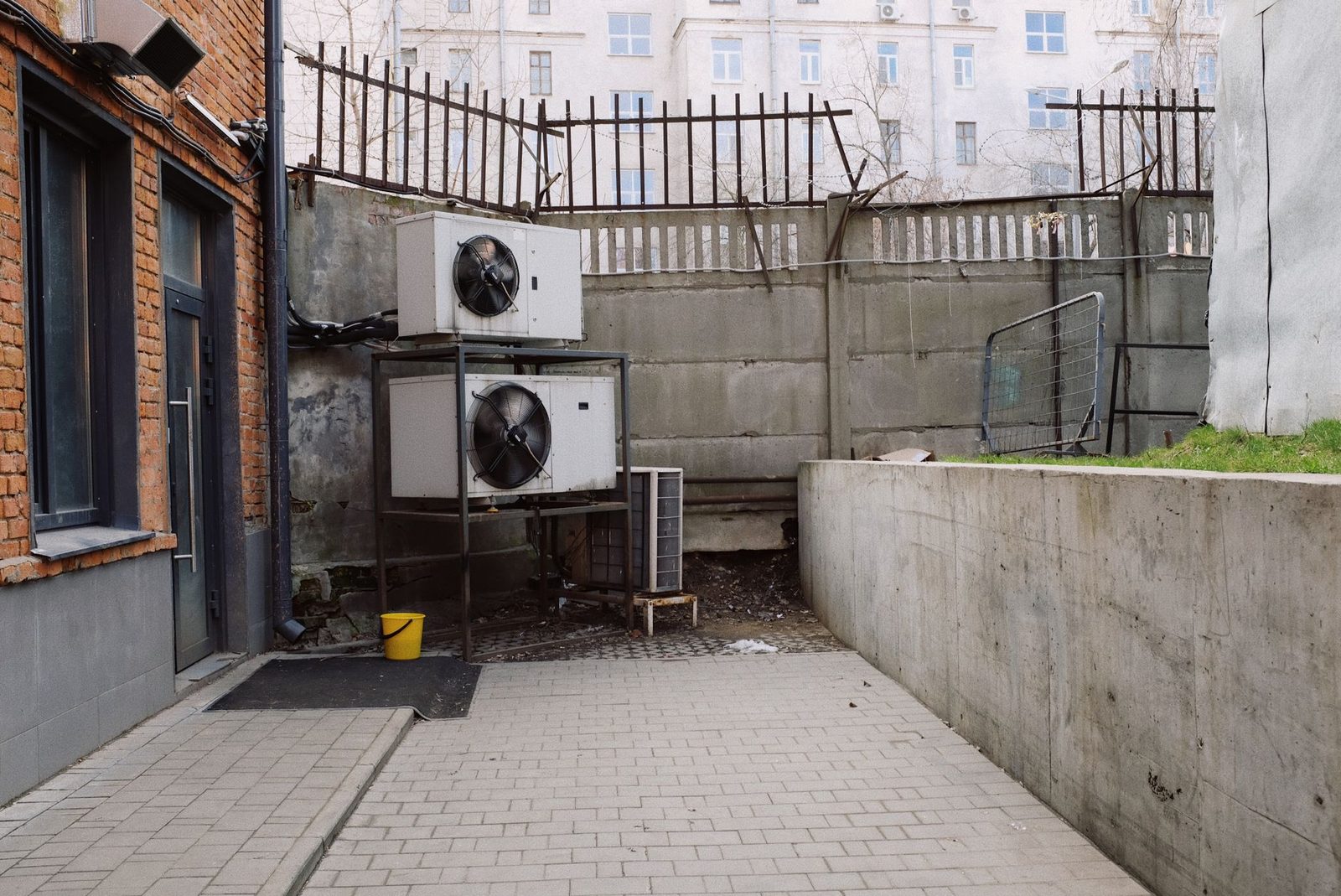
The outdoor unit in full sun, jammed against a wall. The outdoor unit has to reject heat; if it draws in its own recycled hot air, condensing pressure rises and efficiency collapses. Allow at least 30 cm at the rear, 1 m in front, and avoid decorative sealed enclosures that suffocate the unit.
Doors and windows. Cooling a room whose door stays open onto a stairwell means cooling the whole building. An insulating draught excluder on cooled rooms limits air transfer, especially in older homes where gaps under doors reach 1.5 cm.
Should you worry about your subscribed power?
A frequent question that is rarely addressed: can adding air conditioning trip your installation? On a bedroom single split, the start-up power draw remains modest (Inverter compressors start gently, unlike older direct-start compressors). On a multi-split or a ducted air-to-air heat pump, however, it is not unusual to have to move from 6 to 9 kVA of subscribed power, which represents around thirty euros of additional standing charge per year with most suppliers.
The change is requested directly from your supplier, who passes it on to Enedis; the operation is free once a year and is carried out remotely on Linky smart meters. Check this point before installation, not during the first heatwave.
The real comparison: air conditioning versus the alternatives
One common-sense point to finish. Over a season, a well-adjusted fixed bedroom split costs the equivalent of two tanks of petrol. That is neither negligible nor ruinous. But before deciding, compare what the alternatives cost over the same lifespan:
- Ceiling fan alone: €3 to €8 per season, but no real drop in temperature — ineffective above 30°C indoors.
- Evaporative air cooler: €10 to €20 per season, but it raises humidity, which makes it counterproductive in humid regions.
- Portable monobloc air conditioner: higher consumption than a fixed split for less comfort, plus 50 to 60 dB(A) of noise in the room.
- Loft insulation: higher upfront cost, but benefits in winter and summer, with grants available. It is the logical prerequisite to any air conditioning.
For those who want to take things further, a practical guide to home energy renovation helps prioritise the work: in almost every case, the optimal order is insulation → solar shading → ventilation → air conditioning, not the other way round.
In summary
- Look at power input and SEER, never cooling capacity alone.
- A properly sized fixed split typically costs €30 to €70 per season and per room at 2026 rates.
- Every degree lower on the setpoint costs around 7% in extra consumption.
- Oversizing, clogged filters and a poorly ventilated outdoor unit are the three main destroyers of efficiency.
- Dealing with solar gain and air movement before lowering the setpoint remains the most cost-effective strategy.
The best kWh of air conditioning is still the one you don't need to consume. But when you do consume it, it may as well be produced by a unit with a good SEER, well installed, well maintained and well adjusted — that, and nothing else, is where the difference in the bill is decided.
Sources: ADEME (setpoint temperature recommendations and summer comfort), Commission de régulation de l'énergie (2026 regulated tariff changes), European energy labelling for air conditioners (Delegated Regulation EU 626/2011), Enedis (subscribed power modification).
Need an air conditioning solution?