Heat Pump Installation: Understanding the Simplified 2026 Procedures

L'équipe Proclimo
20 Aug 2026 - 05 min read
It is the great paradox of energy renovation in France: while the State is increasing financial aid and strongly encouraging homeowners to abandon fossil fuel boilers, the main obstacle was no longer always the price, but the paperwork. Between the preliminary declaration of works, local urban planning rules, and co-ownership requirements, installing a heat pump (HP) sometimes felt like an obstacle course.
Since March 1, 2026, the situation has changed. In an effort of administrative simplification aimed at accelerating the deployment of renewable energies, the procedures for installing heat pumps have been eased. The objective is clear: reduce waiting times and limit bureaucratic bottlenecks for equipment that, by nature, contributes to the decarbonization of heating.

What specifically has changed since March 2026
Regulatory easing does not mean an absence of rules, but a change in how they are applied. The core of the reform rests on a clearer distinction between "standard" installations and those impacting the architectural appearance of a building.
The end of the preliminary declaration for certain cases
Previously, the installation of an outdoor unit was almost systematically subject to a preliminary declaration (DP) at the town hall, as it modified the exterior appearance of the home. Now, for installations meeting discretion criteria (reduced dimensions, neutral color, no structural modification of the building), the process is simplified.
In several municipalities, and according to new national directives, the installation of an air-to-air or air-to-water HP no longer requires a DP if the unit is installed in an area not visible from the public road or if it complies with a simplified set of specifications pre-approved by the municipality. This avoids the usual one-month wait to obtain tacit approval.
Easier dialogue with urban planning services
The government has also encouraged town halls to adopt "simplified installation charters." Instead of assembling a full file with photos and architectural plans for a simple split system, the owner can now rely on a single, often digital, form that validates the installation's compliance with local acoustic and aesthetic standards.
The new typical journey for the homeowner
To avoid mistakes and prevent a removal order (which would cost far more than the time saved), here is the process to follow in 2026.
1. Technical and thermal diagnosis
Before even thinking about the town hall, the crucial step remains the choice of power. An oversized HP will consume more and wear out prematurely; an undersized HP will never heat your rooms. To prepare for this appointment, it can be useful to use an infrared thermometer to identify thermal bridges in your walls and better guide the installer.
2. Checking the PLU (Local Urban Plan)
Even though procedures are eased, the PLU remains the supreme law regarding urban planning. Certain areas (classified sites, proximity to historical monuments) maintain strict requirements. A quick look at your town hall's portal or a call to the urban planning department will let you know if you fall under the "simplified procedure" or if a full file is still required.
3. Choosing a certified installer
This is where administrative simplification meets technical reality. To benefit from subsidies and guarantee the installation's compliance, using an RGE (Reconnu Garant de l'Environnement) professional is indispensable. The installer no longer just fits the machine; they become the guarantor of technical compliance, particularly regarding the handling of refrigerant fluids.

Vigilance points that remain unchanged
Warning: "simplification" does not mean "anarchy." Three points remain critical and can turn a successful project into a legal nightmare.
Noise: the pain point of installations
As seen in our previous analyses, noise is the primary cause of disputes. Even if the town hall authorizes the installation without a DP, the Public Health Code still applies. The sound emergence (the difference between ambient noise and noise with the machine running) must not exceed legal thresholds.
To limit nuisances, the installation of anti-vibration mounts (silent-blocks) is strongly recommended. If you wish to protect your outdoor unit from the elements while attenuating noise, installing an acoustic air conditioner cover is an elegant and effective solution.
Co-ownership: a lock independent of the town hall
This is the classic trap. You have the town hall's agreement via the simplified procedure, but you forget the co-ownership rules. If the outdoor unit is placed on a load-bearing wall or a common facade, it belongs to the co-ownership.
Authorization from the general assembly (AG) remains mandatory. The 2026 simplification concerns public administration, not the private law of co-owners. A vote in the AG is essential to modify the appearance of a facade, even for an HP.
Technical placement
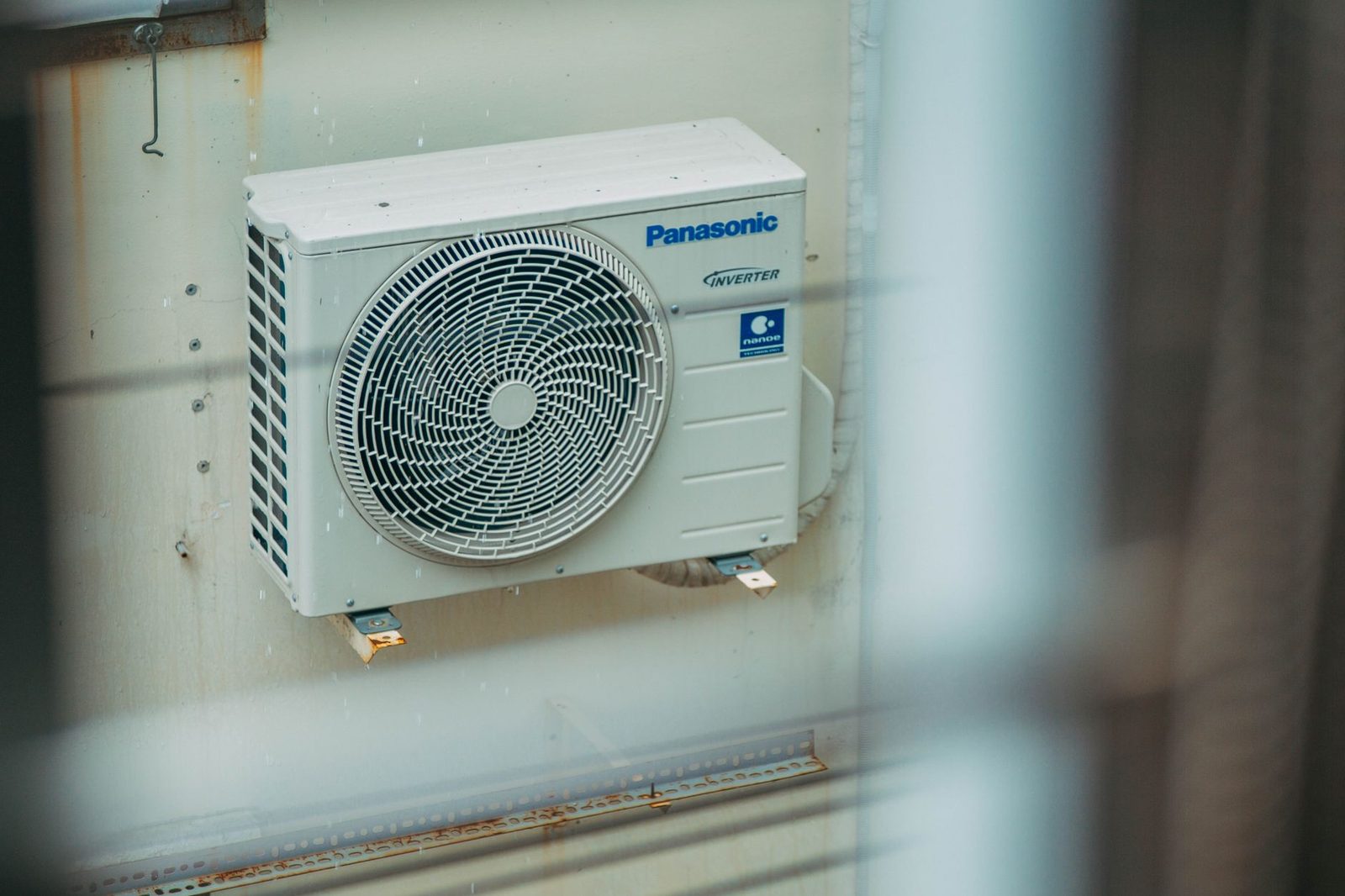
To optimize efficiency, the outdoor unit must be placed in a ventilated area, sheltered from direct sunlight and far from high-traffic zones. Poor placement can lead to massive electricity overconsumption. To keep your units clean and extend their lifespan, the regular use of a winter protection cover can be wise to avoid the accumulation of debris and dead leaves.
Summary Table: Before vs After March 2026
| Step | Old Procedure (Before 2026) | New Procedure (Since March 2026) |
|---|---|---|
| Preliminary Declaration (DP) | Systematic for any change in appearance | Optional or simplified for discreet/non-visible units |
| Processing Times | 1 month (often extended) | Accelerated via single forms or fast tacit agreement |
| Supporting Documents | Full file (plans, photos, insertions) | Self-declaration of conformity for standard cases |
| Installer's Role | Technical installation | Administrative support and certification of conformity |
Optimizing your installation for the future
Easing the procedures is an opportunity to modernize your home, but you should not rush the purchase. The HP market is evolving rapidly, notably with the arrival of more ecological fluids such as R-290 (propane) or CO2.
Fluid choice: a regulatory issue
In 2026, F-Gas regulations continue to tighten on HFCs. Choosing a simplified machine today is good, but choosing a sustainable machine is better. Prioritize equipment with the lowest possible GWP (Global Warming Potential) to prevent your installation from becoming obsolete or expensive to maintain in five years.
The importance of maintenance
An administratively simplified installation must remain technically rigorous. An annual maintenance contract is not an option: it guarantees the longevity of the compressor and the maintenance of energy performance. For those who like to track their consumption precisely, adding a connected plug with electricity consumption measurement allows for real-time monitoring of the HP's operating cost.

Conclusion: Towards a smoother renovation
The simplification of procedures since March 2026 is a strong signal: installing a heat pump should no longer be a psychological or administrative deterrent. By removing redundant steps for standard installations, the State allows homeowners to focus on the essentials: choosing high-performance equipment and a qualified installer.
However, keep in mind that administrative simplicity does not exempt you from technical vigilance. Compliance with acoustic standards, co-ownership agreement, and the choice of a sustainable refrigerant fluid remain the pillars of a successful installation. By following this new path, you optimize not only your thermal comfort but also the asset value of your home.
Need an air conditioning solution?