Air conditioning noise and neighbours: what the law says in 2026 and how to avoid a dispute

L'équipe Proclimo
21 Aug 2026 - 08 min read
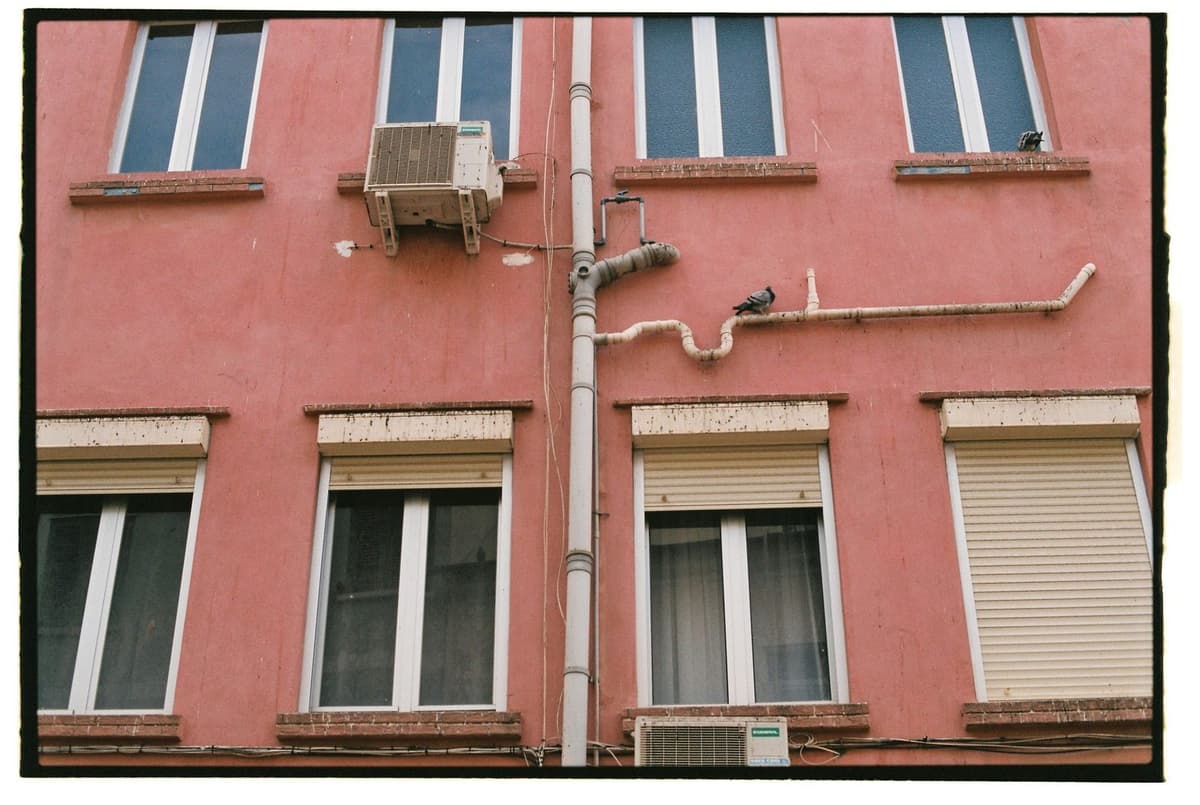
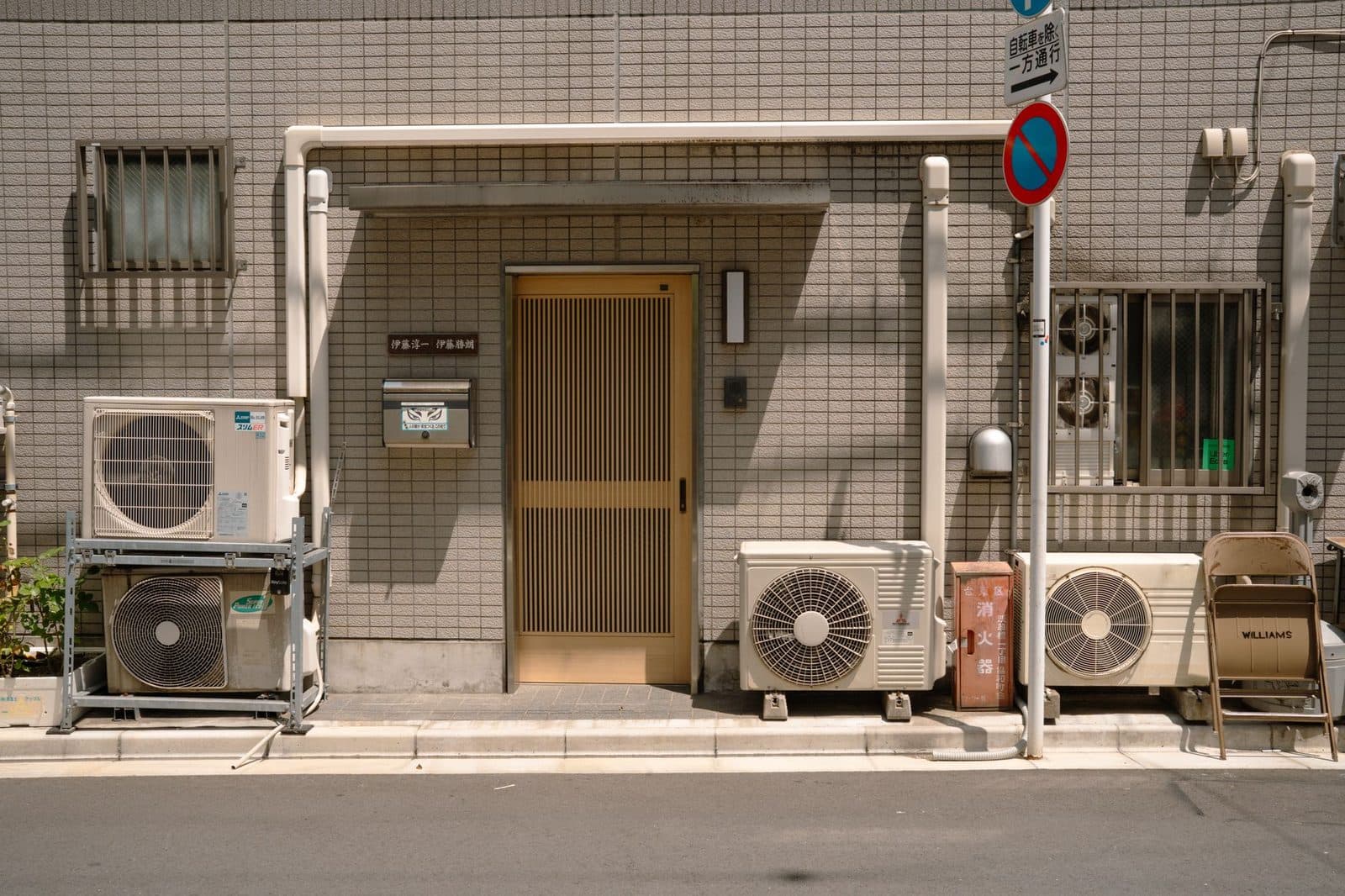
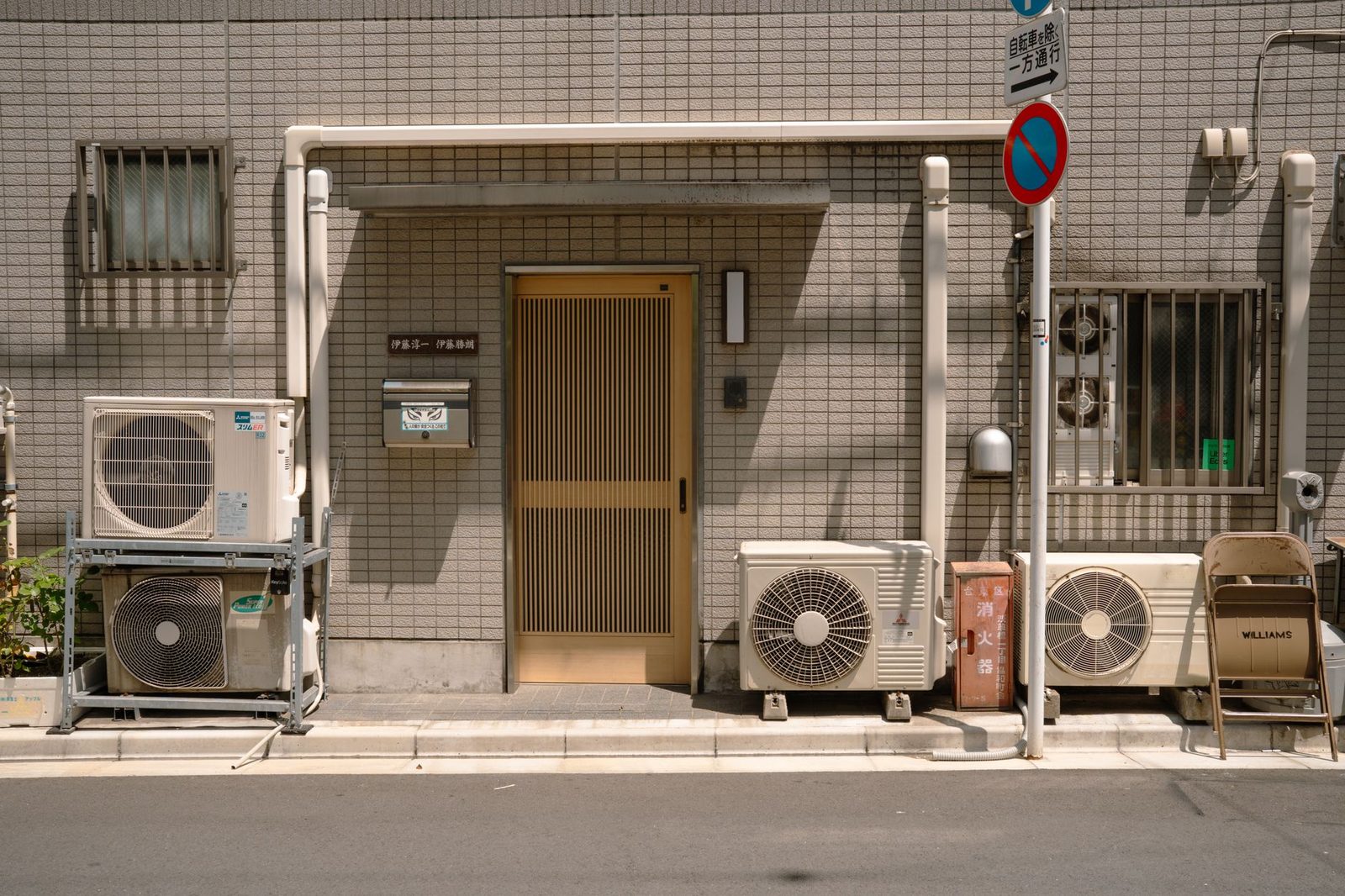
There is a side effect of the air conditioning boom that nobody was talking about three years ago, and which now accounts for a growing share of the incident reports filed at police stations and the registered letters exchanged between neighbours: noise. Since VAT on reversible air conditioners was cut to 5.5% in July 2025, followed by the heatwaves of summer 2026, outdoor units have sprouted on façades, balconies, terraces and suburban front gardens. And every outdoor unit is, by definition, a rotating machine sitting a few metres from somebody's window.
The problem is not new in legal terms — French regulations on neighbourhood noise have been stable for years — but it has become widespread. What was once a marginal type of dispute confined to swimming pool heat pumps is today a common source of conflict between residents, and a frequent reason for refusal at co-ownership general meetings.
The rule that matters isn't the number of decibels, it's the emergence
This is the most widespread misconception. Many owners believe there is an absolute threshold — "you mustn't go above 50 dB(A)" — and that anything below is fine. Wrong. For domestic neighbourhood noise, the French public health code (articles R.1336-5 to R.1336-9) works on the basis of emergence, meaning the difference between the ambient sound level with your machine running and the residual level without it.
The limit values are as follows:
| Period | Maximum permissible emergence |
|---|---|
| Daytime (7 a.m. – 10 p.m.) | 5 dB(A) |
| Night-time (10 p.m. – 7 a.m.) | 3 dB(A) |
On top of these values comes a correction term that depends on the cumulative duration of the noise: the longer the machine runs, the smaller the tolerance. An outdoor unit running continuously all night gets no correction at all — the worst-case scenario, and precisely how an air conditioner operates during a heatwave.
The practical consequence is counter-intuitive: the quieter your neighbourhood, the more exposed you are. In a suburban street where the residual night-time level drops to 28 dB(A), an outdoor unit producing 32 dB(A) at the neighbour's property is already in breach. The same machine, in a city centre where the night-time background level is 45 dB(A), will go completely unnoticed and be perfectly legal.
Note: these thresholds only apply if the ambient level exceeds 25 dB(A). Below that, the measurement is considered unusable.
Measurements can't be taken just any old way
A breach cannot be established by ear, nor with a smartphone app. The measurement must be carried out in accordance with the NF S 31-010 standard (characterisation and measurement of environmental noise), by a sworn officer (municipal hygiene and health department, ARS, trained municipal police) or by an independent acoustics consultant. It is taken inside the affected person's home, with the windows open and then closed, not at the property boundary.
This point matters for both sides. For the complainant: a reading taken with a phone's sound meter has no evidential value before a court, even though it is a useful preliminary indicator. For the installer or owner facing the complaint: the sound power figure quoted on the product datasheet proves nothing either, because it is measured in a laboratory, at full or partial load, under conditions that bear no relation to a reflective façade and a poorly decoupled mounting.
A class 2 sound level meter with a calibration certificate is nonetheless a worthwhile investment for getting an objective picture before starting proceedings: it tells you whether you are dealing with 2 dB or 12 dB of emergence, and therefore whether your case holds up.
Understanding where the noise really comes from
An outdoor unit produces three families of noise, and they are not dealt with in the same way.
Fan airflow noise. This is the continuous, broadband rush of air, the one you notice first. It rises very quickly with rotation speed: a fan going from 400 to 700 rpm can gain 8 to 10 dB(A). It is also the easiest to treat, because it is directional — it comes mainly out of the discharge grille.
Compressor noise. Lower in pitch and more penetrating, it travels both through the air and through structures. This is what causes the "humming in the walls" sensation that neighbours in adjoining properties complain about. Modern Inverter models are far more discreet at partial load, but they run at high speed during the initial pull-down phase.
Vibration transmitted to the building. This is the silent killer of neighbourly relations. A unit bolted directly onto a metal bracket fixed into a hollow wall literally turns the façade into a loudspeaker membrane. The noise measured one metre from the machine may be modest; what is perceived in the neighbour's bedroom, through the structure, can be unbearable. A large share of disputes stem from this mechanism, not from the intrinsic performance of the appliance.
Technical solutions, in order of value for money
1. Mechanically decouple the unit (the best return on investment)
Before considering anything else, check the decoupling. Rubber anti-vibration mounts placed between the unit's feet and its support eliminate most structure-borne transmission, at a laughably low cost given the benefit. For a ground-mounted installation, opt for elastomer supports or a slab isolated from the building. On a wall bracket, decoupling is essential — and unfortunately often overlooked by installers in a hurry.
Second check: tightness. Fasteners loosened by thermal cycling generate rattles and resonances that have nothing to do with the machine's nominal noise.
2. Enable and configure night mode
Almost every manufacturer now offers a "silent", "quiet" or "night mode" function that limits fan speed and caps compressor frequency. The typical gain is 3 to 6 dB(A) — often enough to drop back below the 3 dB(A) night-time emergence threshold. The trade-off is a drop in output of around 20 to 30%, generally of no consequence at night, when the thermal load is low.
With Daikin, Mitsubishi Electric, Toshiba or Atlantic, this mode is set from the remote control or the app. On slightly older installations it is sometimes disabled by default: a simple adjustment can resolve the dispute without spending a penny.
3. Reposition or reorient
Noise falls by roughly 6 dB with each doubling of distance in free field. Moving a unit from 2 to 4 metres from the neighbour's window therefore represents a considerable gain. Three other common-sense rules:
- Never blow towards a window, a French door or an internal courtyard;
- Avoid re-entrant angles and recesses between two walls, which behave like acoustic horns and can add 3 to 6 dB;
- Respect the manufacturer's clearances, otherwise you risk air recirculation, loss of efficiency and the fan ramping up — hence extra noise.
4. Acoustic screen or enclosure
A simple solid screen (low wall, timber panel, solid rigid slatted screen, not open-slatted) placed between the machine and the point of nuisance brings 3 to 8 dB(A) if it genuinely breaks the direct line of sight. An outdoor sound-absorbing acoustic panel lining the machine side improves the result further by preventing reverberation.
Complete acoustic enclosures, sold ready to install, can reach 10 to 15 dB(A) of attenuation. Beware, however: a poorly sized enclosure that strangles the airflow is the worst possible scenario. It drives down the COP, causes short cycling, wears out the compressor and ends up generating more noise than it removes. The available air flow must remain in line with the manufacturer's recommendations.
What to do when you're the victim — and when you're the one accused
You're suffering the noise
The sensible procedure follows a strict progression, and skipping steps almost always works against the complainant.
- Direct dialogue. In most cases, the owner has no idea their unit is causing a nuisance. A conversation often leads to night mode being switched on or anti-vibration mounts being fitted.
- The registered letter. It puts a date on the complaint and demonstrates good faith. Describe the times, the nature of the noise and the room affected.
- The town hall. The mayor has police powers over neighbourhood noise. Some municipalities have a hygiene and health department authorised to carry out measurements; failing that, the ARS can be contacted.
- The acoustics consultant's report. A private assessment compliant with NF S 31-010 generally costs several hundred euros but is the centrepiece of any court file.
- Conciliation, then court. Since the reform of civil procedure, an attempt at amicable resolution (a court conciliator, free of charge) is a mandatory first step for most neighbour disputes. The judge can order soundproofing work, relocation of the unit, or even its removal, and award damages for abnormal neighbourhood nuisance — a case-law doctrine that does not even require proof of fault.
Keep a nuisance log with dates and times: it sounds mundane, but it is what makes the difference before a judge. A notebook is enough; some complainants use a dedicated sturdy notebook for the chronology of the dispute.
You own the unit
Don't dismiss the complaint out of hand. Losing an acoustic dispute can end with an obligation to remove, at your own expense, an installation that cost you several thousand euros — on top of compensation.
Three reflexes:
- Document your installation: invoice, technical datasheet with the sound power level, installer's certificate confirming compliance with good practice (decoupling, clearances).
- Try the free fixes first: night mode, time programming, a less aggressive setpoint (25°C rather than 21°C reduces full-load running time).
- Check your contract and insurance: if the fault lies with a non-compliant installation, the installer may be liable, and your legal protection cover — often included in home multi-risk insurance — may pay for an expert assessment.
In co-ownership buildings: noise comes on top of authorisation
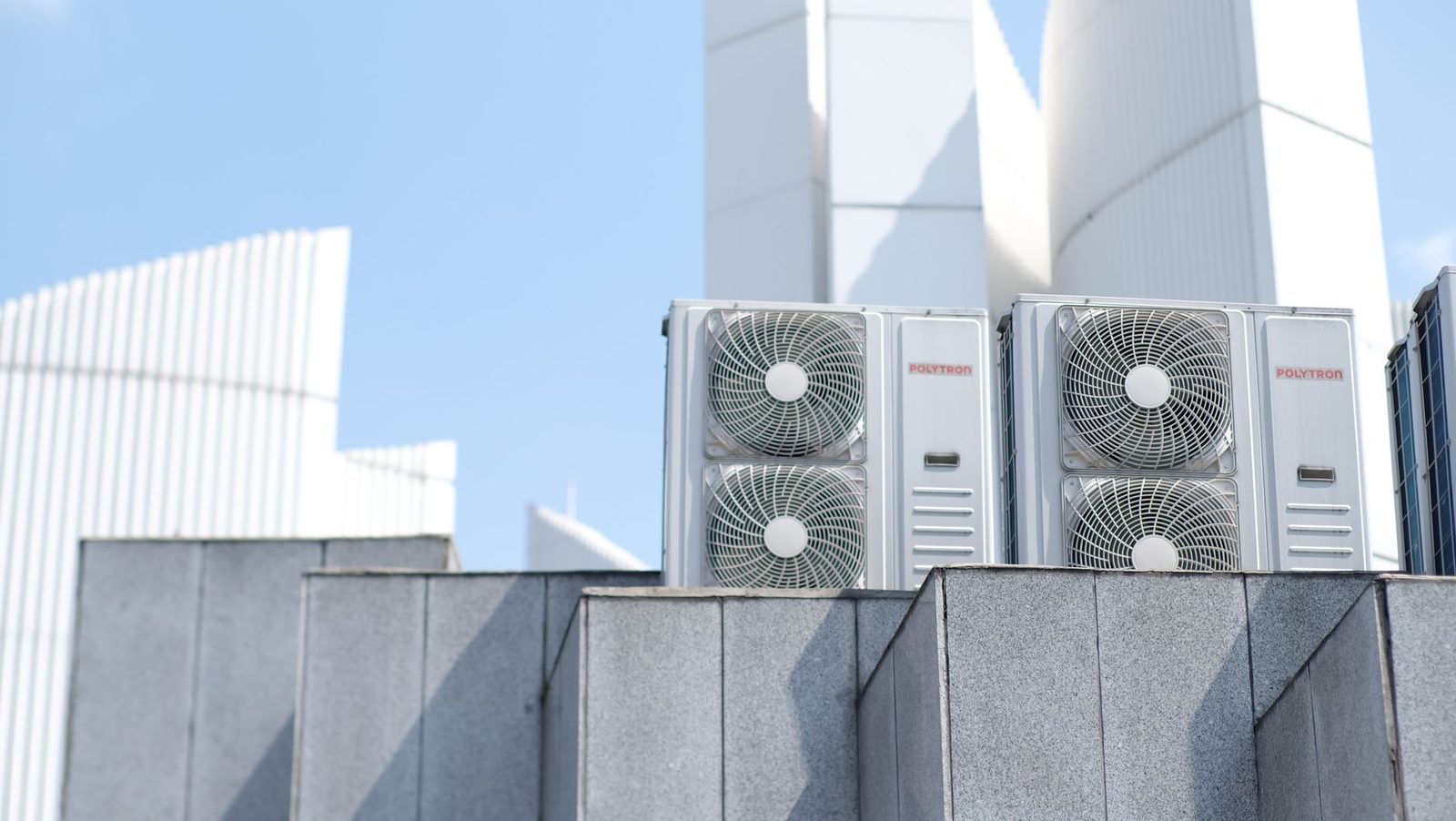
In an apartment building, the acoustic question is layered on top of the authorisation regime. Fitting an outdoor unit to a façade, a balcony or a roof affects the common parts or the external appearance: it requires authorisation at a general meeting. And managing agents and co-ownership councils now almost systematically include an acoustic clause in the resolution voted through — a commitment to a maximum sound power level, an obligation to decouple, a ban on night-time operation above a certain speed.
That is actually good news for applicants: a submission that anticipates the noise question (technical datasheet, layout plan, written commitment on night mode) goes down far better than a bare request. Conversely, an installation put in without authorisation and that turns out to be noisy combines two faults and very often ends in removal ordered by a judge.
One point that is often overlooked: the co-ownership regulations may set stricter requirements than the public health code. In that case, they are binding between co-owners.
Choosing wisely upfront: reading the right line on the datasheet
The best way to avoid a dispute is still to choose suitable equipment and have it installed correctly. On the documentation, carefully distinguish:
- Sound power (LW, in dB(A)): an intrinsic characteristic of the machine, independent of distance. It's the only figure that is comparable between models.
- Sound pressure (Lp): what you hear at a given distance (often 1 m). The marketing figure, to be handled with care because the reference distance varies.
Ballpark figures for 2026: a good 3.5 kW mono-split outdoor unit is rated at 58 to 62 dB(A) sound power, with the most refined models dropping towards 54 dB(A) in night mode. A 5 dB(A) gap between two competing models at a similar price is well worth letting guide your choice when the siting is constrained.
Finally, insist that your installer provides a layout plan showing the distances to neighbouring windows and doors. A qualified professional (refrigerant handling certificate, RGE qualification) knows to ask this question before drilling through the wall — and that detail often reveals how serious a quote really is.
Noise is not a secondary parameter of the installation: it's the one that decides whether your air conditioning stays in place. The €150 spent on mounts, screening and repositioning at the time of installation is far better value than €3,000 of forced removal three years later.
Sources and references: articles R.1336-5 to R.1336-9 of the French public health code; NF S 31-010 standard (AFNOR); Centre d'information et de documentation sur le bruit (CIDB); ADEME, guides on heat pumps in individual housing; ministère de la Transition écologique, regulations on neighbourhood noise.
Need an air conditioning solution?