Air Conditioning Noise and Your Neighbours: the 2026 Rules and How to Avoid a Dispute

L'équipe Proclimo
23 Aug 2026 - 08 min read
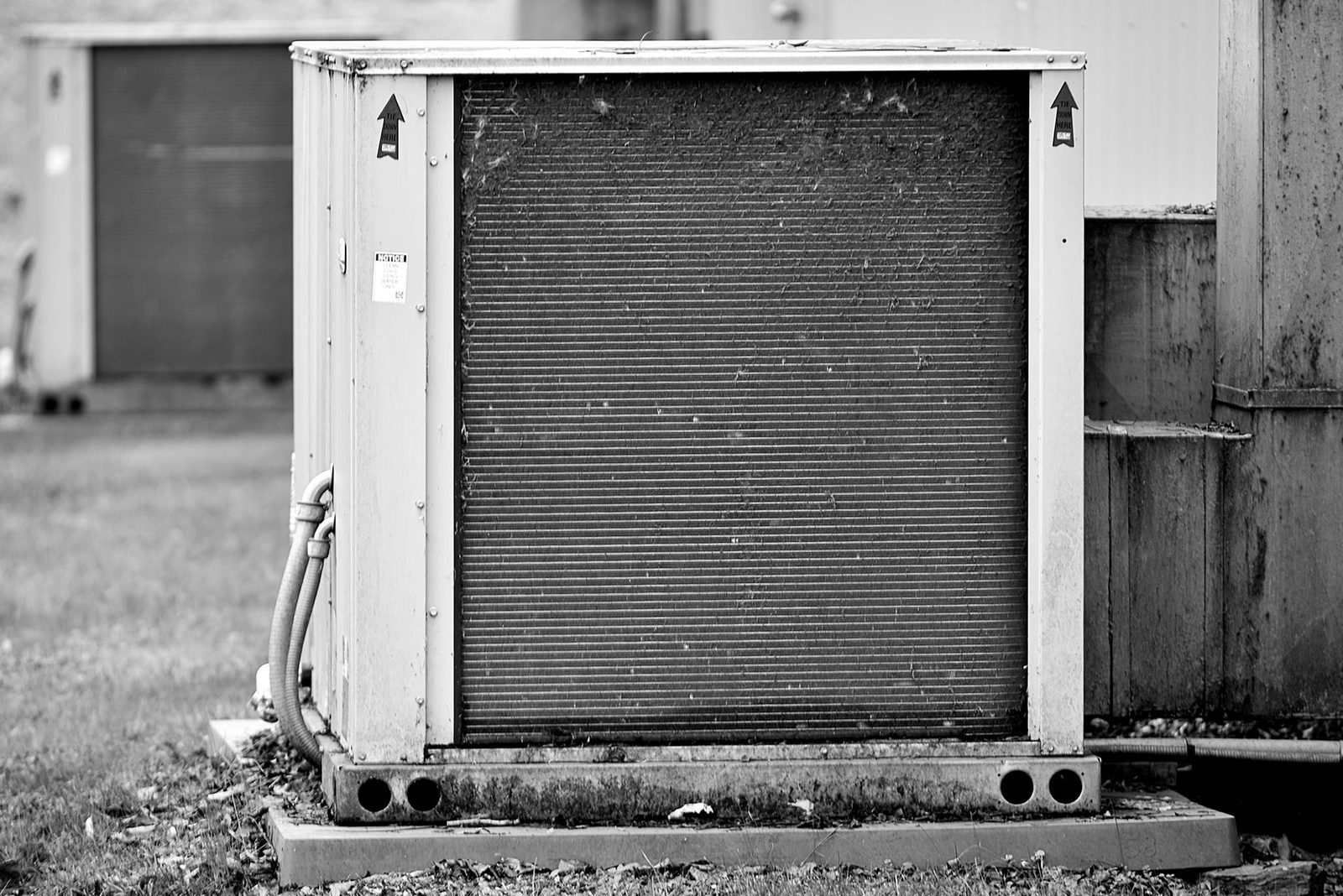
There is one type of dispute that has been quietly gaining ground in the courts and town halls over the last two summers, and it gets far less attention than financial subsidies: noise from outdoor units. Ever since VAT at 5.5% put reversible air conditioning within reach of hundreds of thousands of additional households, outdoor condensing units have sprung up on façades, in gardens, along property boundaries — and often two metres from a neighbour's bedroom window.
The outcome was predictable: municipal health departments and legal conciliators are now handling "air con" cases that barely existed five years ago. And the bad news, for whoever did the installing, is that French neighbourhood noise regulations are strict, expressed in hard numbers, and fully applicable to a heat pump. Buying a "silent" model is not enough.
Here is what you need to know before drilling through the wall — and what to do if the dispute has already started.
The governing rule: emergence, not the decibel figure
This is the first mistake in reasoning, and it is almost universal. Someone looks at the spec sheet for their air conditioner, reads "48 dB(A)", decides that this is the level of a whispered conversation, and concludes there is no risk whatsoever.
The regulations do not work that way. Articles R.1336-5 to R.1336-9 of the French Public Health Code do not set an absolute decibel ceiling for a domestic appliance: they govern emergence, that is, the difference between the ambient noise level with the appliance running and the residual noise level without it.
The regulatory thresholds are as follows:
| Period | Maximum permitted emergence |
|---|---|
| Daytime (7 a.m. – 10 p.m.) | 5 dB(A) |
| Night-time (10 p.m. – 7 a.m.) | 3 dB(A) |
On top of these values come correction terms linked to the cumulative duration of the noise: the longer the noise lasts over the reference period, the smaller the tolerance. An air conditioner running continuously all night therefore gets no favourable correction at all — it is the worst-case scenario.
The consequence is counter-intuitive but essential: the quieter your surroundings, the more easily you breach the rules. A house on a suburban estate where the residual night-time noise drops to 28 dB(A) leaves only 31 dB(A) of headroom. A flat overlooking a boulevard with a 45 dB(A) background level will have no problem at all with the same appliance.
The trigger threshold: the emergence test only applies if the measured ambient noise, with the appliance running, exceeds 25 dB(A) at night and 30 dB(A) during the day. Below that, no offence is established.
What the spec sheet says — and what it doesn't
Manufacturers publish two figures that must not be confused:
- sound power (Lw), expressed in dB(A), which characterises the appliance independently of distance;
- sound pressure (Lp), measured at a given distance (often 1 m), a more flattering figure and the one more often highlighted in brochures.
An outdoor unit rated at 48 dB(A) of sound power will produce, in free field, roughly 40 dB(A) at 3 metres and 34 dB(A) at 6 metres. But placed in a wall corner, between two reflecting façades, it can regain 3 to 6 dB(A) — acoustically the equivalent of doubling the source.
Under the European ecodesign regulation, the outdoor sound power level is mandatorily displayed on the energy label of air conditioning and heat pump units. That value, and only that value, is what you should compare between two models.
Where to put it: the question that settles 80% of disputes
No national law imposes a minimum distance between an outdoor unit and the property boundary. But three layers of rules may apply, and you need to check them before the quotation:
- Your municipality's PLU (local urban plan): more and more communes have introduced requirements on technical equipment fixed to façades (ban on street-facing façades, obligation to conceal the unit, minimum setback).
- The co-ownership regulations, which often make installation conditional on approval by the general meeting whenever the external appearance is altered or common property is occupied.
- The departmental sanitary regulations, which restate and locally supplement the provisions on neighbourhood noise.
In practice, the siting rules that genuinely keep you out of trouble boil down to a few principles:
- aim for at least 3 to 4 metres between the unit and the nearest neighbouring window or terrace, more in a very quiet environment;
- never blow towards the property boundary: direct the airflow onto your own land;
- avoid re-entrant corners and covered walkways, which behave like acoustic horns;
- avoid mounting on a lightweight wall (cladding, timber frame, hollow partition), which transmits vibration into the structure — structure-borne noise travels through walls far better than airborne noise;
- where the site allows, prefer ground mounting on an isolated concrete slab rather than wall fixing.
The right first move, even before calling an installer: measure the residual night-time noise yourself at the intended location. A class 2 digital sound level meter costs a few tens of euros and gives a realistic idea of the available margin. It is not a legally admissible measurement — that requires a certified instrument and a standardised protocol (NF S 31-010) — but it stops you discovering the problem after installation.
Technical solutions, from cheapest to most involved
1. Anti-vibration mounts: the basic step, often forgotten
A large share of the noise perceived inside homes is not airborne but structure-borne: the compressor vibrates the chassis, which vibrates the bracket, which vibrates the wall. It is then audible in every adjoining room, including at the neighbour's on the other side of the wall.
Rubber anti-vibration mounts inserted between the chassis and its support (or the brackets) cut most of this transmission at a trivial cost. On an existing noisy installation, this is the first thing to try before spending anything else. A conscientious installer fits them as a matter of course; many do not.
2. Silent blocks and damping brackets
For wall mounting, switching to anti-vibration wall brackets — reinforced brackets with elastomer interfaces — provides an additional gain. Be careful not to over-specify the damping: a unit sitting on an overly soft support can resonate at low frequencies, which is worse than the original problem.
3. The acoustic screen
This is the most visible and most heavily marketed solution, but it only works if three conditions are met:
- the screen is solid (no slatted trellis, no reed screening) and heavy enough — at least 10 kg/m² to have any effect on the compressor's low frequencies;
- it breaks the direct line of sight between the unit and the point of disturbance, with a lateral overhang of at least 50 cm;
- it does not obstruct intake or discharge: an overly tight enclosure recirculates hot air, cuts efficiency and makes the appliance run longer, hence noisier overall.
Outdoor acoustic panels in composite with an absorbent face give better results than a plain reflective wall, which can simply redirect the noise elsewhere. The realistic gain ranges from 5 to 10 dB(A) in the direct field — significant, but rarely enough on its own when emergence exceeds 8 or 10 dB(A).
4. Night mode: free and underused
Almost every air conditioner and air-to-air heat pump sold since 2020 has a "silent", "night" or "quiet mode" function that throttles fan speed and compressor frequency between 10 p.m. and 7 a.m. The gain is typically 3 to 6 dB(A) — exactly the order of magnitude of the regulatory day/night gap.
On some models the function is controlled from the remote, on others only via a Wi-Fi control module or the manufacturer's app. It is probably the best gain-to-cost ratio on this entire list. That reduction comes at the price of a 10 to 20% drop in output: something to allow for at the design stage, not to discover in the middle of a heatwave.
5. Replacing the unit
Once the appliance is more than ten years old, the question deserves a straight answer. Modern Inverter units run at part load most of the time, hence at reduced speed, and post sound power levels 5 to 8 dB(A) lower than a previous-generation on/off appliance. An old compressor that clunks on start-up also produces impulsive noise, which is particularly badly tolerated and particularly penalised by the regulations.
You're the neighbour being disturbed: the steps to follow
The sequence is tightly codified, and skipping steps wastes time.
Step 1 — Documented dialogue. An amicable conversation resolves most cases, often because the owner has no idea their appliance is audible from the bedroom next door. In parallel, keep a nuisance log: dates, times, duration, type of noise (continuous droning, clunking on start-up, whistling). A simple dated logbook filled in as things happen carries more weight than a retrospective account.
Step 2 — The registered letter. It formalises the request and starts the clock. Stay factual: description of the disturbance, times, reference to articles R.1336-5 et seq. of the Public Health Code, and a request to bring the installation into compliance within a reasonable period (often one month).
Step 3 — The town hall or the ARS. The mayor holds police powers over neighbourhood noise. In communes with a Service communal d'hygiène et de santé (SCHS) — municipal hygiene and health department — an officer can visit and take a measurement. Elsewhere, the Agence régionale de santé (ARS) has jurisdiction. The finding can lead to a formal notice, then to a third-class fine (up to €450, rising to €1,500 for repeat offences depending on the charges brought).
Step 4 — The legal conciliator. Since the reform of civil procedure, an attempt at amicable settlement is mandatory before bringing low-value neighbourhood disputes to court. Conciliation is free and, in this type of case, produces an agreement in a notable share of files.
Step 5 — The judicial court. The legal basis is then abnormal neighbourhood disturbance (trouble anormal de voisinage), now enshrined in article 1253 of the Civil Code by the Act of 15 April 2024. It allows compensation even in the absence of fault and even where the installation formally complies with emergence thresholds — the judge assessing whether the disturbance is "abnormal" in the local context. The court can order the unit to be removed, relocated or enclosed, subject to a daily penalty.
The special case of co-owned buildings
In an apartment block, the regulatory layers thicken. Installing an outdoor unit on a façade, a balcony or a roof terrace almost always affects the common areas or the external appearance of the building: it therefore requires authorisation from the general meeting, generally by the majority set out in article 25 of the Act of 10 July 1965.
An installation fitted without authorisation exposes you to an action by the co-owners' association for reinstatement, with a ten-year limitation period. And the fact that a neighbour did the same thing before you does not create an acquired right: past tolerance has never given rise to an easement.
Three practical recommendations:
- have the general meeting resolution state the maximum permitted sound power of the appliance and its precise location;
- require the installer to provide a predictive emergence calculation with respect to neighbouring homes — a qualified professional knows how to produce one;
- keep the technical data sheet and the handover report: these are the documents that protect you in the event of a later challenge.
What to bear in mind before signing a quotation
Noise is the one parameter of an air conditioning installation that cannot easily be fixed after the fact without significant expense. A minimum checklist:
- ask for the sound power in dB(A) (not the pressure at 1 m) of the outdoor unit, in nominal mode and in night mode;
- have the exact location and the discharge direction written into the quotation;
- check that anti-vibration mounts appear in the pricing — if they don't, ask for them;
- check the commune's PLU and, in a co-owned building, the regulations;
- tell your neighbour before the work, not after: that conversation costs nothing, litigation does not.
A final word for those considering a DIY installation: "ready-to-fit" kits have proliferated, but acoustic comfort depends as much on sizing and workmanship as on the hardware. An oversized appliance starts and stops constantly, and it is precisely this cycling that makes a unit unbearable for the neighbourhood. A practical guide to residential air conditioning helps you grasp the orders of magnitude, but it is no substitute for a sizing study by a professional holding a refrigerant handling certificate.
Sources and references
- Code de la santé publique, articles R.1336-5 to R.1336-9 (neighbourhood noise)
- Code civil, article 1253 (abnormal neighbourhood disturbance, Act no. 2024-346 of 15 April 2024)
- Act no. 65-557 of 10 July 1965 on co-ownership, article 25
- Standard NF S 31-010 on the characterisation and measurement of environmental noise
- Ministère de la Transition écologique — Conseil national du bruit, documentation on individual air conditioning equipment
- Regulation (EU) on the energy labelling of air conditioners (display of sound power)
Need an air conditioning solution?