Air Conditioning and Home Insurance: Who Pays When Your AC Causes Water Damage?

L'équipe Proclimo
25 Aug 2026 - 09 min read
There's plenty of talk about the purchase price of an air conditioner, the 5.5% VAT rate, subsidies and servicing. Far less about what happens the day the installation causes damage. And yet it has become a common source of disputes: ever since France's residential stock of reversible split systems exploded, insurers have recorded a marked rise in claims mentioning an air conditioner or an air-to-air heat pump.
The typical scenario is anything but spectacular. It's almost never a fire or an explosion. It's a condensate drain pipe clogged with algae, a tray that overflows, and twenty litres of water working their way through a ceiling over three days of a heatwave. Average cost recorded by loss adjusters for this type of claim in a flat: between €1,500 and €6,000 once the plasterboard, the paint and sometimes the neighbour's wooden flooring have been redone.
The question that follows is always the same: who pays? And the answer depends on three things — the technical cause of the failure, the age of the installation, and above all whether or not you declared the equipment to your insurer.
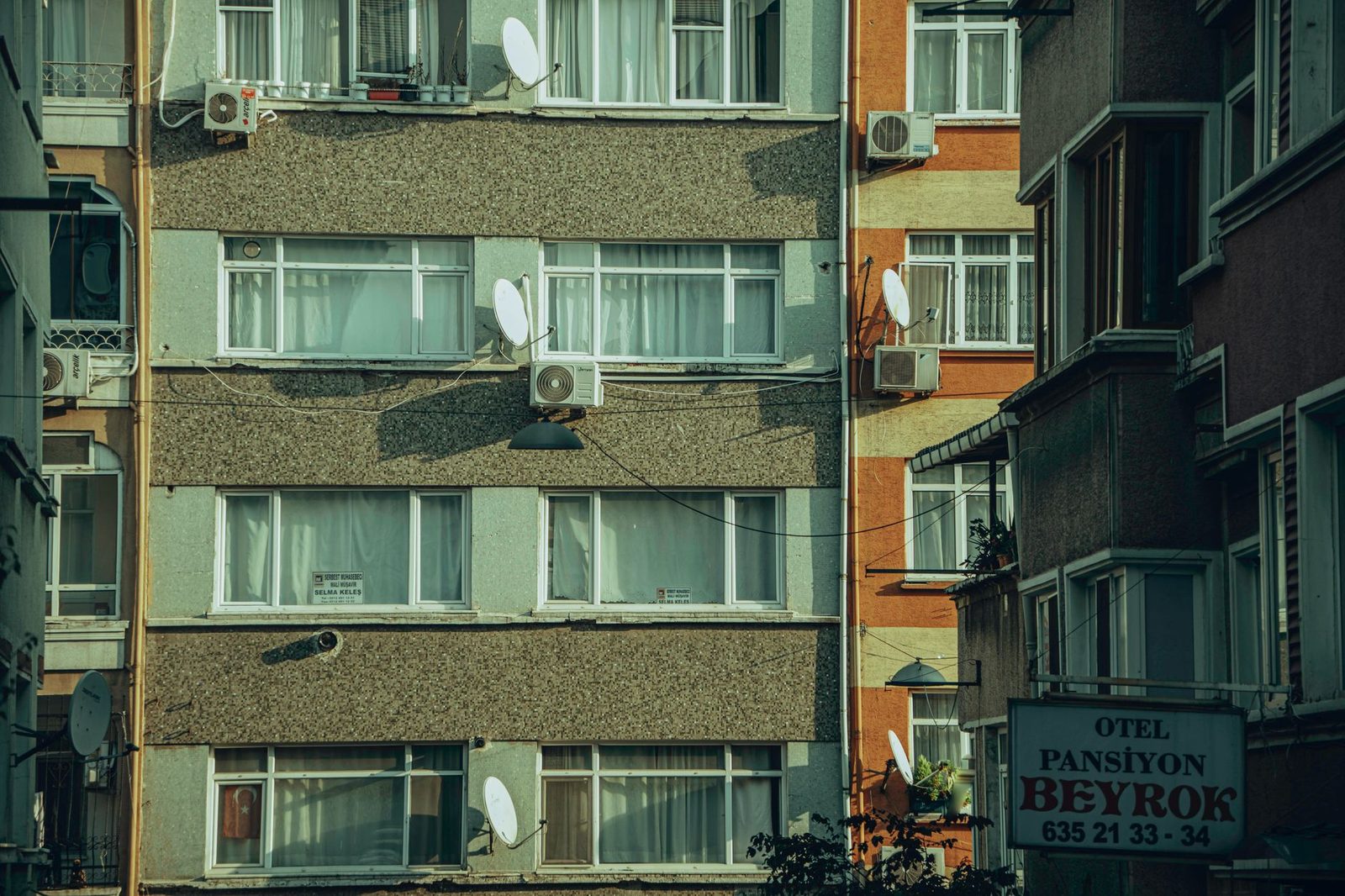
Claim number one: condensate
You need to understand the mechanism to understand the dispute.
An indoor air conditioning unit running in cooling mode dehumidifies the air. Moisture condenses on the heat exchanger, drips into a tray, and drains away through a flexible pipe — either outside by gravity, or into a wastewater drain via a condensate pump. A 3.5 kW wall-mounted split in a humid home easily produces 1 to 2 litres of water per hour during a heatwave. Over a day, that's a bucketful.
Three classic failures:
- The pipe clogs up. Condensate is lukewarm standing water: biofilms and algae develop in it within a few weeks. The tray overflows and water runs down the inside wall.
- The fall is insufficient. A poorly installed gravity drain (slope below 1%, or a back-fall along part of the run) creates a pocket of retained water. Same effect.
- The condensate pump fails. It's an electrical device with a finite lifespan, and many have no high-level cut-out to shut down the compressor.
In a block of flats, water never stays in your home: it passes through the slab or travels along service ducts. The claim immediately becomes a two-party — or even three-party — file.
What insurance covers, in principle
The water damage cover in any multi-risk home insurance policy covers damage caused by "leaks, ruptures, overflows or blockages of pipes, water-using appliances and installations". An air conditioner producing condensate falls into this category with almost every French insurer: it is a water-using appliance.
In practice, in a flat:
| Who is affected | Who pays out |
|---|---|
| Your own decorative finishes (paint, flooring) | Your home policy, water damage cover |
| Damage in the flat below | Your public liability cover, via the IRSI convention |
| The air conditioning unit itself | Rarely: it is the item that caused the claim |
That last point always comes as a surprise. Home insurance repairs the consequences of water damage, not the cause. If the condensate pump has burned out, replacing it is at your expense (unless you have "machinery breakdown" cover or a specific extension).
The IRSI convention: know it before you call
Since 2018, water damage between neighbours or within a co-ownership has been handled under the IRSI convention (Indemnisation et Recours des Sinistres Immeuble), which replaced CIDRE. The principle: for claims up to €5,000 excl. VAT in damage, the insurer of the occupier of the damaged premises handles and pays out directly, with no recourse against the party responsible. Above that threshold, recourse becomes possible again.
That means two things for you:
- Under €5,000, the neighbour below is compensated by their own insurer, which defuses a great many conflicts. You are not being "sued".
- But the claim is still recorded in your name in your policy's claims history. Three water damage claims in five years, and non-renewal at the anniversary date becomes a real possibility.
The blind spot: did you declare your installation?
This is where many cases get complicated.
A home insurance policy is based on declarations: floor area, number of rooms, type of dwelling, presence of a conservatory, a swimming pool, a fireplace. Air conditioning hardly ever appears on standard questionnaires — so in the vast majority of cases, nothing obliges you to declare it spontaneously.
Watch out, however, for two situations:
- The questionnaire does ask the question. Some insurers, since 2025, have added a "heat pump / fixed air conditioning" line. If the question is asked and you answer no while you do have such equipment, article L.113-8 of the French Insurance Code allows the policy to be declared void for intentional misrepresentation. It's rare, but it's ruinous.
- The value of the equipment changes your contents or buildings sum insured. An €8,000 multi-split air-to-air heat pump installed in a house is not a trivial matter if you want it covered in the event of fire or storm.
The sensible move: send a simple email to your insurer mentioning the installation, its date, its output and the installer's name, and keep the acknowledgement of receipt. It costs nothing and shuts down any later argument.
The exclusion that sinks claims: lack of maintenance
Here's the clause to read before all the others. Every home insurance policy excludes, in one wording or another, damage resulting from a demonstrable failure to maintain or repair on the part of the policyholder.
With air conditioning, the loss adjuster will look for exactly three things:
- The maintenance log. Under the 2020 decree codified in articles R.224-59-1 et seq. of the French Environmental Code, servicing is mandatory every two years for air conditioning systems and heat pumps with a rated output between 4 and 70 kW. The professional issues a certificate. Without that certificate, your position is very uncomfortable.
- The condition of the condensate circuit. A pipe colonised by thick biofilm is the signature of years without cleaning.
- Compliance of the installation. Fall, mountings, trap, presence of an overflow cut-out.
In practice, a well-documented file defends itself. Keep in a single folder — physical or scanned — the installation invoice, the refrigeration engineer's certificate of competence, the servicing certificates and photos of the installation. Many homeowners keep all of this in a dedicated folder for administrative documents, which seems trivial until the day the adjuster asks for five documents within forty-eight hours.
Between professional visits, the routine upkeep you can handle yourself hugely reduces the risk: rinsing the filters, dusting the outdoor unit, and above all treating the condensate circuit. Anti-algae tablets for condensate trays, dropped into the tray at the start of the season, markedly reduce biofilm formation — it's the single most cost-effective step on the whole list.
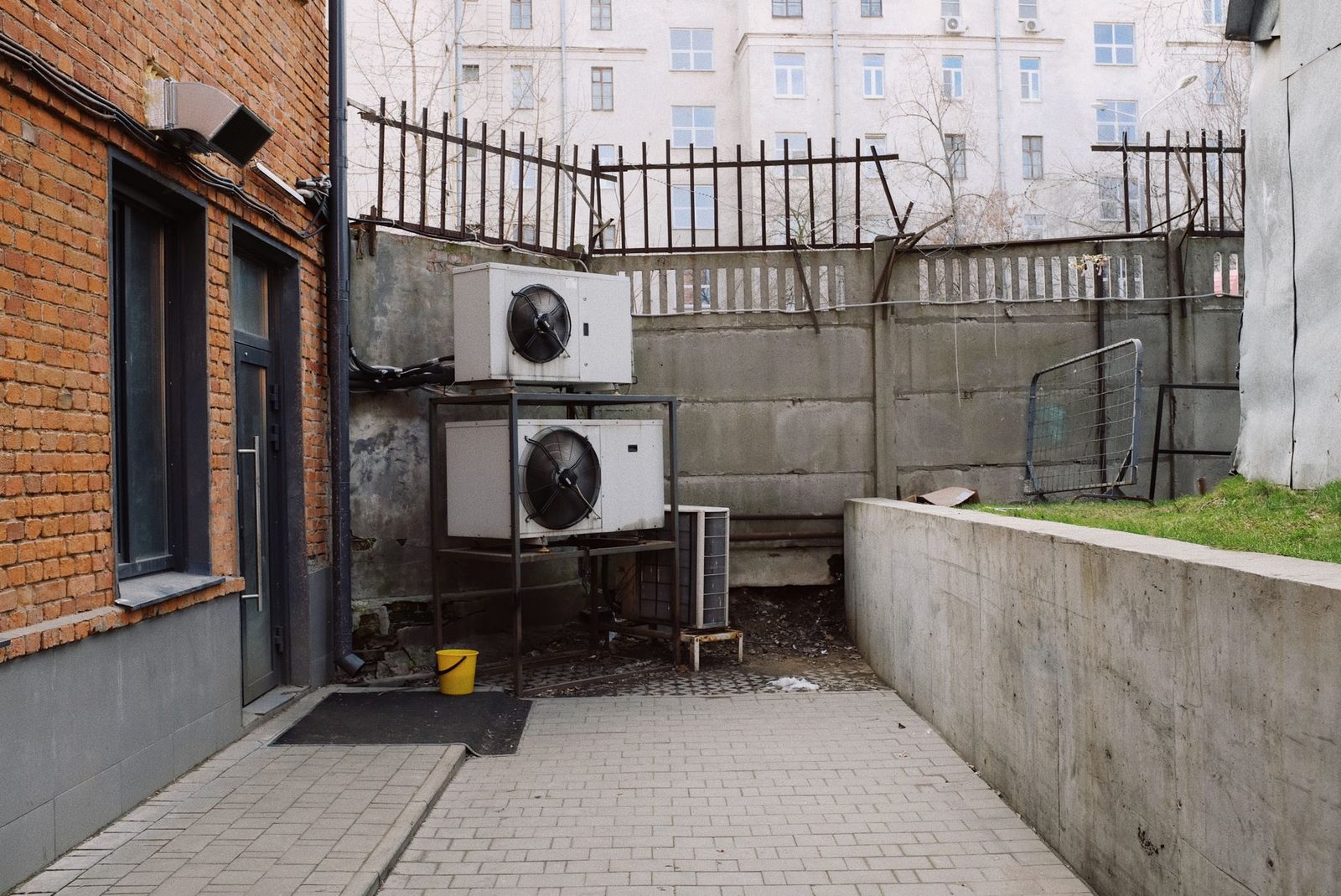
Outdoor unit: storm, hail, theft, falling
The outdoor unit is exposed, heavy (35 to 60 kg for a standard single-split), and mounted either on the ground on feet or on a wall bracket. It concentrates several distinct risks.
Storm, hail, snow
"Storm, hail and snow on roofs" cover (TGN) has been compulsorily included in every French home insurance policy since the 1990 legislation. It covers an outdoor unit damaged by high winds or hail — provided the building itself has suffered damage, or that wind speeds exceeded the policy thresholds (often 100 km/h recorded by Météo-France in the municipality or neighbouring ones).
Two frequent limitations:
- The unit must be properly fixed. A wall bracket unsuited to the machine's weight, and the adjuster will conclude there was a fault in the installation.
- Condenser fins flattened by hail are sometimes reclassified as cosmetic damage if the unit still works. Get the loss of performance formally recorded.
A simple protective canopy for an outdoor unit, correctly sized and leaving airflow unobstructed, limits hail and leaf build-up without degrading the COP. It's also an argument to put to the adjuster: the installation was protected.
Theft
Outdoor units contain copper and aluminium. Thefts do happen, especially at isolated houses and on new-build sites. Home insurance theft cover generally covers property located outside only if it is bolted down or fixed to the structure — check the wording, as some policies apply severe limits to "property outside the home". An anti-theft cage for an outdoor unit, bolted into the slab, costs less than an excess and deters opportunistic thieves.
Falling units and injury: the keeper's liability
Article 1242 of the French Civil Code: you are liable for the things in your keeping. An outdoor unit on a bracket that comes away from the wall and falls onto a car, a terrace or a passer-by engages your public liability, included in your home policy. If the installation is less than ten years old and the cause is faulty workmanship, your insurer will pursue a recourse against the installer and their ten-year (décennale) insurance.
Décennale, biennale, manufacturer's warranty: who guarantees what
This is the second major point of confusion. Three regimes coexist:
| Regime | Duration | What is covered |
|---|---|---|
| Guarantee of perfect completion | 1 year | All defects reported at handover |
| Two-year guarantee (proper functioning) | 2 years | Separable items of equipment: a wall-mounted split falls here |
| Ten-year guarantee (décennale) | 10 years | Defects compromising structural soundness or making the works unfit for their purpose |
The Cour de cassation's case law is consistent: an air conditioner is in principle a separable item of equipment, and therefore falls under the two-year guarantee. But as soon as the failure renders the home unfit for its purpose — recurring water ingress, structural deterioration, inability to heat a dwelling whose heat pump is the sole heat source — the courts switch to the ten-year guarantee. That is precisely the case for an RE 2020 house heated solely by an air-to-air heat pump.
Hence the practical rule: always demand the installer's décennale insurance certificate before signing, check that it does mention the activity "climate engineering" or "heat pump and air conditioning installation" and that it is valid on the date of the works. A certificate dated the previous year is worthless.
On top of this comes the two-year legal conformity guarantee (extended to five years for certain equipment following changes to the French Consumer Code) and manufacturers' commercial warranties — often 3 years on parts, up to 5 years on the compressor with Daikin, Mitsubishi Electric or Atlantic, conditional on annual servicing by an approved professional. That condition is almost always overlooked by buyers, and systematically invoked when a breakdown occurs.
The case of co-ownership
If the damage originates from your unit but travels through the common parts, or if the outdoor unit is mounted on a façade (a common part), the file involves the building's insurance.
Points to remember:
- Insurance for the building is mandatory under the ALUR law, and the managing agent must take it out.
- An installation fitted without authorisation from the general meeting on a common part puts you in a very unfavourable position: the building's insurer can pursue a recourse against you, and the general meeting can demand removal at the owner's expense.
- Keep the minutes of the general meeting authorising the works: it is the key document in the file.
Filing a claim: the procedure to follow
Deadlines are short and non-negotiable.
- Stop the leak. Switch the unit off at the breaker, empty the tray, put down a container. A wet-and-dry vacuum lets you remove several dozen litres quickly and limits the spread — that's often what makes the difference between €800 and €4,000 of damage.
- Photograph everything before any clean-up. Tray, pipe, marks on the wall, the neighbour's ceiling. Timestamp enabled.
- File the claim within 5 working days (article L.113-2 of the French Insurance Code). Via your online account or by recorded delivery letter.
- Complete a joint water damage report with the neighbour concerned, in two copies.
- Call in a refrigeration engineer to produce a technical report on the cause of the failure. This document shapes everything that follows.
- Throw nothing away before the adjuster's visit: not the condensate pump, not the pipe, not the damaged materials.
If the adjuster's findings go against you, you can request a second opinion assessment (at your own expense, or covered if your policy includes legal protection), then refer the matter free of charge to the Médiateur de l'Assurance once you have exhausted the internal complaints procedure.
Five habits that limit the risk
- Fit an overflow cut-out. A simple high-level switch that shuts down the compressor costs a few tens of euros and prevents the overwhelming majority of condensate claims. Ask for it explicitly on the quote.
- Install a connected water leak detector under the indoor unit or in the false ceiling where the drain runs: the alert reaches your phone before the neighbour's ceiling soaks through.
- Flush the condensate circuit at the start and end of the season, with an anti-algae tablet to back it up.
- Comply with the mandatory two-yearly servicing and archive the certificates.
- Photograph the installation at handover: mountings, drain fall, feet, clearances. Those photos are worth an expert report three years later.
Sources
- French Insurance Code, articles L.113-2, L.113-8 and L.121-1
- French Civil Code, articles 1242 and 1792 (ten-year guarantee)
- French Environmental Code, articles R.224-59-1 et seq. (mandatory servicing of air conditioning systems)
- Convention IRSI, France Assureurs
- Médiateur de l'Assurance — La Médiation de l'Assurance
- Service-Public.fr, factsheets "Dégât des eaux" and "Assurance habitation"
- Law no. 89-1009 of 31 December 1989 (mandatory storm cover)
Need an air conditioning solution?