How Much Does Air Conditioning Really Cost on Your Electricity Bill in 2026?

L'équipe Proclimo
22 Aug 2026 - 08 min read
Every year, the same back-to-school ritual plays out: the September electricity bill lands, and the homeowner who has just lived through their first air-conditioned summer discovers a figure they hadn't budgeted for. Or, conversely — and this happens more often than you'd think — they discover the difference is far smaller than the neighbour had promised.
The summer of 2026 was particularly instructive in this respect. Between the heatwaves of late June and the first half of August, a large share of France's housing stock ran its air conditioners far longer than in previous summers. And with VAT cut to 5.5% in July 2025, followed by a wave of equipment upgrades, hundreds of thousands of households went through their first full season with an air-to-air heat pump.
The trouble is that the figures doing the rounds are either alarmist or promotional. You'll read "€300 per summer" just as easily as "only €20 a month". Both are true — for different situations. Here's how to work out your own number, without marketing spin or guesswork.
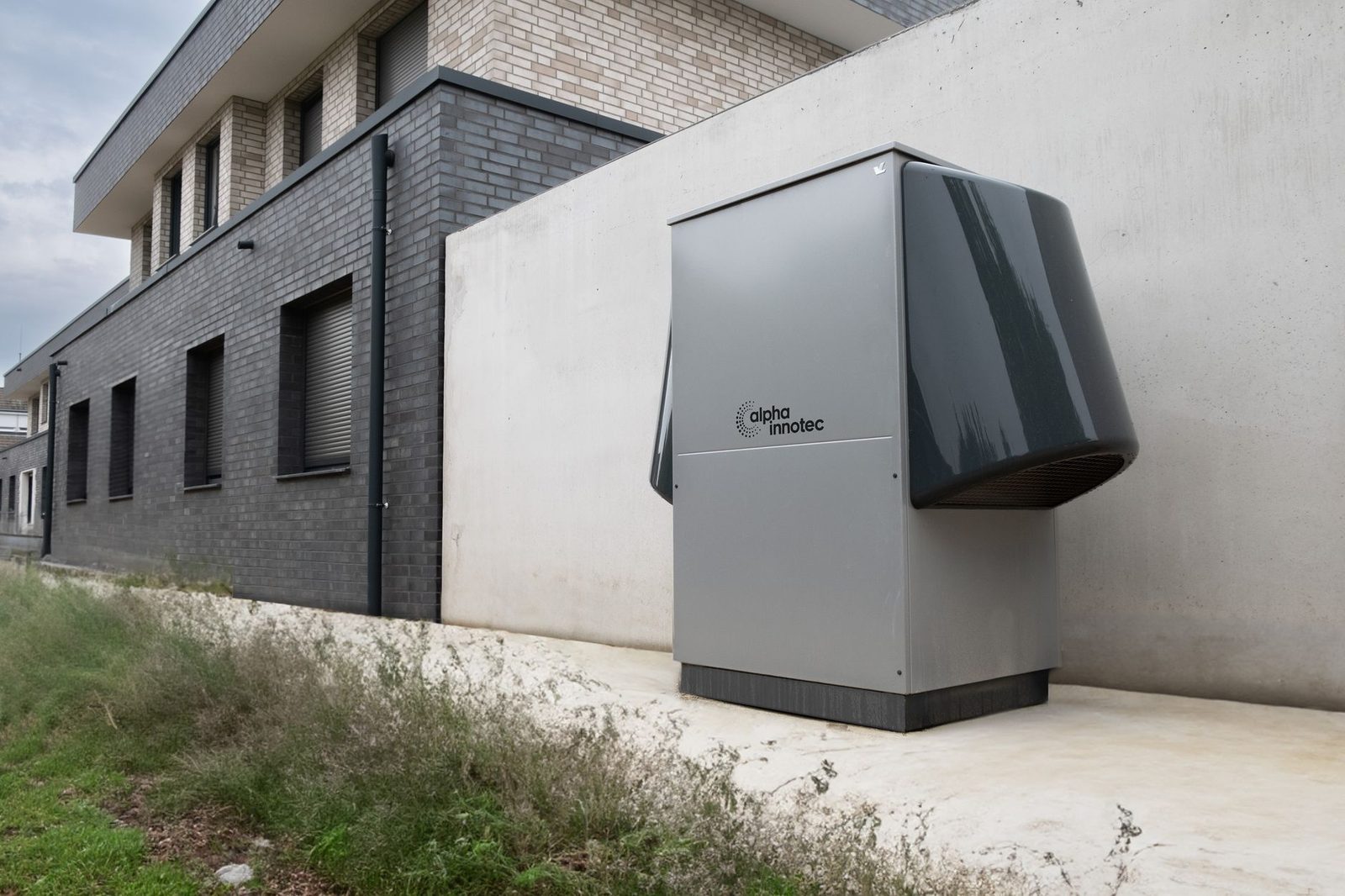
The fundamental confusion: cooling capacity ≠ electrical power
This is mistake number one, and it skews every back-of-the-envelope calculation. When an installer or a product sheet advertises a "3.5 kW air conditioner", they're talking about cooling capacity: the amount of heat the machine can extract from the room. That is not what the machine draws at the meter.
An air-to-air heat pump is a machine for moving heat, not producing it. It doesn't "make" cold, it transports heat from inside to outside. That's why it delivers several kilowatts of cooling for a single kilowatt of electricity absorbed.
The ratio between the two is called the EER (instantaneous efficiency) or, more usefully, the SEER — Seasonal Energy Efficiency Ratio, the average seasonal efficiency measured over an operating profile representative of a cooling season. This is the figure that appears on the European energy label, and it's the only one that means anything when estimating a bill.
| Energy class (cooling) | Indicative SEER | Interpretation |
|---|---|---|
| A+++ | ≥ 8.5 | Recent high-end inverter |
| A++ | 6.1 – 8.5 | Current good-quality standard |
| A+ | 5.6 – 6.1 | Entry-level wall-mounted |
| A | 5.1 – 5.6 | Often monobloc / portable units |
| Portable monobloc | 2.6 – 3.5 | The worst ratio on the market |
A SEER of 7 means that, averaged across the season, the machine delivers 7 kWh of cooling for every 1 kWh of electricity consumed. A portable air conditioner with a SEER of 2.8 uses two and a half times more for the same service — and that's before counting the losses from the exhaust hose running through a partly open window.
The calculation formula, in three lines
You don't need thermal modelling software to estimate your consumption. Three figures are enough.
Annual consumption (kWh) = Cooling demand (kWh cooling) ÷ SEER
Cost (€) = Consumption (kWh) × Price per kWh (€)
That leaves the cooling demand to estimate. The clearest method for a homeowner is to think in terms of operating hours at average load:
Cooling demand ≈ Nominal cooling capacity × Operating hours × Average load factor (≈ 0.5 to 0.6)
The load factor is crucial: an inverter heat pump almost never runs at full power. It modulates. After the initial pull-down phase — often 20 to 40 minutes — it drops to 30–50% of its output to hold the setpoint. This is precisely where the equipment's frugality is decided, and it's why a correctly sized machine (neither undersized nor oversized) consumes less.
Worked example: a 30 m² living room near Lyon
Let's take a concrete, checkable case.
- Wall-mounted mono-split with 3.5 kW cooling capacity, SEER 7.0 (class A++)
- Use: 6 hours a day, 45 days over the summer (late June to mid-August 2026, a realistic profile)
- Average load factor: 0.55
Cooling demand = 3.5 × 6 × 45 × 0.55 = 519 kWh of cooling
Electricity consumption = 519 ÷ 7.0 = 74 kWh
At the regulated electricity tariff (base option), which sits at around €0.20/kWh including tax in 2026 following the price changes approved by the French energy regulator (CRE), that gives:
74 × 0.20 = roughly €15 for the whole summer.
Yes, fifteen euros. It's the figure that surprises readers most, and it is entirely consistent with field measurements. Cooling a living room with a recent, well-adjusted machine is a marginal expense.
So why do some people pay €200?
Because the case above is the favourable one. Here are the five factors that blow the result out of proportion.
1. The multi-split that cools the whole home
Going from a single living-room mono-split to a four-unit multi-split serving the living room, kitchen and two bedrooms mechanically multiplies the cooling demand by three or four. The same calculation applied to a 10 kW cooling system used 8 hours a day easily gives 250 to 400 kWh over the summer, or €50 to €80.
2. Running all night, continuously
This is the most underestimated item. Many households leave the bedroom units running all night during hot spells. Eight night-time hours × 20 nights, across two bedrooms, is no longer occasional use: it doubles the total running time.
3. The portable air conditioner
A portable monobloc combines three handicaps: a catastrophic SEER, parasitic air infiltration through the window where the hose passes, and often on/off rather than modulating operation. For an equivalent service — which is already generous, since it cools far less effectively — it uses two to three times more than a fixed split. If you use one, a window sealing kit for portable air conditioners in zipped fabric is the only accessory that genuinely improves performance: it eliminates the reintroduction of hot air, which accounts for much of the waste.
4. A setpoint that's too low
Every degree lower on the setpoint increases consumption by roughly 7 to 10%. Going from 26 °C to 21 °C isn't "a bit more": it's 40 to 50% extra consumption, for comfort that is often worse (thermal shock on entering, dried-out air, irritated throat).
ADEME recommends not going more than 5 to 7 °C below the outdoor temperature, and aiming for 26 °C during the day. That advice isn't purely environmental: it's also the range in which the machine modulates best.
5. A poorly insulated home
Air conditioning in a badly insulated home, with unshaded south-facing glazing, is working against a permanent heat gain. It never really stops modulating high. This is the only case where the bill can genuinely hurt — and it's also the case where the best investment isn't the air conditioner, but an external blind.
Summary table: what an air-conditioned summer costs in 2026
Estimates for the 2026 summer season, based on €0.20/kWh including tax, class A++ machines.
| Configuration | Use | kWh consumed | Cost for the summer |
|---|---|---|---|
| Mono-split 2.5 kW, bedroom | 8 h/night, 25 nights | ~50 kWh | ~€10 |
| Mono-split 3.5 kW, living room | 6 h/day, 45 days | ~74 kWh | ~€15 |
| Bi-split living room + bedroom | 7 h/day, 50 days | ~160 kWh | ~€32 |
| Four-unit multi-split, house | 8 h/day, 55 days | ~330 kWh | ~€66 |
| Portable monobloc 2.6 kW | 6 h/day, 40 days | ~215 kWh | ~€43 |
| Poorly insulated house, multi-split | 12 h/day, 60 days | ~700 kWh | ~€140 |
These values are orders of magnitude, not contractual guarantees. They assume proper maintenance and appropriate sizing. But they frame the debate: for reasonable use in France's temperate climate, we're talking tens of euros, not hundreds.
Measure rather than assume
All this arithmetic remains an estimate. The only way to know your own figure is to measure it. There are two approaches, depending on the type of installation.
For a portable air conditioner or a monobloc plugged into a socket, a plug-in energy monitor with kWh meter costs around fifteen euros and shows cumulative consumption in kWh, the calculated cost and instantaneous power draw. It's the most profitable investment you can make before settling a family argument.
For a fixed split wired to a dedicated circuit at the consumer unit, you'll need a modular energy meter for the consumer unit, fitted on the DIN rail upstream of the air conditioner's breaker. That job is one for an electrician if you're not comfortable working inside the panel. Some brands also offer built-in consumption tracking via their Wi-Fi gateway — convenient, but often based on a software estimate rather than an actual measurement.
Finally, the Linky meter lets you view your hourly load curve in the Enedis customer area. By comparing a day without air conditioning to a day with it, the machine's contribution is fairly easy to isolate.
Off-peak hours: the overlooked lever of summer 2026
Since the off-peak time-slot reform came into force in 2026, part of the cheap-rate window has been shifted to the afternoon (roughly 11 a.m. to 5 p.m. depending on the area), to align with national solar output. For a household on a peak/off-peak tariff, that changes a great deal: cooling the house can now be done partly during the cheap window.
The resulting strategy is simple: pre-cool. Bring the home's temperature down during the off-peak afternoon, then raise the setpoint — or switch off — in the late afternoon when the tariff returns to peak rate. The thermal mass of the walls takes over for one to three hours depending on the building.
That does require the ability to schedule. Most recent splits offer weekly programming via the remote control, but the interface is often poor. A universal Wi-Fi control module for infrared air conditioners, which learns the remote's codes and lets you build time-based scenarios from a smartphone, solves the problem for around thirty euros on machines with no built-in connectivity.
Maintenance, the silent multiplier
A clogged filter reduces airflow across the indoor heat exchanger. The machine compensates by running longer to reach the same setpoint. Figures reported by industry professionals put the extra consumption at between 5 and 15% for filters neglected over a whole season, and more if the outdoor exchanger is blocked by vegetation, lint or dust.
The minimum protocol, to do yourself every two to three weeks in peak season:
- Remove and rinse the indoor unit's filters in lukewarm water, and let them dry completely before refitting.
- Dust the fins of the outdoor exchanger, with the fan stopped and the machine switched off at the mains.
- Clear 50 cm of free space around the outdoor unit, and check that no hedge is boxing it in.
- Check that the condensate drain is flowing freely.
A can of disinfectant air conditioner cleaner, applied to the indoor exchanger at the start and midpoint of the season, is a useful complement to cleaning the filters — especially if odours appear on start-up, a classic sign of microbial growth on the damp exchanger.
It's worth recalling that professional servicing is mandatory every two years for installations with a nominal cooling capacity between 4 and 70 kW (decree no. 2020-912). Beyond the legal obligation, this visit is also when the refrigerant charge is checked: an installation with a slow leak loses efficiency long before it breaks down.
And in winter? The real consumption item
Let's be clear: on a reversible air-to-air heat pump, winter heating consumption is almost always 5 to 15 times higher than summer cooling consumption. The heating season lasts five months, the temperature gap to bridge is far larger, and operation is near-continuous.
It's the SCOP (seasonal coefficient of performance in heating mode) that then governs the bill, and it degrades as the outdoor temperature falls, notably because of defrost cycles. A machine rated SCOP 4.6 in a temperate zone can drop below 3 in a continental winter.
In other words: if you're choosing equipment in 2026, don't decide on SEER alone. SEER decides €20 per summer; SCOP decides several hundred euros per winter.
Key takeaways
- The kW rating on the label is not the consumption: divide the cooling demand by the SEER.
- For living-room use with a recent split, summer 2026 typically costs €15 to €40.
- Cases at €150 and above do exist, but they combine multi-split systems, constant night-time use and poor insulation.
- Every degree lower on the setpoint costs 7 to 10% extra consumption: 26 °C is the right setting.
- A portable air conditioner uses two to three times more than a fixed split, for less comfort.
- The new afternoon off-peak schedule makes pre-cooling economically worthwhile.
- Cleaning the filters is the cheapest and most profitable action of the season.
To check the rates applicable to your contract, consult the schedules published by the Commission de régulation de l'énergie and the Médiateur national de l'énergie; for usage recommendations, ADEME publishes an updated fact sheet on home cooling each year.
Need an air conditioning solution?