Air Conditioning Noise and Your Neighbours: What the Law Says in 2026 and How to Avoid a Dispute

L'équipe Proclimo
30 Aug 2026 - 08 min read
There is one sentence refrigeration engineers have been hearing more and more often since this summer: "the neighbour installed air conditioning, and now we can't sleep with the window open."
The VAT cut to 5.5% on air-to-air heat pumps, enacted in July 2026, triggered an unprecedented volume of installations in France. Hundreds of thousands of additional outdoor units are now running in adjoining gardens, on balconies, against gable walls and in the courtyards of apartment blocks. Mechanically, neighbour disputes are following the same curve.
And in nine cases out of ten, the issue is approached the wrong way round. The exasperated neighbour talks about "decibels", the installer replies "my machine is rated 48 dB(A) on the data sheet", the town hall refers the matter to the municipal police, and nobody mentions the only concept that matters legally: emergence.
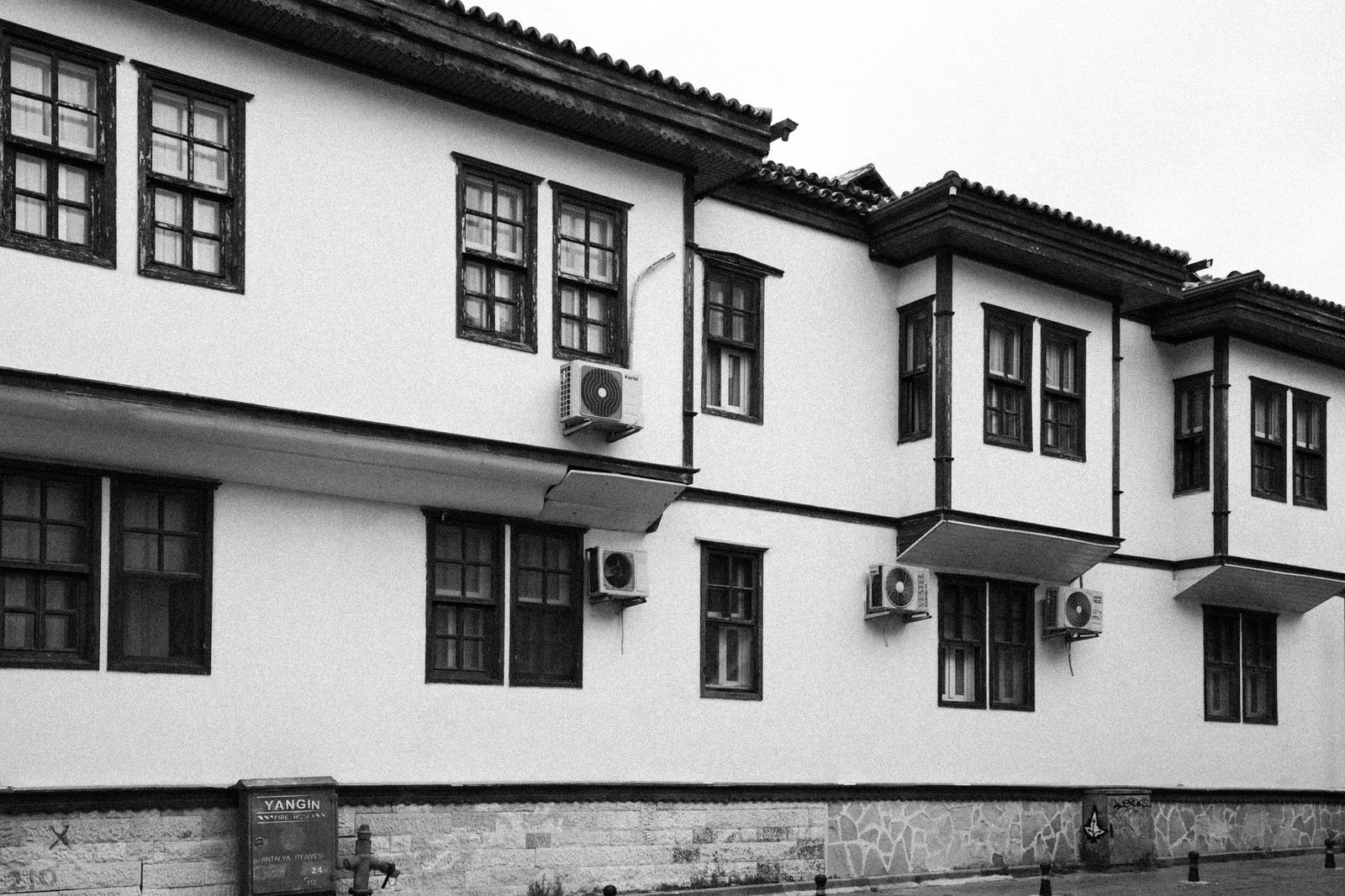
Air conditioning noise is not judged in absolute decibels
This is the founding misunderstanding behind almost every dispute. French regulations on neighbourhood noise — articles R.1336-4 to R.1336-11 of the Public Health Code, derived from amended decree no. 2006-1099 — set no absolute ceiling in dB(A) for an individual piece of equipment at a private home.
What they do regulate is emergence: the difference between the ambient noise level with the machine running and the residual noise level without it, measured at the complainant's home.
The thresholds are clear:
| Period | Maximum permitted overall emergence |
|---|---|
| Daytime (7 a.m. – 10 p.m.) | 5 dB(A) |
| Night-time (10 p.m. – 7 a.m.) | 3 dB(A) |
On top of this come corrective terms linked to the cumulative duration of the noise: the longer the noise lasts within the reference period, the smaller the tolerance. A machine running continuously at night is subject to the strictest correction (0 dB), while a machine that only kicks in for a few minutes benefits from a +6 dB correction.
In practice, this means two counter-intuitive things:
- An outdoor unit rated 60 dB(A) installed beside a ring road may be perfectly legal, because the residual noise is already very high and the emergence is low.
- The same machine at 42 dB(A) in a rural hamlet where the night-time background noise drops to 25 dB(A) is in clear breach.
Emergence isn't about "does it make noise". It's about "does it change the soundscape at the neighbour's home". Two completely different logics.
The special case of spectral emergence
Since the 2017 overhaul, the regulations also provide for spectral emergence by octave band: 7 dB in the 125 and 250 Hz bands, 5 dB in the 500 to 4000 Hz bands. This is the criterion that makes it possible to penalise "low-frequency" noise, typical of a compressor or a poorly balanced fan blade, even when the overall emergence stays below the thresholds. A dull humming that travels through walls can be illegal while a consumer-grade sound level meter barely registers a variation.
What an outdoor unit's noise actually does
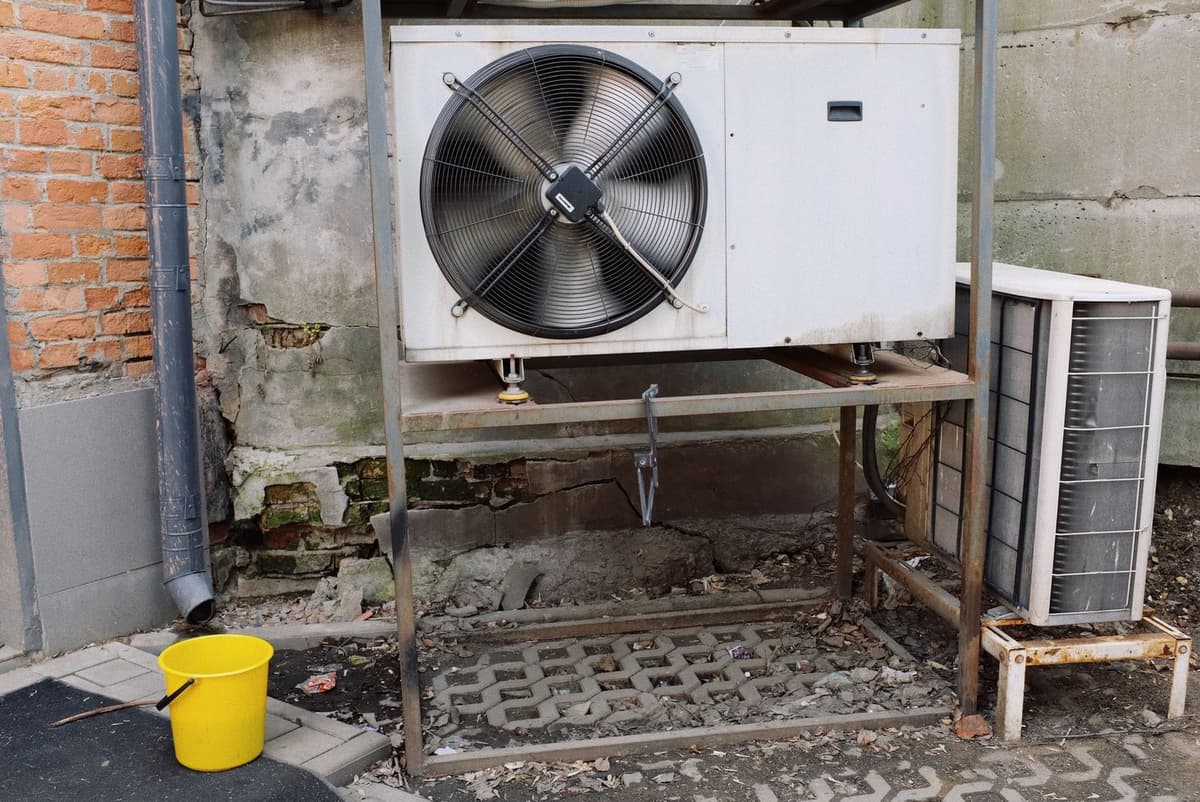
The outdoor unit of an air-to-air heat pump produces three families of noise, and they are not dealt with in the same way.
Airflow noise, generated by the fan blade pushing air through the exchanger. It is a broadband rush of air, fairly high-pitched, and very sensitive to rotation speed. It rises sharply when the machine runs at full load — so during heatwaves, and when heating in very cold weather.
Compressor noise, lower in pitch, transmitted both through the air and through the structure. This is the one that "gets through" walls and wakes people at 3 a.m.
Structure-borne vibration, transmitted through wall brackets or the supporting slab. This is the most insidious noise of all: the neighbour doesn't hear the machine, they hear their own wall vibrating. A wall bracket bolted directly into a shared gable wall is the worst possible configuration.
To this must be added two operating modes ignored by data sheets:
- Defrosting in winter. The cycle reverses, the compressor changes regime, the fan stops then restarts: the acoustic signature is abrupt and repeats every 40 to 90 minutes in damp weather.
- Start-up on non-inverter or badly sized machines, with peaks of 6 to 10 dB above the nominal running level.
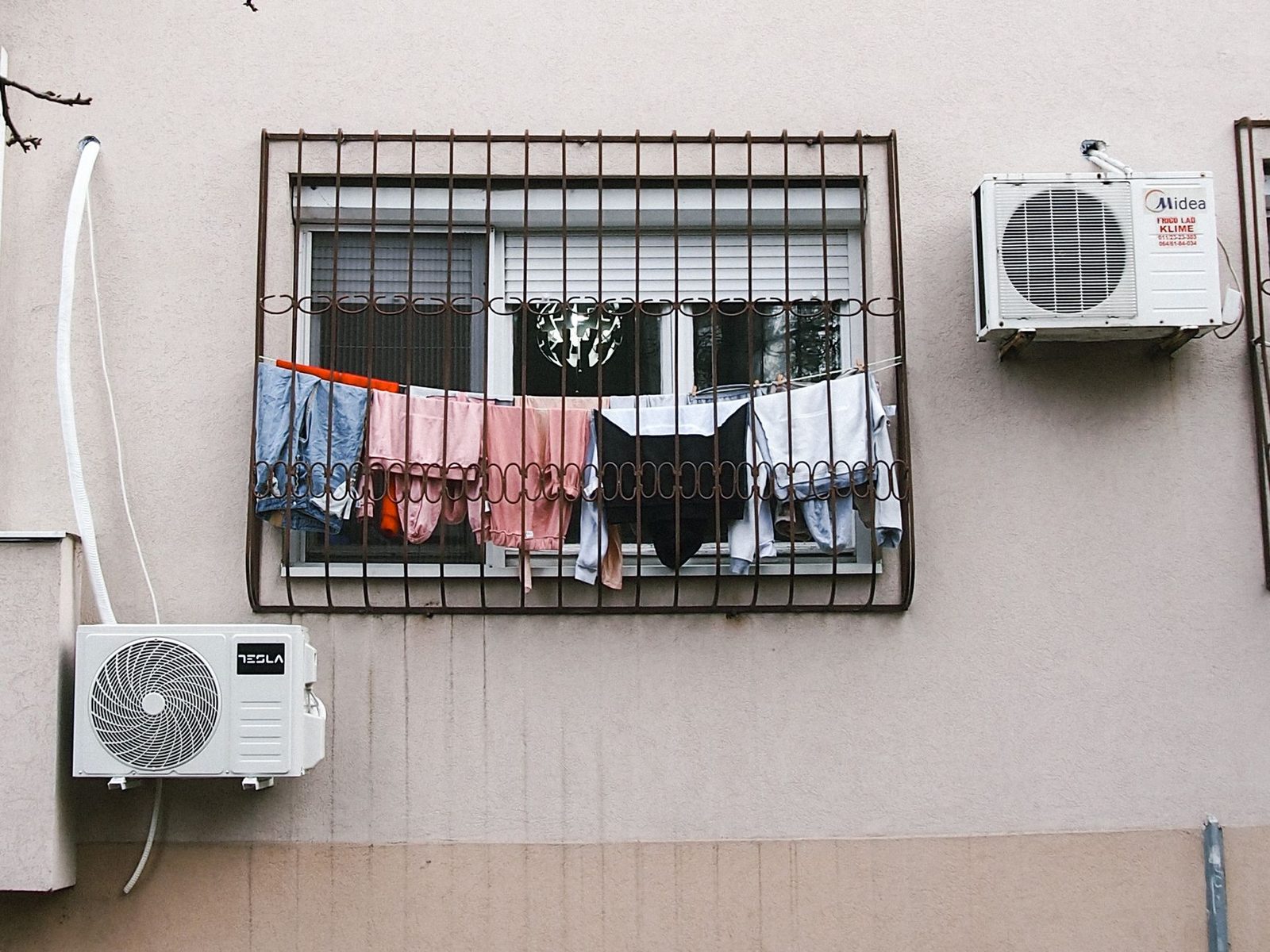
Reading a data sheet without being fooled
Manufacturers publish figures that have almost nothing to do with what the neighbour actually experiences.
Sound pressure level (Lp): this is the marketing figure, expressed in dB(A) "at 1 m" or sometimes "at 3 m", in free field, in silent mode. It is optimistic by design.
Sound power level (Lw): this is the machine's intrinsic physical value, independent of distance. It is the only usable figure for a predictive calculation. It must be declared in the product data sheet under the European ecodesign regulation, and it is systematically 8 to 12 dB above the Lp shown in large print.
Quick free-field rule of thumb: pressure drops by roughly 6 dB with every doubling of distance. A machine with an Lw of 62 dB(A) will give, broadly speaking:
| Distance | Estimated level (free field) |
|---|---|
| 2 m | ≈ 48 dB(A) |
| 4 m | ≈ 42 dB(A) |
| 8 m | ≈ 36 dB(A) |
| 16 m | ≈ 30 dB(A) |
But beware: as soon as there are reflecting surfaces — a wall behind, a wall to the side, an enclosed courtyard — you add 3 dB per surface. A machine in the corner of a courtyard means +6 dB compared with free field. That is exactly the configuration in which disputes flare up.
Before any purchase, insist on the Lw value in heating mode at full load, not the night mode figure. Reputable manufacturers (Daikin, Mitsubishi Electric, Atlantic, Toshiba) publish it in their technical catalogues.
Before filing a complaint: the steps that settle 80% of cases
In practice, most disputes are resolved without a bailiff or a court. Here is the order in which to proceed.
1. Gather objective evidence, calmly
Before writing anything, document the problem. A simple portable digital sound level meter of class 2 lets you record orders of magnitude, even if the readings are not legally binding. What matters is not absolute accuracy but the difference: a reading with the window open and the machine running, then with the machine switched off, in the same place, at the same time of day.
Note the date, time, duration and weather. A log book kept over three weeks carries infinitely more weight than a one-off phone recording. Some models have a continuous logging function that makes the exercise much easier.
2. Talk to the neighbour before writing
It sounds naive, but statistically it is the most effective step. In most cases, the owner has absolutely no idea their machine can be heard next door — especially if their own bedroom is on the other side of the house. Many remote controls have a silent or quiet mode that limits fan speed and brings the level down by 3 to 6 dB, often with no noticeable loss of comfort in mid-season.
Another underused setting: time scheduling. An air-to-air heat pump that brings the home back up to temperature between 10 p.m. and 6 a.m. can often be shifted by an hour or two with no real consequence.
3. Deal with structure-borne transmission
If the machine is wall-mounted, this is the first job to tackle. Replacing the original anti-vibration mounts — often cheap rubber washers — with anti-vibration pads for air conditioning sized to the unit's actual weight eliminates a huge share of structure-transmitted noise. Cost: a few tens of euros, with an immediate and measurable effect.
Ideally, the machine should be brought down to ground level onto ground-mounted anti-vibration supports or a decoupled slab. An outdoor unit should never be fixed to a wall shared with a bedroom, nor to a lightweight partition.
4. Deal with airborne noise
Once vibration has been addressed, you can tackle direct radiation. The solutions, in order of increasing effectiveness:
- Reorient the air discharge: never aim the fan towards the property boundary. A quarter turn sometimes changes everything.
- A solid acoustic screen, with no gaps, positioned between the machine and the neighbour. Careful: a screen only works if it is heavy (≥ 10 kg/m²) and taller than the line of sight. An open-slat screen or a hedge does strictly nothing acoustically; they only address the visual aspect.
- A dedicated acoustic enclosure or hood, on the strict condition that the air passage sections specified by the manufacturer are respected. A sealed enclosure reduces efficiency, raises condensing pressure and can trip the machine into safety shutdown. Models designed for heat pumps leave the discharge face open and treat the sides.
- Adding an outdoor sound-absorbing acoustic panel on the reflecting surface behind the unit, when it sits in a courtyard corner.
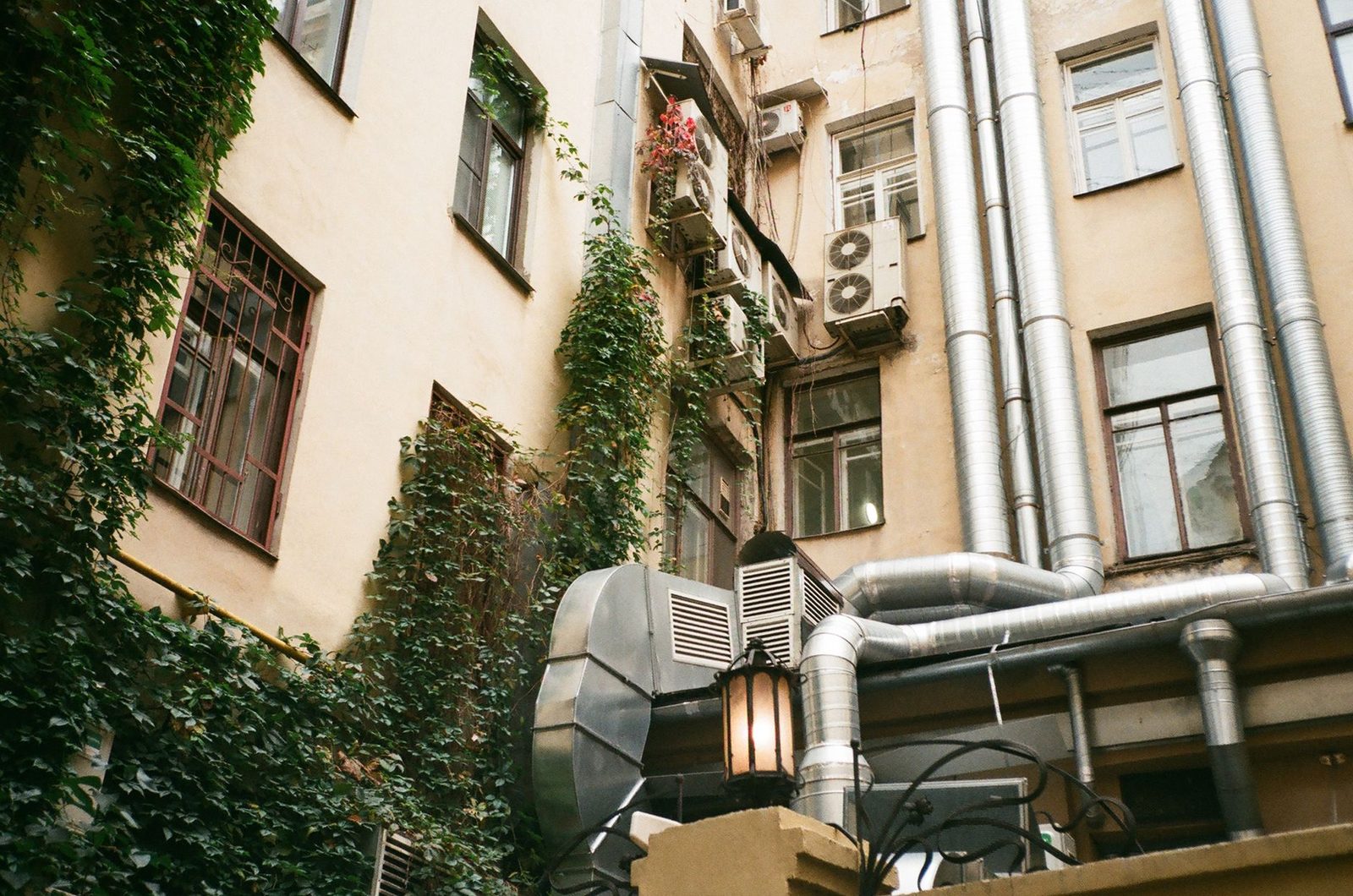
If dialogue fails: the procedure
The route is well marked out and it is best to follow it in order — a judge takes a dim view of anyone skipping the amicable stages.
Step 1 — The registered letter. A recorded-delivery letter to the owner of the installation, citing articles R.1336-4 et seq. of the Public Health Code, describing the nuisance factually (times, duration, rooms affected) and requesting compliance within a reasonable deadline (30 days is customary).
Step 2 — The town hall. The mayor holds policing powers over neighbourhood noise. Many local authorities have a hygiene and health department authorised to carry out standardised acoustic measurements (NF S 31-010). This is free in most cases and the report carries evidential weight. In some départements, it is the ARS (regional health agency) that steps in.
Step 3 — The conciliator of justice. Referral is free, mandatory for civil disputes below €5,000, and often effective once a measurement report already exists.
Step 4 — The protection litigation judge. They can order compliance under penalty payments, or even removal of the installation, and award damages on the grounds of abnormal neighbourhood nuisance — an autonomous case-law principle, distinct from the Public Health Code, which does not even require an emergence threshold to be exceeded if the nuisance is established.
On the administrative sanctions side, breaching the Public Health Code provisions is a class 3 offence (up to €450), with the possibility of seizing the equipment in the most serious cases.
The co-ownership and planning angle, often overlooked
Two points bring down many installations, quite apart from any question of decibels.
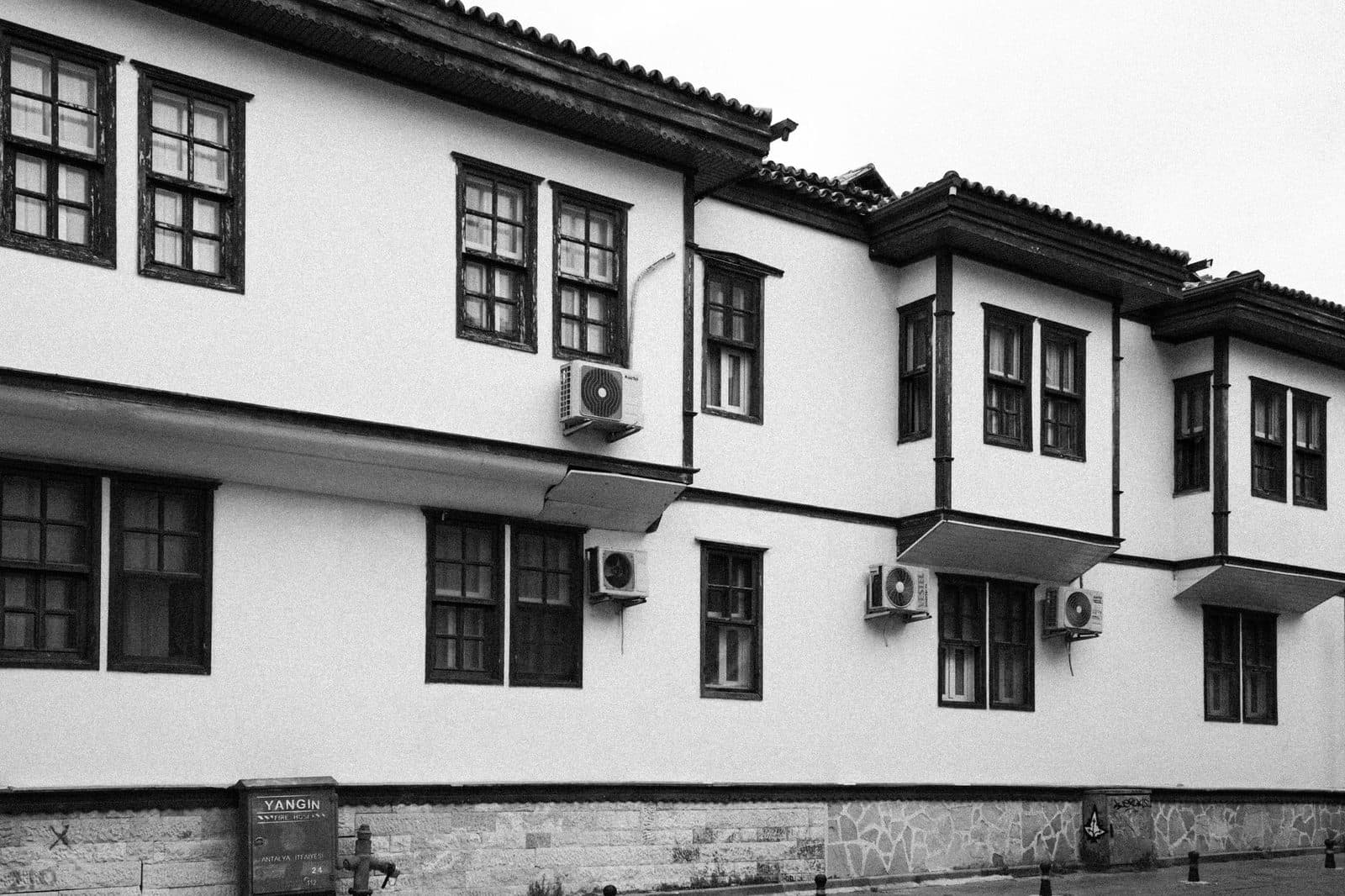
In a co-owned building, an outdoor unit installed on the façade, on a balcony or on the roof alters the exterior appearance of the building and often affects common parts. It requires authorisation from the general meeting. Installation without a proper vote exposes the owner to restoration works at their own expense, even if the machine is perfectly silent.
In planning terms, installing an outdoor unit visible from public space in principle requires a prior works declaration. In protected areas (the surroundings of a listed monument, a remarkable heritage site), the opinion of the Architecte des Bâtiments de France is mandatory.
Finally, some local PLU planning rules now set explicit siting requirements: a minimum setback from boundary lines, a ban on street-facing façades, an integration obligation. A quick look at the zoning rules before requesting a quote saves months of hassle.
The checklist before having a unit installed (or before accepting a quote)
- Ask for the Lw in dB(A), not just the Lp at 1 m, and at full load.
- Position the unit as far as possible from the boundary line and from bedrooms — yours as well as your neighbours'.
- Never install it in a courtyard corner or between two parallel walls.
- Never fix it to a party wall or to a lightweight bedroom partition.
- Insist on properly sized anti-vibration supports, not generic washers.
- Orient the air discharge away from neighbouring properties.
- Check the co-ownership rules and the PLU before signing.
- Have the quote include a written commitment to comply with the Public Health Code.
- Plan for an indoor thermometer and hygrometer to check that silent mode does not genuinely degrade comfort before giving up on it.
Key takeaways
Air conditioning noise is not a matter of opinion: it is a matter of measurement, and the measurement that counts is taken at the neighbour's home, not on the manufacturer's data sheet. Five decibels of emergence by day, three at night — everything else is negotiation.
The good news is that the vast majority of situations can be fixed for a few hundred euros: decent anti-vibration pads, a well-placed heavy screen, night mode switched on and an adjusted time schedule are enough in most residential configurations.
The bad news is that these fixes cost ten times more after installation than at the moment the location is chosen. With the 2026 wave of installations, the best acoustic investment is still the one made before the hole is drilled in the wall.
Sources and references: Code de la santé publique, articles R.1336-4 to R.1336-11; decree no. 2006-1099 of 31 August 2006 on combating neighbourhood noise; order of 5 December 2006 on measurement procedures; standard NF S 31-010; Centre d'information sur le bruit (CidB); ADEME, guides on heat pumps; service-public.fr, "Nuisances sonores" factsheet.
Need an air conditioning solution?