Air Conditioner Noise: Legal Limits, Measurements and Remedies in Neighbour Disputes

L'équipe Proclimo
27 Aug 2026 - 08 min read
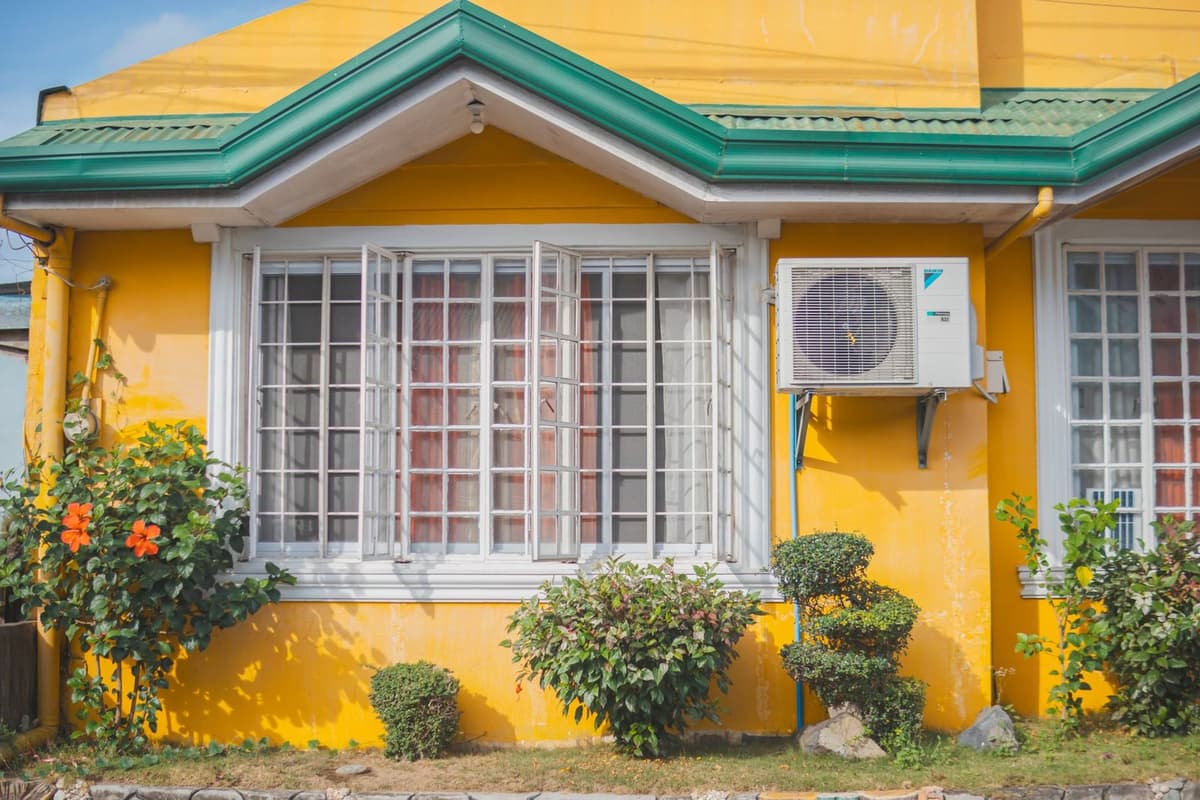
The summer of 2026 was the summer of mass installations. With VAT cut to 5.5% on air-to-air heat pumps in July, tens of thousands of outdoor units were bolted to façades, set down on terraces or pressed against boundary walls — often in a rush, squeezed between two heatwaves.
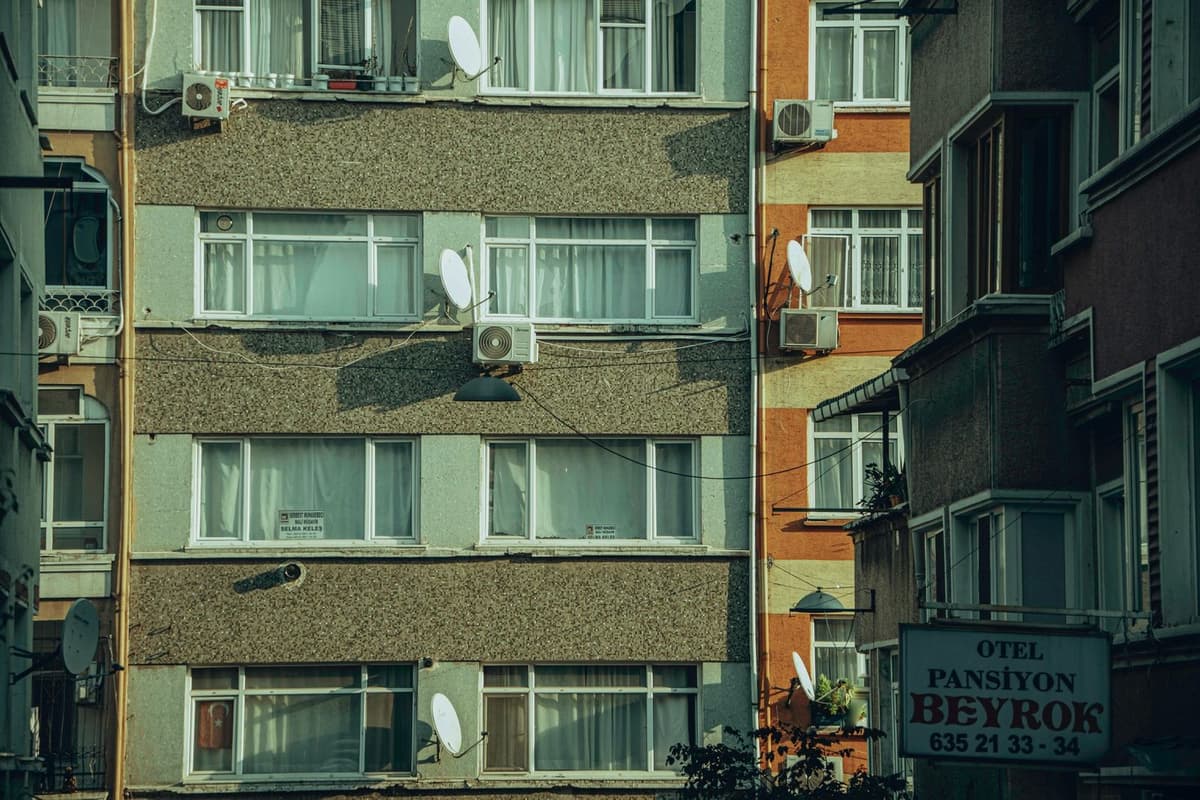
By late August, the second wave arrives: the letters. Registered mail, police blotter entries, summonses to conciliation. Because an outdoor unit isn't just a piece of thermal equipment: it's a fan and a compressor running, sometimes at night, three metres from the neighbour's bedroom.
And that's where everyone's reasoning goes off the rails. The owner says, "my unit is certified at 48 dB, that's less than a dishwasher." The neighbour says, "I can hear it, so it's illegal." Neither is right, because French regulations don't reason in absolute levels but in emergence — that is, the difference between ambient noise with and without the equipment running.
The text that actually applies: Article R.1336-5 of the French Public Health Code
This is the legal basis for almost every dispute. The Public Health Code defines neighbourhood noise caused by an activity or a piece of equipment as an offence as soon as it disturbs the peace of the neighbourhood, and sets numerical limits.
For what is termed "behavioural or activity" noise produced by fixed equipment (which is what an air conditioner or heat pump is), the emergence limit values are:
| Period | Permissible overall emergence |
|---|---|
| Daytime (7 a.m. – 10 p.m.) | 5 dB(A) |
| Night-time (10 p.m. – 7 a.m.) | 3 dB(A) |
On top of that come correction terms linked to how long the noise occurs. The more continuous the noise, the smaller the correction (potentially zero), and therefore the stricter the rule. A heat pump running non-stop is precisely the worst-case scenario for its owner: no correction, the limit stands bare.
What "emergence" actually means
Emergence is:
Sound level measured with the equipment running (ambient noise) − sound level measured without it (residual noise).
Take a telling example, in a quiet residential neighbourhood:
- Residual night-time noise, window open, unit off: 28 dB(A)
- Ambient noise, unit running: 34 dB(A)
- Emergence: 6 dB(A) → exceeds the 3 dB(A) night-time limit
And yet 34 dB(A) is objectively very quiet: less than a modern fridge. That's the whole paradox. The quieter your neighbourhood, the more easily your air conditioner becomes illegal. The same machine tolerated along a Parisian boulevard will be unlawful in a rural housing estate.
The threshold condition: the safeguard
The text provides for an important exception: the emergence values only apply if the measured ambient noise, including the equipment, exceeds 30 dB(A) indoors in living rooms with windows closed, or 35 dB(A) outdoors. Below that, no nuisance is deemed to exist.
It's a point many complainants overlook — and it causes a fair share of cases to collapse. With windows closed, a good number of properly installed systems never cross that floor.
What the product datasheet says (and doesn't say)
Manufacturers quote a sound pressure level, generally measured at 1 metre, in night mode or at part load. The figures given hover around 45 to 52 dB(A) for a residential mono-split, sometimes 38 dB(A) in silent mode.
Three classic pitfalls:
- Sound pressure ≠ sound power. Sound power (L_WA), also expressed in dB(A) but independent of distance, is the only figure comparable from one brand to another. It is typically 8 to 12 dB higher than the pressure measured at 1 m. The European ecodesign regulation requires it to appear on the product datasheet: that's the figure to read.
- Silent mode throttles the machine. In a full heatwave, or at −5 °C in heating mode, the heat pump drops out of night mode and returns to its nominal level. The marketing figure no longer holds.
- The surroundings change everything. A unit set in a re-entrant corner between two walls can gain 3 to 6 dB from reflections. Against a flat façade with a hard floor, you're looking at 3 dB more than in free field.
In other words: a "silent" machine poorly sited makes more noise than an ordinary machine well sited.
Measure before you get angry
Before writing to a lawyer, you need hard facts. And there are two levels to this.
The personal pre-assessment
An entry-level digital sound level meter with A-weighting and a "slow" mode gives you a reliable idea to within ±2 dB. It isn't judicial evidence, but it's enough to tell whether you have a real case or a subjective annoyance.
The method:
- Measure at night, between 11 p.m. and 1 a.m., when residual noise is at its lowest.
- Place the meter at ear height, at least 1 m from any wall, in the affected room with windows closed, then outdoors.
- Take a series of readings with the equipment running, then ask the neighbour to switch it off for ten minutes and repeat the series.
- Record equivalent levels (LAeq) over periods of at least 5 minutes, not peaks.
Smartphone apps should be avoided for this kind of measurement: MEMS microphones saturate and are poorly calibrated at low frequencies — precisely where a compressor's droning sits.
The legally admissible measurement
For a serious case, you need a report carried out according to the methodology of standard NF S 31-010 (characterisation and measurement of environmental noise), by:
- an independent acoustic consultancy (budget €500 to €1,200 for an overnight campaign);
- or your town hall's municipal hygiene and health department (SCHS), where one exists — free, but with long waiting times;
- or the ARS (Regional Health Agency) in municipalities without an SCHS.
The Centre d'information sur le bruit (CidB), a recognised association funded notably by the Ministry for Ecological Transition, publishes very clear practical fact sheets on the steps to follow and maintains a directory of regional noise information points. It's the most useful starting point for a private individual.
The five technical causes of an overly noisy air conditioner
In the vast majority of cases, the problem isn't the machine. It's the installation.
1. Vibrations transmitted into the structure
This is cause number one in apartment blocks. A unit fixed directly to wall brackets, with no decoupling, transmits compressor vibrations into the load-bearing wall. The neighbour upstairs doesn't hear a fan: they hear their own wall vibrating at low frequency, which is far more distressing and far harder to locate.
The fix is simple and inexpensive: rubber anti-vibration mounts or silent blocks inserted between the chassis and the support, plus oversized brackets. Typical gain: 5 to 10 dB of perceived structure-borne noise.
2. A poorly designed ground support
A unit sitting on breeze blocks or a thin concrete slab resonates. A heavy, decoupled base on an elastomer mat changes everything. On a terrace, avoid direct contact with a timber deck at all costs.
3. Distance and orientation
No national rule imposes a minimum distance from the property boundary — that's a very widespread misconception. On the other hand, co-ownership rules, local planning schemes (PLU) and municipal by-laws may impose one. Many coastal towns and resorts require 3 m from the boundary line and prohibit installation on street-facing façades.
Failing any such constraint, the common-sense rule: never blow towards a neighbour's bedroom window, never install in a re-entrant corner, favour a blank gable wall.
4. The improvised acoustic screen
Beware the "I'll just hide it" reflex. A solid enclosure that muffles the noise also muffles the airflow: the machine recycles its own hot air, loses 20 to 30% efficiency, and the compressor ramps up — and so does the noise. A properly sized louvred air conditioner cover (minimum 30 cm clearance on the discharge side, angled louvres) is the only acceptable solution. A heavy, decoupled acoustic screen placed between the unit and the neighbour is even more effective, provided it doesn't restrict airflow.
5. Lack of maintenance
A fan unbalanced by dirt build-up, worn bearings, a heat exchanger clogged with fluff and pollen: the machine strains and whistles. An annual clean of the outdoor heat exchanger with an air conditioner condenser cleaner and a fin comb often brings the sound level back into line. It's the cheapest action in the whole file, and the first to try.
The resolution path, in order
Courts regularly penalise complainants who tried nothing before suing. Here's the sequence that works.
Step 1 — Documented dialogue
A verbal exchange, then a plain letter describing precisely: the times of disturbance, the room affected, what you hear (continuous droning, clicking on start-up, vibration). Keep a copy. A dated log of observations, kept over three to four weeks, recording the times the unit kicks in, carries a lot of weight before a judge.
Step 2 — The town hall
The mayor holds police powers over neighbourhood noise. A written report to the hygiene department triggers, depending on the municipality, a visit or a formal notice. It's free and often decisive: many owners react to an official letter where they ignored the neighbour's.
While you're at it, check the prefectoral or municipal by-law on combating neighbourhood noise for your département: it may contain provisions stricter than the national baseline.
Step 3 — Mandatory conciliation
Since the reform of civil procedure, an attempt at amicable settlement is mandatory before referring the matter to the judicial court in neighbour disputes. The conciliator of justice is free of charge, can be contacted online or at the town hall, and settles a significant share of cases in one or two sessions — often through an undertaking to fit anti-vibration mounts or set up a time schedule.
Step 4 — Litigation
Two possible grounds, which can be combined:
- Breach of the Public Health Code: a third-class petty offence, up to a €450 fine, recorded by sworn officers.
- Abnormal neighbourhood nuisance: a no-fault liability regime, now codified in Article 1253 of the Civil Code since the Act of 15 April 2024. The judge can order compliance works, relocation or even removal of the installation under penalty payments, and award damages.
Bear in mind that case law is clearly favourable to complainants where a night-time emergence exceedance is established by a standardised measurement. Some rulings have ordered outdoor units to be dismantled outright.
If you're the one being blamed
The defensive reflex is the worst response. Here's what defuses the situation.
Turn on night mode and set a schedule. Almost all recent models have a silent mode that reduces fan speed and caps compressor frequency. Combined with a Wi-Fi smart plug with scheduling or the built-in timer, it lets you avoid start-ups between 11 p.m. and 6 a.m. — the most contentious window.
Bring the installer back in. If the installation is less than ten years old, the ten-year structural warranty may be invoked for a siting defect. A unit fitted without decoupling on a party wall is a design flaw, not an inevitability.
Document your good faith. An annual maintenance invoice, the addition of mounts, the fitting of a screen: these count for a lot if the matter goes to litigation. A judge penalises the passive owner, rarely the one who has taken corrective action.
In a co-owned building, check your authorisation. A unit fitted on the façade without a general meeting vote is challengeable independently of the noise, purely on the grounds of interference with common areas. The limitation period for such action is five years.
Key takeaways
- The rule isn't an absolute decibel figure but an emergence: 5 dB(A) by day, 3 dB(A) at night, with a trigger threshold of 30 dB(A) indoors / 35 dB(A) outdoors.
- The figure on the product datasheet predicts nothing: read the sound power, not the pressure at 1 metre.
- In 80% of cases, the solution is mechanical (decoupling, support, orientation, maintenance) and costs less than €300.
- The winning sequence is always: written dialogue → town hall → conciliator → court. Skipping steps weakens your case.
- Plan ahead: when you get the quote, insist that the siting, the fixing method and the sound power level are set out in black and white. That's the best moment to avoid eighteen months of conflict.
A well-installed air conditioner is forgotten. A badly installed one becomes, within two summers, the number one topic on the street.
Need an air conditioning solution?