Air Conditioner Filters: The Maintenance Step 80% of Owners Skip (and What It Costs)

L'équipe Proclimo
29 Sep 2026 - 07 min read
The manual says it in two lines, on page 14, somewhere between setting the clock and the list of error codes: "clean the filters every two weeks during periods of use." Nobody reads it, and nobody does it. The result: in most homes with a unit installed, the indoor unit runs with a carpet of dust stuck to its filters, untouched for two or three seasons. This isn't a cosmetic detail. It's the single biggest avoidable source of excess energy use in an air conditioning system or an air-to-air heat pump, and the main factor degrading the air you breathe. Here's what actually happens behind that plastic front panel, and how to deal with it properly.
What an indoor unit's filters are actually for
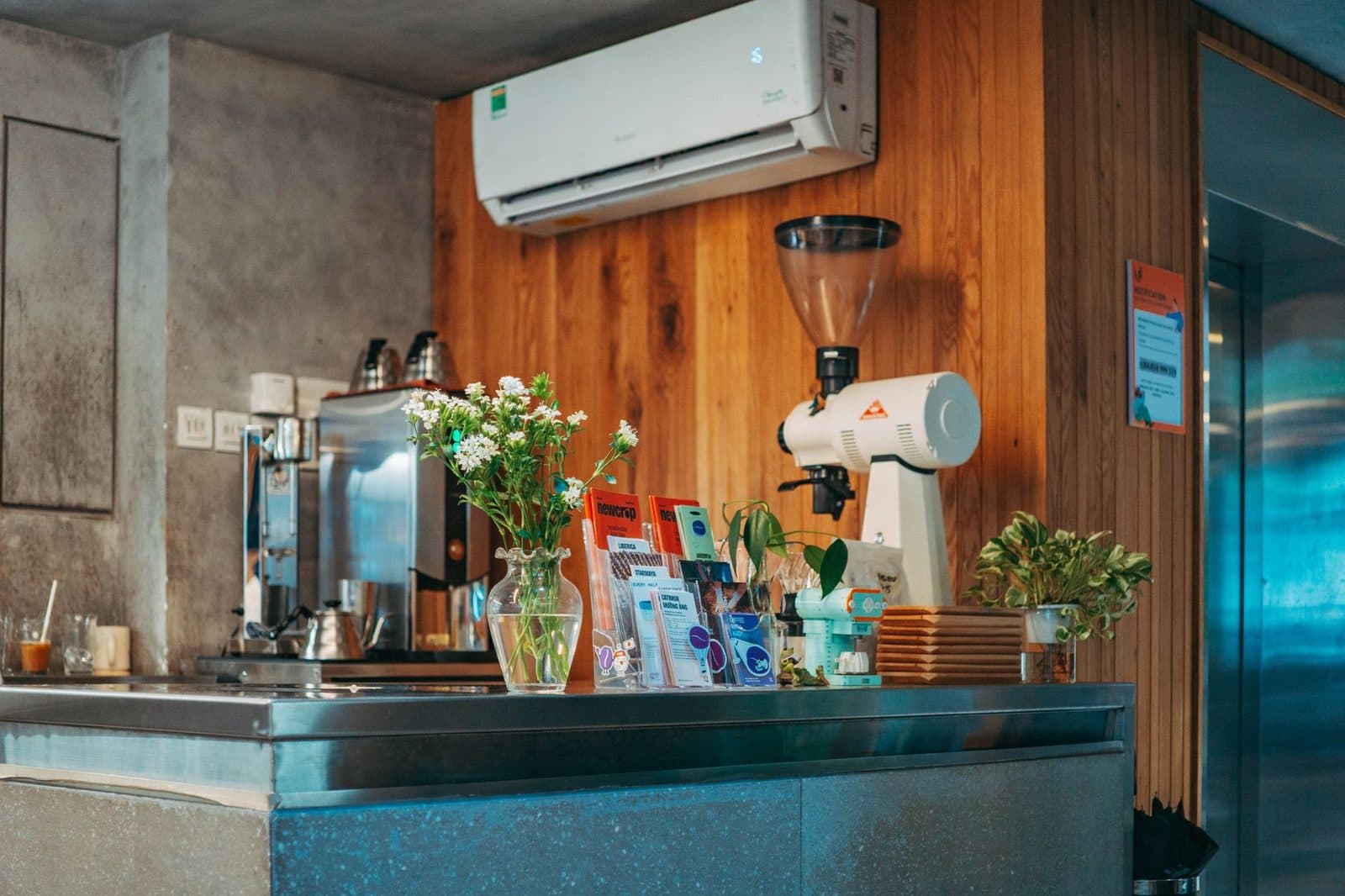
First, let's clear up a misunderstanding: the filters in a standard wall-mounted split are not air purification filters. Their primary function is mechanical and protective. They're relatively coarse-mesh polypropylene screens whose job is to stop dust, hair, pet fur and textile fibres from reaching the heat exchanger (the finned coil) and the fan.
Why does that matter? Because a heat exchanger with fouled fins loses its ability to transfer heat, and a dust-laden fan wheel becomes unbalanced, vibrates and moves less air. The filter is therefore the line of defence protecting the hardest part of the machine to clean.
On newer models you'll often find a second layer: an activated carbon filter for odours, a photocatalytic filter, a so-called "antibacterial" treatment, sometimes an electrostatic stage. These secondary stages vary in usefulness — but they only work if the pre-filter upstream is clean. A saturated activated carbon filter behind a blocked pre-filter does nothing at all, except add pressure drop.
| Filter type | Function | Washable? | Service life |
|---|---|---|---|
| Plastic mesh pre-filter | Trap dust and fibres | Yes, with water | The life of the appliance |
| Activated carbon | Absorb odours and VOCs | No (light vacuuming only) | 6 to 12 months |
| Electrostatic / fine pleated | Trap fine particles | Rarely | 6 to 12 months |
| Photocatalytic | Break down certain compounds | UV/sunlight regeneration | 2 to 3 years |
The real cost of a clogged filter
A blocked filter increases the pressure drop across the airflow circuit. The fan has to work harder for less airflow, and above all the heat exchanger temperature drifts: colder in cooling mode (risk of icing and condensation outside the drain pan), hotter in heating mode.
The orders of magnitude, widely documented by manufacturers and echoed in ADEME's guides on heat pump equipment:
- Excess electricity use: 10 to 25%, depending on how dirty the filter is. Over a cooling season costing €80 in electricity, that's €8 to €20 wasted — modest. On an air-to-air heat pump used as primary heating at €900 a year, we're talking €90 to €200.
- Loss of cooling capacity: up to 20%. The unit takes longer to reach the setpoint, so it runs longer, which amplifies the first point.
- Risk of icing on the indoor coil in cooling mode due to insufficient airflow: the unit trips its safety, blows lukewarm air, and the user concludes it's "low on gas." A significant share of service calls is resolved in ten minutes with lukewarm water and soap.
- Increased noise: the fan permanently running at a higher speed, with a characteristic whistling at the intake grille.
Before calling a refrigeration technician about an AC that "doesn't cool anymore," check the filters. It's free, it takes five minutes, and it's the most common cause of a gradual drop in performance.
Indoor air quality: what the science says, and what it doesn't
This is the topic where the most half-truths circulate. Two facts need to be kept separate.
First fact: an air conditioner does not renew the air. A split recirculates room air in a closed loop. It is in no way a substitute for ventilation. Indoor air quality depends on your mechanical ventilation or on opening windows, not on the AC. ANSES regularly points out in its work on indoor air that air renewal is the main lever against the build-up of CO₂, humidity and volatile organic compounds.
Second fact: a poorly maintained air conditioner becomes a source of emissions. The condensate pan and the heat exchanger create a damp, dark, mild environment. Combine that with a layer of organic dust and you have a culture medium for mould and bacteria. That's the origin of the "damp sock" or cellar smell at start-up — a sign that you need to tackle the pan and the coil, not just the filters.
Recommendations from the Haut Conseil de la santé publique and the technical sheets from the Centre scientifique et technique du bâtiment (CSTB) converge on one simple point: the health risk from a properly maintained domestic air-to-air system is low; the risk from a system neglected for years is not. For people with asthma or allergies to dust mites and mould, cleaning the filters regularly is not a luxury.
One note for sensitive households: keeping relative humidity between 40 and 60% limits both dust mite proliferation and condensation problems. An indoor thermometer and hygrometer costing a few euros, placed in the living room, gives you more useful information than any blind setting on the remote.
The method, step by step
This is the one maintenance task a homeowner can carry out alone with no regulatory restrictions: no refrigerant circuit is opened, so no certification is required. Handling refrigerants, by contrast, remains strictly reserved for professionals holding the certificate of competence under the F-Gas Regulation.
1. Cut the power
Switching off with the remote is not enough. Turn off the dedicated breaker for the air conditioning circuit. The fan can start up on a defrost or self-cleaning timer, and your fingers are right next to it.
2. Open the front panel and remove the filters
On a wall-mounted split, the front panel lifts upward with a firm movement and a slight click on each side. The pre-filters then come free by pinching the central tabs and pulling downward. Note which way round they fit: they're almost never symmetrical.
Take a photo before dismantling anything. It's trivial and it saves thirty minutes of hesitation during reassembly.
3. Vacuum dry before wetting
Start by running a vacuum with a soft brush over the dirty side (the one facing the room). This dry step removes 80% of the deposit. If you wet a saturated filter straight away, the dust turns into a sludge that works its way into the mesh.
4. Wash with lukewarm water
Water at 30–40 °C maximum, a few drops of dish soap, then rinse with clean water. Never use hot water above 45 °C: the mesh warps and the filter no longer seats properly in its housing. Never use a stiff brush, neat bleach or a pressure washer.
5. Dry completely, in the shade
A filter put back while still damp is an invitation to fungal growth. Allow two to three hours flat on a towel, in the shade — direct sunlight makes the plastic brittle.
6. Deal with the intake grille and the louvres
While the filters dry, wipe down the front panel, the air discharge louvres and the intake grille with a slightly damp microfibre cloth. The louvres, often forgotten, build up a greasy film that gets redispersed into the room at every start-up.
7. Optional: sanitise the heat exchanger
If a smell persists after reassembly, the problem is downstream of the filters. A cleaning foam for air conditioners, sprayed onto the coil fins, liquefies and drains away through the condensate pan. It works well on light fouling and an emerging odour. On a visibly blocked coil or a dirty drain pan, however, the only lasting solution is a professional intervention involving removal of the fan wheel and pressure cleaning.
How often, in practical terms?
The "every two weeks" in the manuals corresponds to intensive use in a dusty environment. Here's a more realistic guide:
| Situation | Pre-filter cleaning |
|---|---|
| Moderate seasonal use, low-dust home | Every 6 to 8 weeks of use |
| Daily use summer + winter (main air-to-air heat pump) | Every 4 weeks |
| Pets, smoking, roadside location | Every 2 to 3 weeks |
| Building work in the home | Before and after the job |
| End of cooling season / start of heating season | Always |
In every case, two "pivot" cleanings are essential: late May before the cooling season, and late September before switching over to heating mode. We're right in the middle of that second window.
Don't forget the consumables either. On a five-year-old unit, the secondary filters are often long saturated and never replaced, simply because nobody knows they're there. Compatible activated carbon filters are easy to find as manufacturer parts or as universal sheets you cut to size. Budget €10 to €25 a pack.
The mistakes that cost you
- Running the unit without filters "while they dry." The dust goes straight onto the coil and into the fan wheel: you turn a ten-minute maintenance job into a €150 professional clean.
- Putting the filters in the dishwasher. The drying temperature permanently warps the mesh.
- Using a generic disinfectant spray in the intake grille. Products not formulated for aluminium coils can attack the fin coating and leave residues you'll then breathe in for weeks.
- Confusing filter maintenance with mandatory inspections. Since French Decree No. 2020-912, air conditioning systems above 4 kW must undergo a mandatory periodic inspection every two years by a professional (leak check, efficiency, sizing, usage advice). Cleaning your filters doesn't exempt you from it. Conversely, a biennial visit is no substitute for routine maintenance done ten times a year.
- Forgetting the other vents in the home. If your home has mechanical ventilation, its extract vents and unit require separate maintenance on their own schedule. A well-ventilated home fouls its AC filters more slowly.
What to have on hand
Nothing sophisticated is needed. A vacuum with a brush attachment, a microfibre cloth, dish soap. Two or three accessories do, however, make the job considerably cleaner:
- A set of dedicated microfibre cloths, kept separate from the kitchen ones, for the louvres and front panel.
- A soft-bristled cleaning brush to lift the deposit out of the mesh without deforming it — more precise than a vacuum nozzle.
- A foam coil cleaner; one can per season is enough for two or three indoor units.
- A stable step ladder: most units are mounted more than 2 metres up, and the temptation of the kitchen chair is the leading cause of household accidents during these jobs.
In summary
| Task | Who | Frequency | Cost |
|---|---|---|---|
| Pre-filter cleaning | You | 1 to 2 times per month of use | €0 |
| Replacing secondary filters | You | Once a year | €10 to €25 |
| Foam coil cleaning | You | Once a year | €10 to €15 |
| Full clean + drain pan + fan wheel | Professional | Every 2 to 3 years | €100 to €180 |
| Mandatory periodic inspection (> 4 kW) | Certified professional | Every 2 years | €100 to €200 |
Filter maintenance offers the best effort-to-benefit ratio in the entire air conditioning ecosystem: ten minutes, zero euros, and up to 20% less energy use on an appliance that would otherwise degrade silently, season after season. With the switch to heating mode coming up, now is the time to lift that front panel.
Sources: ADEME (guides on heat pump equipment), ANSES (work on indoor air quality), CSTB, Decree No. 2020-912 on the periodic inspection of air conditioning systems, European F-Gas Regulation on the handling of refrigerants.
Need an air conditioning solution?