Air conditioning that smells bad (musty, sewage, vinegar): where the odour comes from and how to get rid of it for good

L'équipe Proclimo
16 Oct 2026 - 09 min read
There are two moments in the year when the phone rings about a smell: late June, when people restart their air conditioning after nine months of standstill, and mid-October, when they switch over to heating mode and a wave of mustiness fills the living room within the first minute of operation. In both cases, the phone diagnosis begins with the same question: which smell, exactly?
Because an air conditioner doesn't "smell bad" in some generic way. It smells of damp mould, sewage, vinegar, burnt dust or, more rarely, it gives off a sweet, chemical odour. Each of these five signatures points to a different part of the machine — and to a different intervention. Confuse the two and you end up emptying a can of disinfectant into an appliance whose problem was in the drain pipe.
Here is how to read your appliance's smell, what you can deal with yourself in an hour, and what calls for a deep clean, either in the workshop or on site.
Why an air conditioner becomes fertile ground for micro-organisms
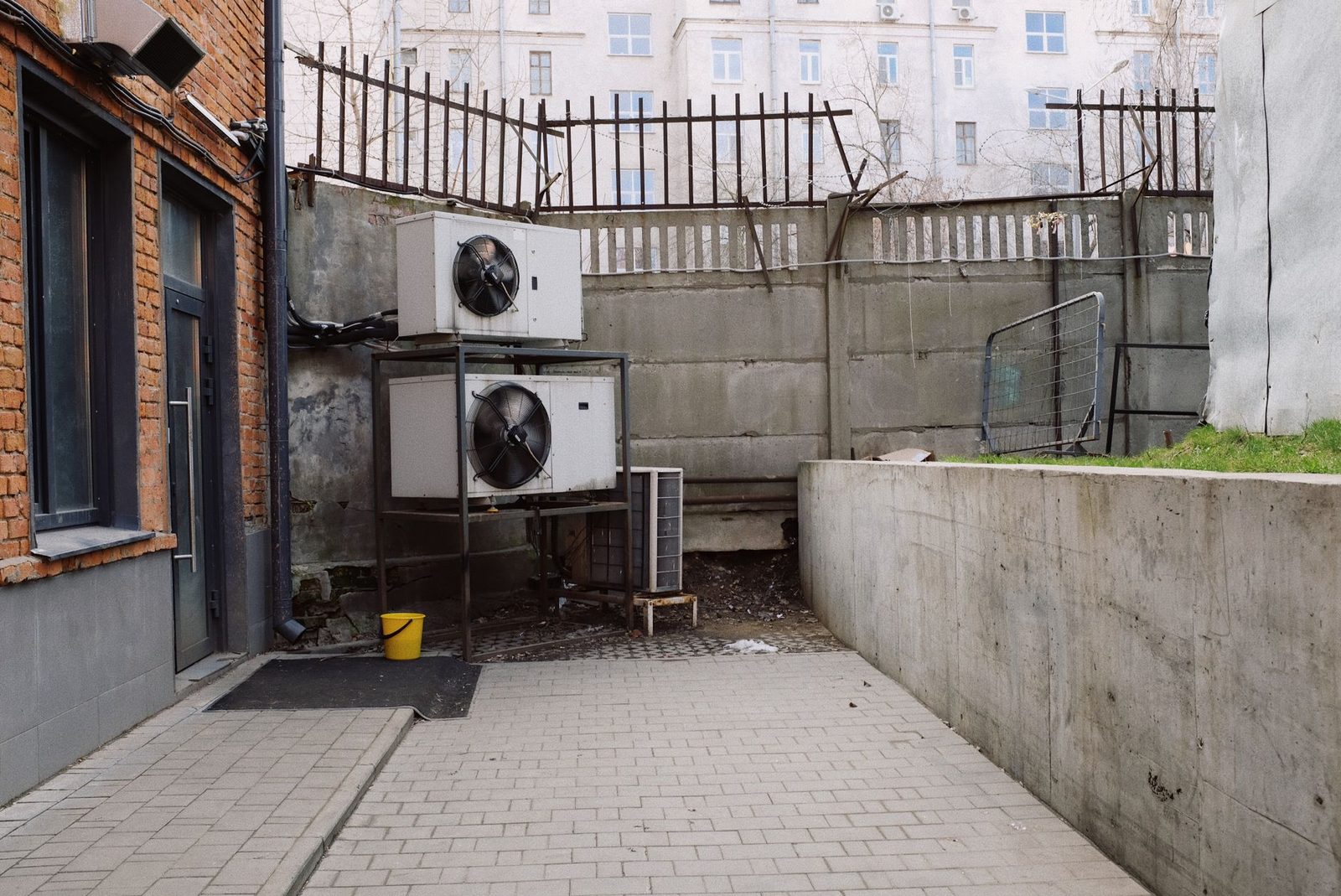
In cooling mode, the indoor unit passes the air from your home over a heat exchanger at 6–12 °C. The moisture in the air condenses on it: that is the very principle of dehumidification. The result is that, all summer long, the exchanger fins and the condensate tray stay permanently wet, at an ideal temperature for mould.
Add to that whatever the machine draws in inside an Île-de-France home: dust, skin flakes, pollen, cooking particles, traffic soot. What you get is a damp organic deposit, sheltered from light and continuously ventilated. ANSES, in its work on indoor air quality, regularly points out that poorly maintained air treatment systems can become sources of contamination instead of tools for cleaning the air.
The key point: the machine is not inherently unhealthy. A properly maintained air conditioner filters and dries the air better than a window open onto a busy boulevard. It is the missing maintenance that creates the problem — and the smell is the first warning sign.
The five smells and what they point to
1. Musty, cellar-like, old-mop smell — the exchanger and the fan barrel
This is by far the most common one. The smell appears within 30 seconds of start-up, then fades after a few minutes. It is the typical signature of a biofilm established on the coil fins and on the tangential fan barrel (the long roller that blows the air out).
A reliable check: shine a torch into the air outlet with the louvre open. If the fan blades are grey or fuzzy instead of smooth and white, cleaning the filters will not be enough.
2. Sewage or rotten-egg smell — the condensate circuit
This one doesn't come from the air, it comes from the drain pipe. When the condensate line is connected directly to a wastewater pipe without a trap, or with a trap that has dried out over the summer, gases from the stack rise back into the tray and come out through the air outlet.
Two variants:
- no trap at all: an installation fault, the connection was made by the shortest route;
- dried-out trap: common in October, after weeks without any condensate production.
This is the only case where the smell has nothing to do with how clean the unit is. The subject is covered in detail in our article on condensate drainage, the number one breakdown of the summer.
3. Vinegary or acidic smell — standing water and a dirty tray
A sharp, acidic smell, sometimes described as "socks". It betrays anaerobic fermentation in the condensate tray: the water no longer drains fully, and a 2–3 mm layer sits there permanently along with organic debris.
First check the slope of the condensate pipe and make sure there is no low "U" point behind the furniture. A tray that holds water will always end up smelling, whatever the state of the filters.
4. Burnt-dust smell — switching to heating mode
A October classic, and most often harmless. In heating mode, the exchanger rises to 40–50 °C and burns off the dust that settled on the fins over the summer. That "radiator starting up again" smell usually disappears after 20 to 40 minutes of operation, with the windows slightly open.
If it lasts more than an hour, or if it turns acrid and electrical, switch the appliance off: at that point we are looking for overheating in a board, a terminal block or a fan motor. Our checklist on the faults that show up at the October restart sets out what to do.
5. Sweet, ether-like, faintly chloroform smell — to be taken seriously
Rare, but it deserves a mention. At high concentrations, some refrigerants give off a slightly sweetish, ether-like smell. Combined with a loss of performance (the unit blows lukewarm air, frost appears on the fittings), it can indicate a leak. This is not something you treat with a product: it requires an intervention under a refrigerant handling certification, mandatory under the European F-Gas regulation and articles R.543-99 et seq. of the French Environment Code.
| Smell detected | Most likely origin | Who handles it |
|---|---|---|
| Musty, cellar-like | Biofilm on exchanger and fan barrel | Refrigeration engineer (deep clean) |
| Sewage, rotten egg | Trap missing or dried out | Refrigeration engineer / plumber, depending on the installation |
| Vinegar, acidic | Standing water in the tray | You first, then an engineer if it recurs |
| Burnt dust | Baked-on deposit in heating mode | Nobody (unless it persists) |
| Sweet, ether-like | Suspected refrigerant leak | Certified refrigeration engineer, urgently |
What you can do yourself, in order
Allow an hour, with the appliance unplugged or the breaker switched off. You never work on a live unit, not even to take out a filter.
1. The filters. Remove them, vacuum off the worst, then wash them in warm soapy water. Let them dry completely in the shade before refitting — a filter put back damp is exactly what brings the smell straight back. If the foam is distorted, brittle or deeply stained, replace it: compatible replacement filters are available for most Daikin, Mitsubishi, Toshiba and Atlantic ranges.
2. The air outlet and the louvre. Use a microfibre cloth, slightly damp, with no aggressive product. The aim is to remove the greasy film that holds the odours.
3. The tray and the pipe. This is where most sewage and vinegar smells are won or lost. A condensate pipe cleaning kit with a flexible brush and a blow bulb will clear blockages in the first few centimetres. Then pour a glass of clean water into the tray to re-prime the trap, if there is one.
4. Measure before you conclude. A persistent musty smell combined with indoor humidity above 65 % is often as much a building problem as a machine problem. An indoor hygrometer at €15–25 settles the question in two days, and stops you blaming the air conditioner for a ventilation problem. We look at that dividing line in our article on humidity, condensation and the respective roles of air conditioning and mechanical ventilation.
5. Run it in fan-only mode. After any cleaning, 30 minutes of fan-only operation dries out the inside of the unit. It is also the habit to adopt at the end of every summer day: 10 to 15 minutes of fan-only running before switching off is enough to limit residual moisture. Many recent appliances offer this function under names such as "dry keep", "clean" or "self-clean".
"Air conditioner disinfectants": what they do and don't do
The aerosols sold in supermarkets as "air conditioning cleaner" fall into two families, and you need to know which one you are buying.
- Cans diffused into the room or into the air return mask the smell and disinfect the accessible surface. The effect is real, but short-lived: a few weeks, because the biofilm underneath the fins is never reached.
- Active foams sprayed directly onto the exchanger, which then drain into the tray, do genuinely lift the deposit. They require removing the front cover and protecting the electronics, and they are no substitute for a rinse.
Three mistakes we see regularly, and which cost more than the original smell:
Bleach, undiluted white vinegar and acidic cleaners: they attack the aluminium of the fins and the seals. A corroded coil loses heat exchange capacity and may eventually leak.
Pressure washers or a direct jet of water: the water gets into the fan barrel, the motor and the board. This is the classic "I was only trying to help" scenario that ends with a €250–450 circuit board replacement.
Air freshener on its own: it removes the symptom and lets the colonisation spread. The following spring, the smell comes back stronger.
If you are working on the front cover yourself, a cleaning foam for air conditioning exchangers in the "no-rinse" version is the only defensible category without professional equipment. For the rest of the DIY protocol, we set it out in our guide on cleaning your air conditioner yourself as winter approaches.
When professional disinfection becomes the only option
There is a fairly clear threshold. You move to a professional when at least one of these signs is present:
- the smell comes back less than three weeks after cleaning the filters;
- the fan barrel is visibly colonised (grey blades, fuzzy deposit);
- water drips from the indoor unit, or the machine goes into safety shutdown;
- the smell is the sewage type and persists despite re-priming;
- occupants experience breathing discomfort or a dry cough linked to the appliance running;
- the appliance has never been serviced since installation and is more than three seasons old.
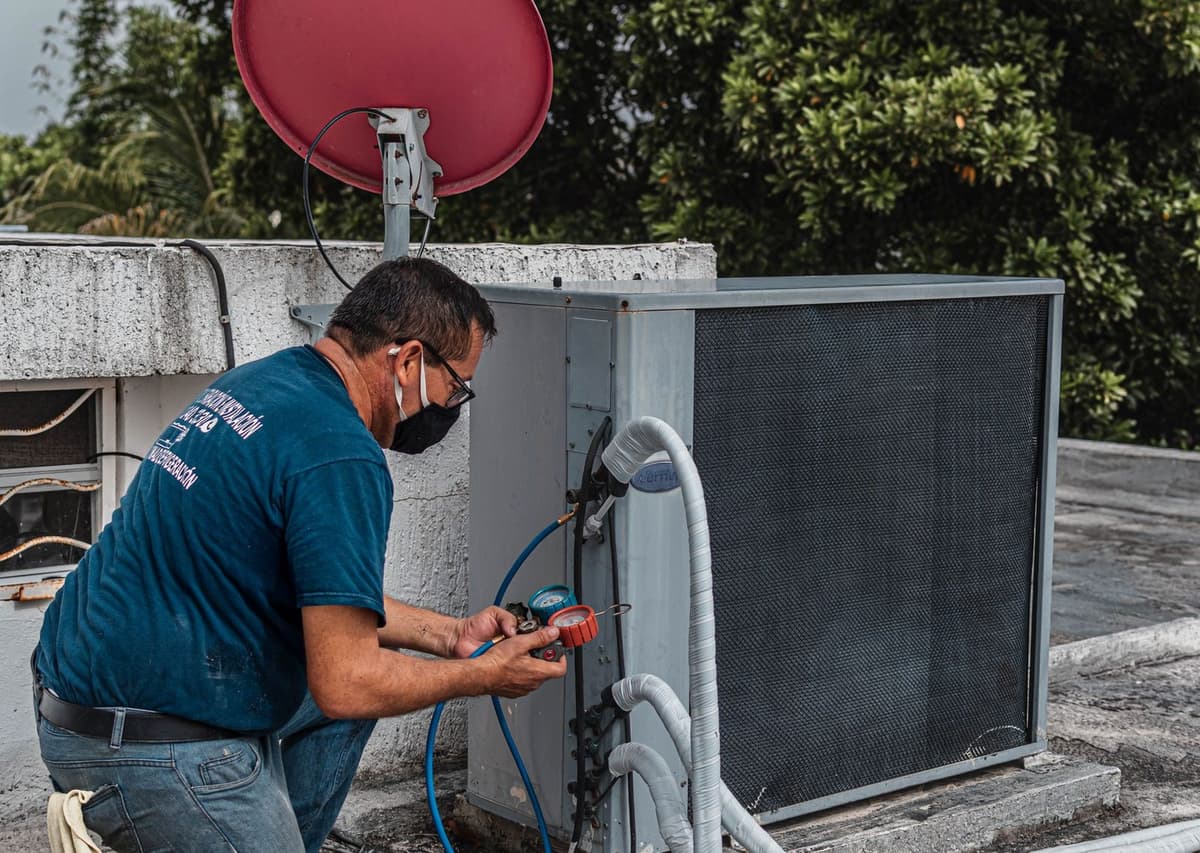
A professional clean is not a filter clean at a higher price. The protocol we apply includes:
- complete removal of the casing and the condensate tray;
- protection of the board, the wiring and the wall;
- mechanical and chemical cleaning of the exchanger, active foam plus controlled rinsing with water collected in a flexible duct;
- brushing the tangential fan barrel blade by blade, the longest part of the job;
- bactericidal and fungicidal disinfection with an approved product, followed by forced drying;
- unblocking and re-priming the condensate circuit, fitting a trap if there isn't one;
- checking supply and return air temperatures, pressures and current draw.
The price ranges we apply in the Île-de-France region, to give you a benchmark:
| Service | Range, incl. VAT |
|---|---|
| Standard annual service (filters, tray, checks) | €120 – 180 |
| Deep disinfection, 1 indoor unit (fan barrel + exchanger) | €180 – 280 |
| Additional unit during the same visit | €90 – 150 |
| Condensate unblocking / trap fitting | €90 – 200 |
| Ducted system cleaning (per outlet, depending on access) | on quotation |
These figures tie in with what we set out in our article on the price of an air conditioning service in 2026. Note: disinfection is a corrective operation; it does not replace the annual service, nor — for installations above the refrigerant charge thresholds — the periodic leak check required by the F-Gas regulation.
Specific Île-de-France situations
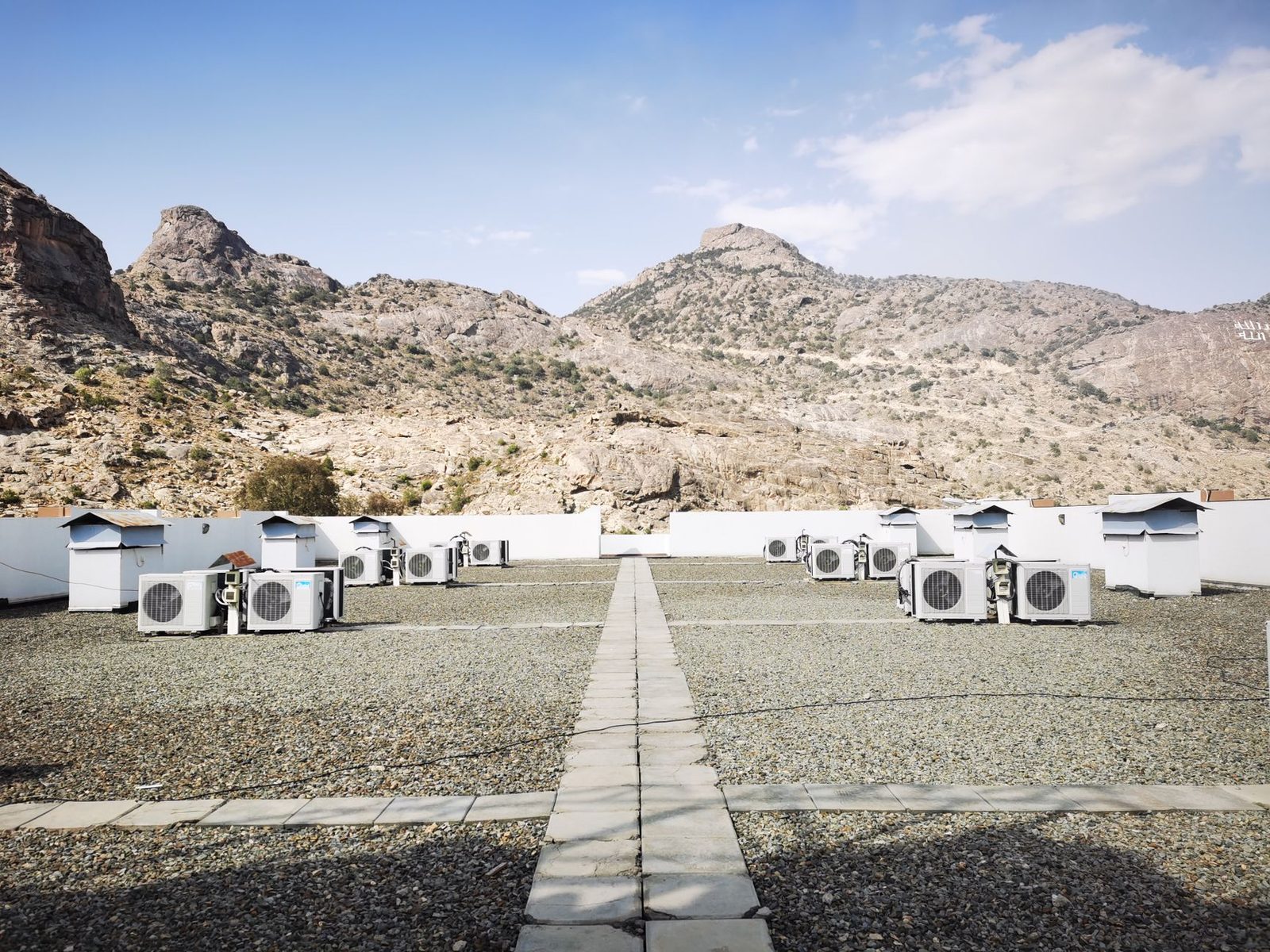
Ground-floor flat or one facing an enclosed courtyard. The indoor unit's air return picks up everything that stagnates: the bin store, a restaurant kitchen, a neighbouring extract vent. Filters clog twice as fast. In these set-ups, an additional activated carbon filter compatible with the unit makes a real difference to how the smell is perceived — provided you replace it every 3 to 6 months, otherwise it becomes the source itself.
Ducted systems. The smell does not always come from the machine but from the duct network and the outlets. Uninsulated flexible ducts in the loft, condensation inside the duct, and the problem becomes structural. Diagnosis requires a camera inspection or opening up several outlets.
Shared buildings and commercial premises. In an apartment block, a persistent smell on a shared unit (a landing ducted system, a commercial VRF) is a collective decision. Who decides and who pays is the whole subject of our article on air conditioning maintenance in shared buildings. In a shop or a restaurant, the smell becomes a direct commercial issue and must be written into the maintenance contract, as we explain for commercial premises and restaurants.
Five habits that prevent the problem next year
- Fan-only drying for 10 to 15 minutes before every shutdown in summer.
- Filters washed every 2 to 4 weeks during heavy-use season, not once a year.
- Setpoint at 25–26 °C rather than 20 °C: less condensation, less water in the tray, and a lighter bill.
- An annual service booked out of season (October to March), when lead times are short and prices more stable.
- Never block the air return with furniture, a curtain or a shelf: air must circulate for the unit to dry out.
In summary
A smell from your air conditioning is information, not an inevitability. Mustiness and vinegar point to residual moisture and the tray; sewage, to the drainage circuit; burnt dust, to a simple baked-on deposit in heating mode; a sweet smell, to a refrigerant check that should not be put off. In the vast majority of cases, cleaning the filters plus clearing the condensate line settles the matter. When the smell returns within three weeks, it is the fan barrel and the exchanger that need treating — and that is where professional equipment and products make the difference.
A persistent smell in your home, your office or your business in the Île-de-France region? Describe the smell and tell us how old the installation is: that is often enough for us to tell you whether an hour of your time will do the job, or whether a visit is needed. Book an appointment on our booking page, or write to us via our contact page.
Need an air conditioning solution?