Air conditioning and allergies in 2026: how to turn your AC into an ally of indoor air quality

The Proclimo Team
15 Jul 2026 - 07 min read
Pollen, dust mites, mould, pet hair and fine particles: as the warm weather arrives, the same question comes up for millions of allergy sufferers in France. "Should I switch the air conditioning off when I have allergies?" The answer is almost always the opposite of the obvious one: a properly chosen, properly set and properly maintained air conditioner is one of the best allies for people with allergies. A neglected unit, on the other hand, can turn summer comfort into a health nightmare. Here is how to do it — and how to avoid the traps.
Allergies in France: a summer time bomb
The numbers speak for themselves. According to France's national aerobiological monitoring network, 20 to 25% of French adults and nearly one child in three suffer from a respiratory allergy. Consultations for allergic rhinitis double between May and July, and the WHO classifies pollen among the main triggers of asthma in Europe.
In 2026, several factors make matters worse:
- Pollen seasons are lengthening with global warming. On average, birch and grass pollen seasons now start 10 to 15 days earlier and last longer.
- Fine-particle pollution episodes (PM2.5, NO2) overlap with pollen peaks: the cocktail effect is well documented and amplifies symptoms.
- Heat and humidity encourage mould growth in homes — another often underestimated trigger for respiratory allergies.
In this context, indoor air quality becomes a public-health issue — we spend on average 80% of our time indoors. And air conditioning plays a central role, provided you control it.
Air conditioning and allergies: friend or foe?
It all comes down to one word: maintenance. A well-maintained AC filters the air, removes excess humidity and seals the home off from outdoor pollen. A neglected AC, on the other hand, blows back into the room the very pollutants it was supposed to trap: dust, pollen, dust mites, mould spores and even bacteria.
The French maintenance federation Synasav recently reminded the public that a poorly maintained air conditioner can use 20 to 30% more energy and become a breeding ground for micro-organisms. A study published by Anses also flags a risk of legionella when the condensate tray is not cleaned regularly.
info
An air conditioner is nothing more than a fan pushing air through a filter. The quality of that air is 90% down to the filter, 5% to the cleanliness of the indoor unit and 5% to the relative humidity of the room.
Air filters: the first barrier against allergens
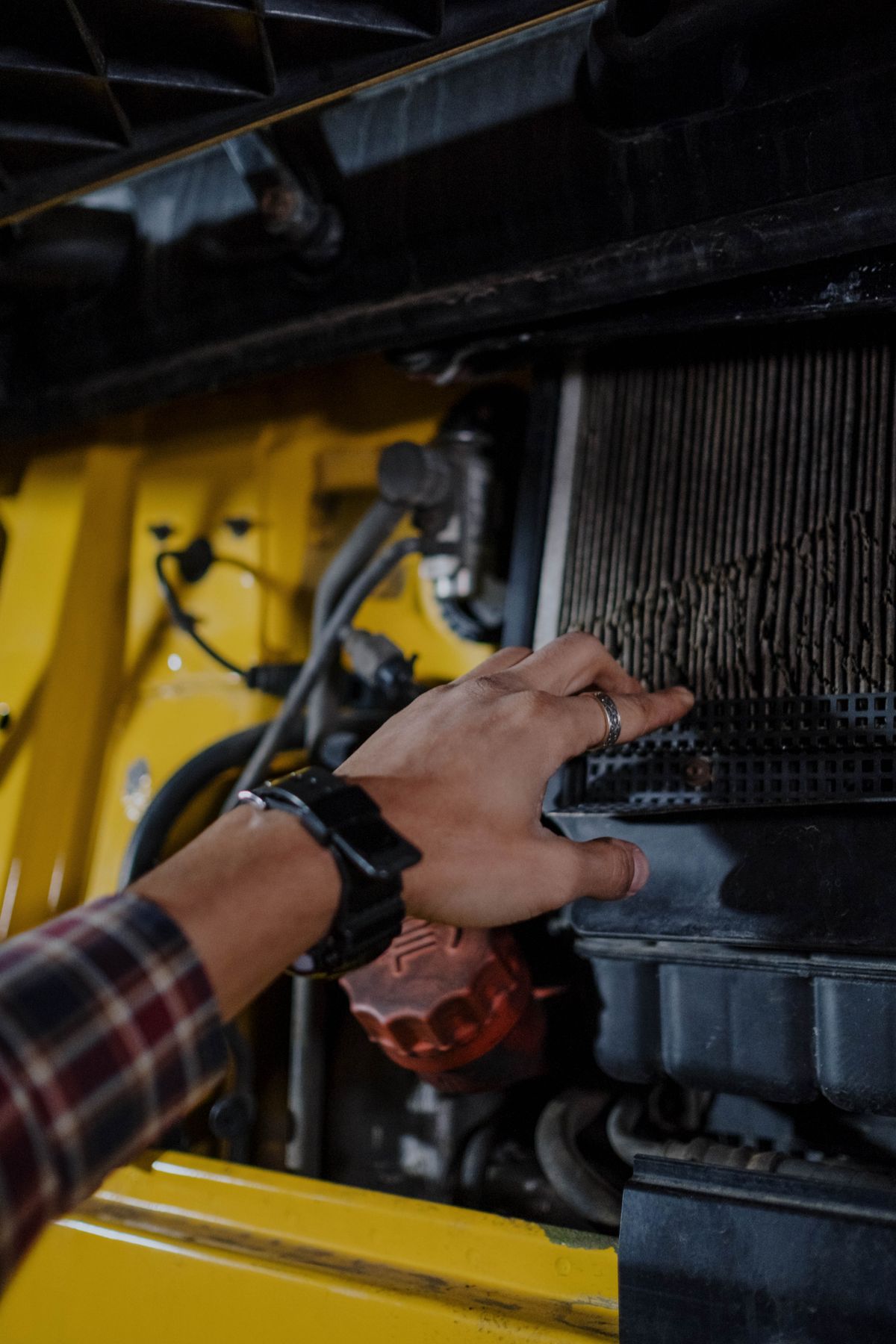
The filter is your real first line of defence against allergens. There are several levels of filtration, to choose from depending on your sensitivity.
| Filter type | Effectiveness on allergens | Who is it for? |
|---|---|---|
| Standard filter (supplied as standard) | Catches large dust, limited effect on pollen and PM2.5 | Everyday use with no particular allergy |
| Electrostatic / pleated filter | Better retention of fine particles | Slightly sensitive users |
| HEPA filter (H10 to H13) | Captures 99.5 to 99.97% of particles ≥ 0.3 µm: pollen, dust mites, mould, pet hair | Allergy sufferers, asthmatics, households with young children |
| Activated carbon filter | Removes odours, VOCs, formaldehyde | Useful complement in urban areas or poorly ventilated rooms |
| Photocatalysis / ionisation | Variable effectiveness, use with care (possible ozone production) | To be avoided for severe asthmatics |
If you are truly sensitive, the winning reflex is to combine a HEPA filter with the standard filter of your split, or to invest in a stand-alone air purifier with a documented CADR (Clean Air Delivery Rate). The CADR indicates the volume of clean air delivered per hour: for a 20 m² bedroom, aim for at least 150 m³/h for effective air renewal.
The right settings to limit flare-ups
How you set your AC directly affects the severity of allergy symptoms. Here are the benchmarks to know:
- Aim for 26 to 27 °C as the setpoint and do not exceed a 7 to 8 °C gap with the outside temperature. Too sharp a contrast between inside and outside can, on its own, trigger an asthma attack in sensitive people. This is also the setting recommended in our heatwave advice.
- Keep relative humidity between 40 and 60%. Below that, mucous membranes dry out and become more vulnerable to allergens; above, dust mites and mould thrive. A €10 hygrometer is enough to monitor this.
- Limit airflow to what is strictly necessary. A unit that's too powerful or blowing straight at your face dries out nasal and bronchial mucous membranes. Prefer indirect diffusion.
- Ventilate at the right times. During pollen peaks (mid-morning and early evening for grasses), keep windows closed and let the AC do the work. Open wide during rainy hours or at dawn, when pollen counts drop.
tip
During a pollution peak (ATMO index > 7/10), do not switch your AC off: that's exactly when it protects your home best. Just clean or replace the filter straight after the episode.
Servicing: the real topic — your checklist
For an AC to remain an ally, maintenance leaves no room for approximation. Here is the calendar to remember, for a standard residential split:
| Frequency | Action | Why |
|---|---|---|
| Every 2 to 4 weeks (during use) | Wash the indoor unit filter in warm soapy water, leave to air-dry | A clogged filter blows back the allergens it has captured |
| Every 2 to 3 months | Check and clean the condensate tray, check for mould | Prevents odours, mould and legionella risk |
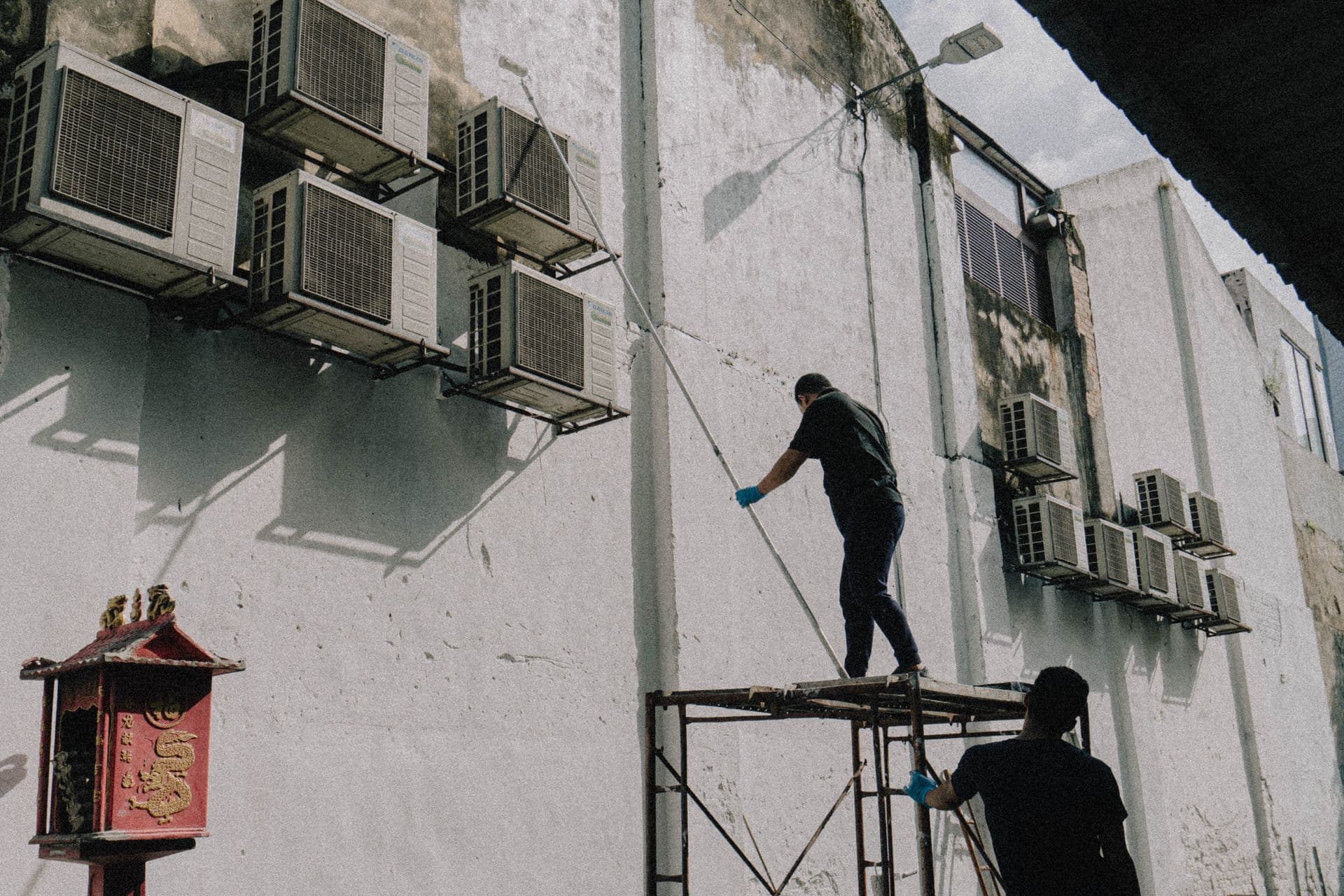
| Once a year (spring) | Have a professional carry out a full service: evaporator cleaning, refrigerant check, electrical check, unit disinfection | A pro removes what you cannot reach yourself |
| Every 2 to 5 years (depending on refrigerant charge) | Mandatory leak test on the refrigerant circuit above a certain threshold | Set out in our article on mandatory air-conditioning servicing |
The cost ranges from €90 to €250 depending on the region and the type of unit — a modest price for the gain in respiratory comfort and the electricity bill under control. If you live in a shared building, servicing can be pooled through a contract.
The mistakes that turn your AC into a problem
To avoid shooting yourself in the foot, you need to know the classic traps:
- Running an AC that has never been serviced from one season to the next. The most common scenario: when you switch it on again in May, the air it blows out is loaded with everything the unit accumulated over the winter.
- Ignoring the insulation of the home. An AC circulates air, but it only filters properly if windows and doors stay shut. Without that discipline, you are paying for outdoor air — pollen included — at full price.
- Confusing AC with ventilation. An AC does not renew air, it conditions it. Without a working MVHR / VMC system or daily airing, CO2 and humidity stagnate.
- Multiplying ozone purifiers. Some consumer "ioniser" units emit ozone, which irritates the airways. Anses recommends avoiding them, especially in a child's bedroom.
Choosing the right AC when you have allergies
At the point of purchase, a few criteria change the game:
- An indoor unit with an accessible, washable filter — it makes a huge difference for regular maintenance. Most recent wall splits meet this criterion.
- A "dehumidify" mode (dry mode), useful in humid regions, to be used occasionally to avoid excess humidity.
- A "night" or "silent" mode that limits fan speed and therefore the stirring up of dust.
- A reversible unit (air-to-air heat pump) to heat in winter without drying out indoor air — very useful for asthmatics sensitive to dry air. Our guide to choosing an air conditioner covers the other criteria.
- A brand that makes compatible replacement filters. It is usually easier and cheaper than assuming a generic supermarket HEPA filter will last more than a month.
Air conditioning and respiratory health: what the science says
Several scientific studies have highlighted the positive role of filtered, conditioned air for asthmatic and allergic patients:
- The AIRGENE study (Europe, 2008) showed that exposure to filtered air reduced cardio-respiratory mortality during pollution periods.
- The WHO recognises indoor air quality as a health priority and explicitly cites filtration as an effective lever.
- In 2024, the French Society of Allergology published a guide recommending HEPA filtration alongside ventilation in the living spaces of atopic patients.
Conversely, there is no evidence that a properly maintained AC makes allergies worse — except in cases of major maintenance failure or documented fungal contamination. The right reflex: have your installation audited by a professional as soon as unexplained symptoms appear.
Frequently asked questions
Does air conditioning dry the air and make asthma worse? A reversible AC, well set, slightly dehumidifies the air in cooling mode, which can even be beneficial (limits dust mites and mould). In heating mode, the opposite effect can dry out mucous membranes: use a hygrometer and a humidifier if needed, and aim for 40 to 60% relative humidity.
Is an air purifier really more effective than an AC with a filter? For very fine allergens (pollen, PM2.5), a dedicated HEPA purifier with a high CADR will often be more effective than a standard split filter. Ideally, you combine the two: the AC handles the temperature, the purifier handles the air quality.
Should I switch the AC off during a pollen peak? No, it's the opposite: keep it running, windows closed, and let the filter do the work. Switching the AC off forces you to open the windows, which lets pollen flood in.
How often should I replace a HEPA filter? In intensive summer use, allow 6 to 12 months depending on the model. A filter that has turned dark grey or smells of damp must be replaced without delay.
Are "air-purifying" air conditioners reliable? The best models (Daikin, Mitsubishi, Panasonic, Hitachi) come with pleated filters and sometimes a photocatalytic stage. For severe allergy sufferers, they form a good base, but are usually less effective than a stand-alone HEPA purifier.
Healthy indoor air is built, not bought
An AC that is an ally for people with allergies comes down to three things: a unit chosen well from the day of installation, settings designed to limit thermal shocks and humidity, and regular servicing — at least twice a year by a professional. No more complicated than a car, but no less demanding either.
Want to take stock of your current installation, or equip your home for the next heatwave taking your household's sensitivities into account? Get in touch with Proclimo for a tailored assessment, or discover our installation, servicing and repair services in the Paris region.
Need an air conditioning solution?