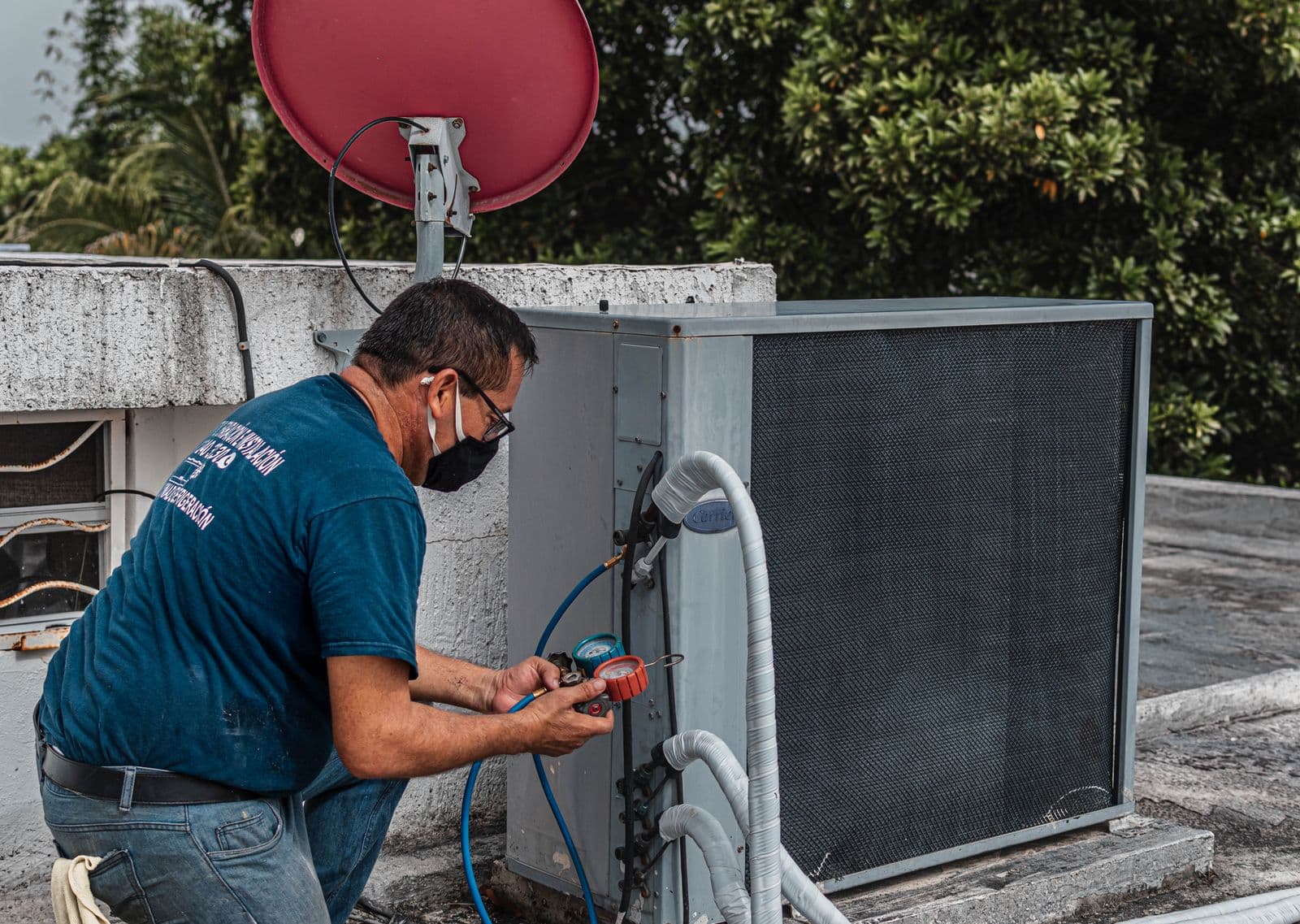
The 2026 shortage of refrigeration engineers: how to check that an air-conditioning installer is genuinely qualified

The Proclimo Team
14 Jul 2026 - 06 min read
Finding an available air-conditioning installer in the middle of summer can feel like an obstacle course. It isn't your imagination: the refrigeration engineer (frigoriste) is one of France's most understaffed trades, and the gap between what companies need and the number of trained professionals keeps widening. The direct consequence for households: longer lead times, more aggressive cold-calling, and work sometimes carried out by people who are not legally allowed to do it. Here is what you need to know about the trade — and, above all, how to check in five minutes that an installer is genuinely certified.
Why is the refrigeration trade under such strain?
The refrigeration engineer — also known as a refrigeration and air-conditioning technician — installs, services and repairs air-conditioning systems, heat pumps and refrigeration plants. They are the ones who handle refrigerants, the pressurised gases at the heart of every air conditioner.
Several forces are compounding in 2026:
- The energy transition is driving demand through the roof. The mass roll-out of heat pumps, fuelled by public subsidies, calls on exactly the same skills as air conditioning. An air-to-water heat pump installer and a reversible air-conditioning installer are, technically, the same trade.
- Regulation is tightening and demands real expertise. The gradual shift from R32 to low-climate-impact refrigerants such as R290 (propane), which is flammable, requires specific certifications and handling procedures. We cover this shift in our article on the R290 refrigerant and in the one dedicated to the F-Gas regulation and R32.
- Training isn't keeping up. The qualification routes exist — we set them out below — but the number of places and trainers remains far short of the sector's recruitment needs.
- Regulatory deadlines are concentrating demand. The enhanced subsidy for approved heat pumps coming into force on 1 September 2026, together with the end of "single-measure" grants, is pushing many households to start their projects at the same time.
info
This pressure has a side effect that rarely gets discussed: it attracts opportunists. When reputable professionals have full order books, space opens up for improvised "installers" who hold neither the refrigerant handling certificate (attestation de capacité) nor the required insurance.
How do you become a refrigeration engineer? Training and qualifications
If the subject interests you for yourself or someone close to you, the training path is well mapped out and the job prospects are real.
| Qualification | Level | Duration | Who it's for |
|---|---|---|---|
| CAP Installateur en froid et conditionnement d'air (vocational certificate in refrigeration and air conditioning) | CAP (vocational certificate) | 2 years after lower secondary school (or ~8 months for adult career changers) | The entry point into the trade |
| Bac pro Technicien du froid et du conditionnement d'air (vocational baccalaureate) | Bac (upper secondary) | 3 years | Installation and maintenance |
| BP Monteur en installations du génie climatique et sanitaire (professional certificate in HVAC and plumbing installation) | Bac (upper secondary) | 2 years, work-study | Specialisation after the CAP |
| BTS Fluides Énergies Domotique (FED) (higher technical diploma in fluids, energy and home automation) | Bac +2 (two years of higher education) | 2 years | Design office, project manager |
Retraining is a common route: an adult can prepare for the CAP in a matter of months. And the tightness of the market works in candidates' favour — the scarcity of qualified profiles puts technicians in a strong position in salary negotiations, even early in their careers.
But a qualification alone is not enough. To handle refrigerants legally, a company needs an attestation de capacité (refrigerant handling certificate). And that is exactly what you, as a customer, need to check.

The attestation de capacité fluides frigorigènes: the document that matters
This is the single most important point in this article. Every company that handles refrigerants — and therefore every company that installs, services or repairs air conditioning — must hold an attestation de capacité (refrigerant handling certificate), issued by a body approved by the French Ministry for the Ecological Transition. This obligation stems from the European F-Gas regulation.
The key points:
- It is issued to the company, not to the individual technician (technicians hold a personal aptitude certificate, the attestation d'aptitude).
- It is valid for five years, with regular compliance checks.
- It comes in five categories, depending on the operations authorised. Category I is the broadest: it covers leak testing, commissioning, maintenance and refrigerant recovery on all equipment, with no charge limit. Categories II to IV are more restricted (for example, limited to equipment containing less than 2 kg of refrigerant), and category V applies only to vehicle air conditioning.
warning
A company that opens your refrigeration circuit without an attestation de capacité is breaking the law. Beyond the regulatory issue, a badly executed refrigerant charge degrades performance, causes early breakdowns and can void the manufacturer's warranty. In the event of damage, your insurer may also refuse to cover the claim.
The 6 checks to make before signing a quote
- Ask for the attestation de capacité fluides frigorigènes. A serious professional will hand it over without hesitation. Check the validity date and the category: for residential air conditioning, look for category I.
- Check the RGE / QualiPAC qualification if you are counting on subsidies. Without an RGE-certified professional (Reconnu Garant de l'Environnement, France's recognised-environmental-guarantor label), there is no CEE energy-saving bonus and no MaPrimeRénov' grant: it is a deal-breaker, whatever the price on the quote.
- Check that the company legally exists. SIRET registration number, address, how long it has been trading. A company set up three weeks ago in the middle of a heatwave deserves close scrutiny.
- Insist on ten-year structural insurance (assurance décennale) and professional liability cover, both up to date and genuinely covering HVAC work.
- Read the quote line by line. It must state the exact model, the output, the type of refrigerant, the number of units, the length of the refrigerant lines and the commissioning conditions. A one-line quote is a red flag.
- Beware of manufactured urgency. "Offer valid today only", "last slot before summer": commercial pressure is the most reliable marker of abusive doorstep selling.
What the shortage means for you in practice
Plan ahead. The worst time to look for an installer is during the first heatwave — everyone is calling at once. Having air conditioning fitted in autumn or winter means better availability and a professional who takes the time to size the system properly. Our guide to choosing the right air conditioner is the place to start.
Service your unit rather than waiting for it to fail. A well-maintained unit breaks down far less often, and a breakdown in August is precisely when lead times explode. Remember that air-conditioning servicing is governed by law above a certain refrigerant charge threshold.
Don't overlook passive solutions. Before investing, shutters, blinds and well-maintained ventilation already cut overheating significantly. And a correctly adjusted air conditioner consumes far less.
A good installer protects the value of your property. A clean, documented and well-maintained installation counts towards your home's energy performance rating (DPE) and market value.
Frequently asked questions
Can a plumber or an electrician install my air conditioning? Only if their company holds the attestation de capacité fluides frigorigènes. Fitting the brackets and running the power supply is not a problem; opening the refrigeration circuit and charging the refrigerant, however, are regulated operations.
Are the attestation de capacité and the RGE qualification the same thing? No, and this is a common confusion. The attestation de capacité is a legal requirement for handling refrigerants. The RGE label (which includes QualiPAC) is a voluntary qualification that determines access to financial support. An installer can be fully compliant without being RGE-certified — but you will then lose your grants.
How can I check that a certificate is genuine? Ask for the document, which states the certifying body (Afnor, Bureau Veritas, Dekra, Socotec, etc.), the number and the validity date. If in doubt, the certifying body can confirm that the certificate is valid.
Are lead times really longer in 2026? Demand is concentrated on the summer months and on the September 2026 subsidy deadlines. Planning a few months ahead remains the best way to avoid the wait — and to avoid settling for the first contractor available.
Is the refrigeration trade really recruiting? Yes. Maintenance technicians, heat pump installers, project managers: the sector is struggling to fill its vacancies, and the shortage translates into genuine bargaining power for qualified candidates.
Trust your installation to certified professionals
At Proclimo, every job is carried out by technicians trained and certified to handle refrigerants. Discover our air-conditioning installation, servicing and cleaning and repair services, or get in touch for a clear, detailed quote. You can also find out more about our team and about the areas we cover.
Need an air conditioning solution?