5.5% VAT on Air-to-Air Heat Pumps in 2026: Complete Guide for Homeowners and Co-owners

L'équipe Proclimo
6 Aug 2026 - 04 min read
The year 2026 marks a fundamental shift in access to thermal comfort in France. While air conditioning was long perceived as a luxury or a simple summer supplement, the fiscal recognition of reversible air-to-air heat pumps (PAC) as energy transition tools has led to a historic measure: the lowering of the VAT rate from 20% to 5.5%.
This decision, which came into effect during the summer of 2026, is not just an administrative reduction, but an immediate financial gain that can amount to several hundreds, or even thousands of euros, depending on the power of the installation. However, for the homeowner or co-owner, the transition to this reduced rate is not automatic. It requires meeting strict technical and administrative criteria to avoid any tax reassessment or refusal of coverage.
Understanding the Reduced VAT Mechanism in 2026
Unlike CEE certificates or MaPrimeRénov', which are paid after the work is completed, the 5.5% VAT applies upfront. It is integrated directly into the quote and the installer's final invoice. This makes it a powerful lever for reducing the amount of bank financing needed to launch the project.
The Crucial Distinction: Air Conditioning vs. Air-to-Air Heat Pump
This is where the success of your application is decided. Fiscally, the term "air conditioning" can be ambiguous. If a quote simply mentions "installation of air conditioners," the tax authorities may maintain the standard 20% rate, as air conditioning alone is considered a comfort amenity rather than energy renovation.
To benefit from the 5.5% rate, the equipment must be explicitly described as a "Reversible air-to-air heat pump." This terminology confirms that the system is capable of heating the home in winter, thus classifying it as a high-performance heating system eligible for reduced rates.
Eligibility Conditions
For the 5.5% VAT to be applicable, three cumulative conditions must be met:
- Property Age: The property must have been completed more than two years ago. New homes remain subject to the standard rate.
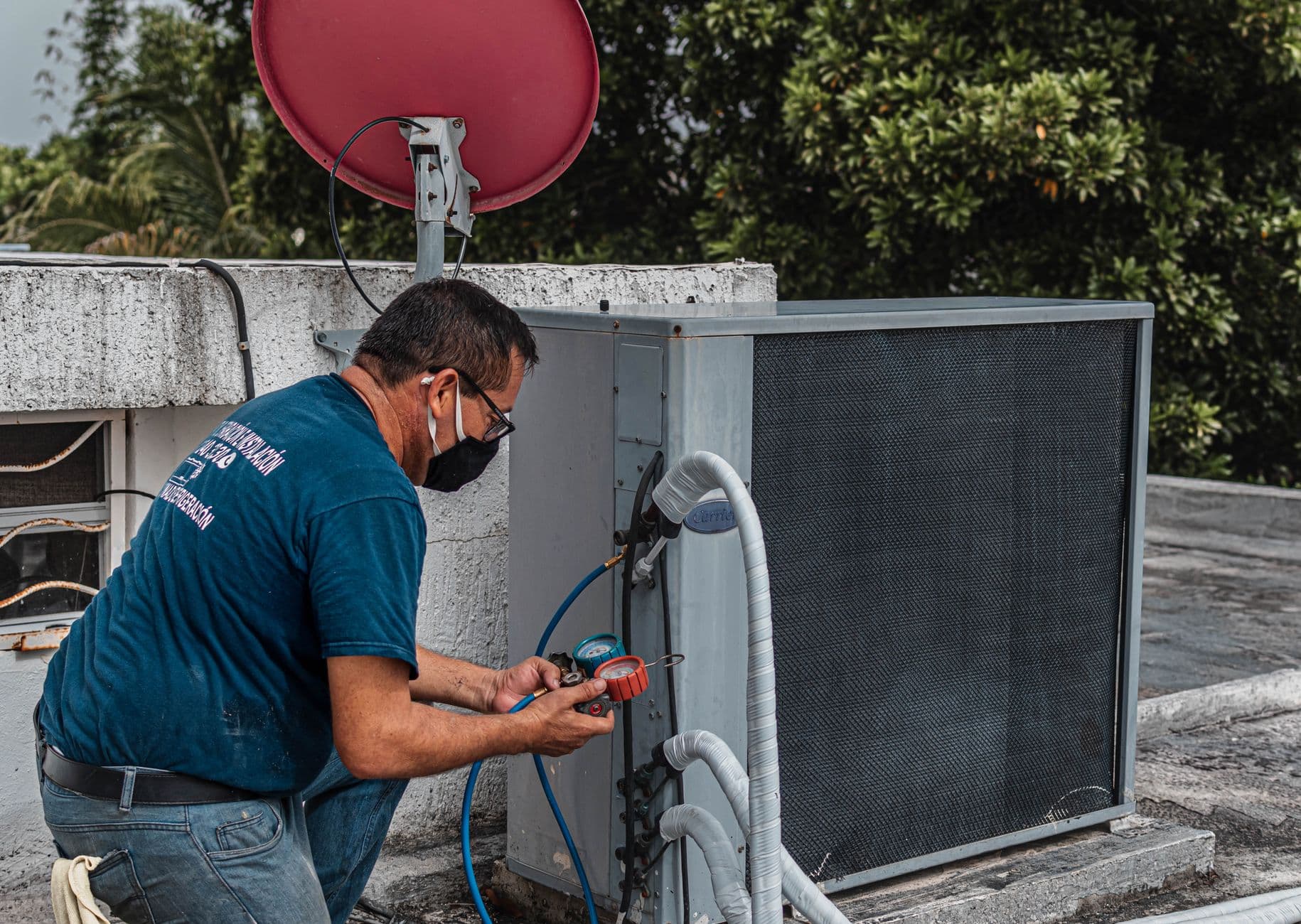
- Professional Qualification: The installation must be carried out by a certified company (RGE - Reconnu Garant de l'Environnement). The refrigerant technician's capacity certificate is essential here to guarantee the proper handling of refrigerants.
- Nature of the Work: It must be a replacement installation or the first high-performance heating equipment in an existing dwelling.
The Specific Challenge for Co-owned Properties
Installing an air-to-air heat pump in an apartment is often hindered by the regulatory constraints of the managing agent (syndic) and the co-ownership rules. In 2026, the VAT reduction makes the investment more attractive, but it does not waive administrative procedures.
Syndic Authorization and Aesthetics
The major point of friction remains the outdoor unit. Co-ownership rules often prohibit modifying the exterior appearance of the facade. To succeed in your project while benefiting from reduced VAT, it is advised to:
- Propose a discreet location: Use approved AC covers or install the unit on a private balcony.
- Rely on the National Heat Adaptation Plan: Co-ownerships are now encouraged to facilitate the installation of cooling systems in the face of increasing heatwaves.
- Vote in the general assembly: If the installation requires a modification of common areas, a vote is necessary. The financial argument of 5.5% VAT can help convince co-owners of the relevance of a collective approach.
The Case of Collective Installations
Some co-ownerships opt for collective heat pump systems. In this case, the reduced VAT can apply to all the energy renovation work of the building, thereby optimizing charges for all residents.
Comparative Analysis: Real Financial Impact
To illustrate the concrete advantage of this measure, let's compare the installation of a multi-split system (3 indoor units) for an 80 m² apartment.
| Expense Item | Old Regime (20% VAT) | New Regime (5.5% VAT) | Net Gain |
|---|---|---|---|
| Equipment (excl. tax) | €4,500 | €4,500 | - |
| Labor (excl. tax) | €1,500 | €1,500 | - |
| VAT Amount | €1,200 | €330 | €870 |
| Total (incl. tax) | €7,200 | €6,330 | €870 |
This gain of €870 is immediate. If combined with Energy Savings Certificates (CEE), the out-of-pocket cost for the owner can drop below €5,000, making the investment profitable in just a few seasons thanks to the energy savings realized over traditional electric heating.
Pitfalls to Avoid and Points of Vigilance
Despite the simplification of procedures announced as of March 2026, certain pitfalls remain during the quoting phase.
The "Hybrid" Quote
Some installers, to simplify their management, continue to apply 20% VAT out of habit or due to a lack of information on the latest decrees. Demand an explicit mention of the 5.5% rate on your quote. If the contractor refuses, ask if they hold the RGE qualification and if they recognize the equipment as an air-to-air heat pump.
Confusion with Air-to-Water Heat Pumps
Do not confuse air-to-air heat pumps (which blow hot or cold air) with air-to-water heat pumps (which feed radiators or underfloor heating). Although both benefit from reduced rates, the performance criteria and associated CEE bonuses differ. Ensure that the chosen equipment matches your summer cooling needs.
Technical Compliance
The tax administration and control bodies may request proof that the installed device is indeed high-performing. Carefully keep:
- The detailed invoice.
- The technical data sheet of the device (certifying its energy efficiency).
- The installation certificate signed by the RGE professional.
Conclusion: An Opportunity to Seize Now
The shift to 5.5% VAT for reversible air-to-air heat pumps is one of the most concrete measures to combat summer thermal precariousness while reducing winter energy bills. For the owner, it is the ideal time to transform an obsolete heating system into a versatile solution.
By correctly coordinating this tax reduction with CEE aid and ensuring the compliance of quotes, the installation of a reversible air conditioning system is no longer a prohibitive investment, but a strategy for property valuation and sustainable comfort.
Expert Tip: Before signing, verify that your installer is up to date with their capacity certificate for handling refrigerants (R32 or R290). This is the guarantee of a secure installation and an unassailable tax file.

Need an air conditioning solution?