Air Conditioning a Flat Without an Outdoor Unit: Through-the-Wall Monobloc, Ducted or Portable — What Are These Solutions Really Worth in 2026?

L'équipe Proclimo
21 Sep 2026 - 09 min read
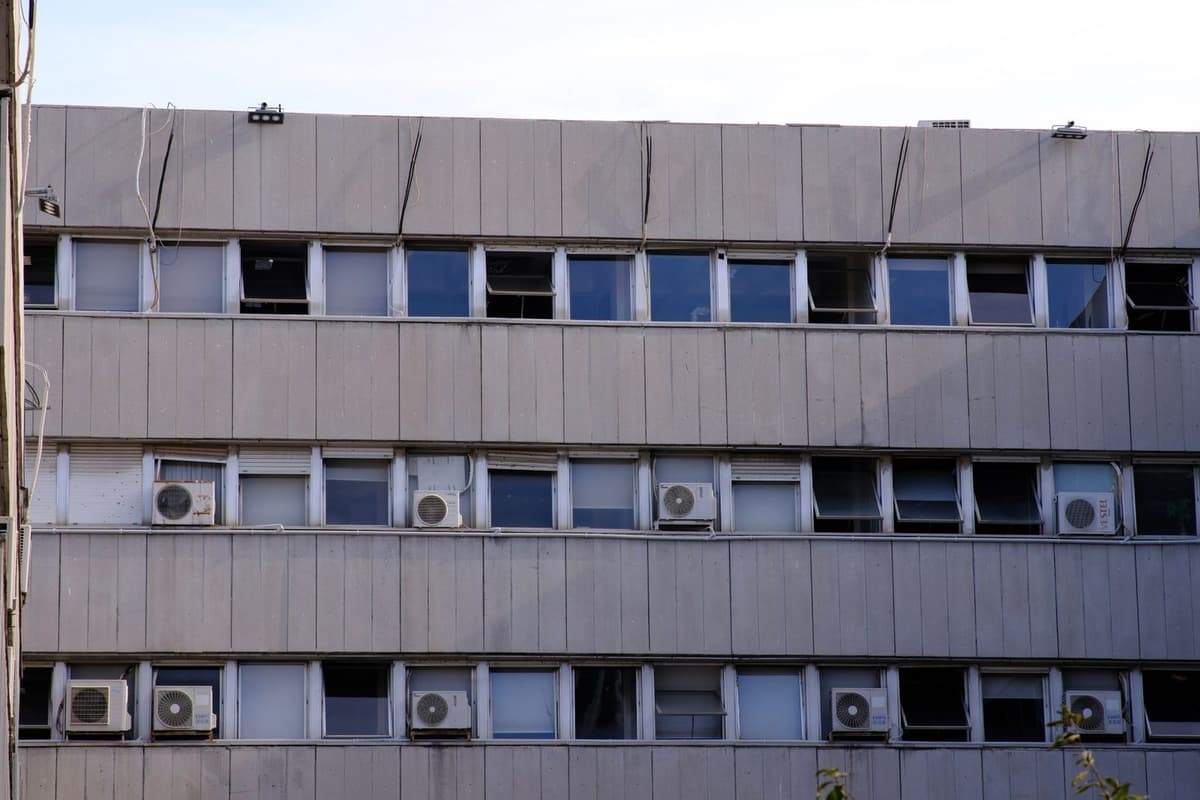
"Your application to install an outdoor unit has been rejected." Three lines in the minutes of a general meeting, and an air conditioning project is on hold for a year — at the very least. Ever since the 5.5% reduced VAT rate caused installation requests to explode, building managers have been swamped with motions for "installation of an outdoor unit on the façade," and many of them fall by the wayside. Add to that buildings in conservation areas where heritage architects have a say, Haussmann-era blocks with enclosed courtyards, rented flats where the landlord won't hear a word about drilling: hundreds of thousands of French homes are, in practice, ruled out of the classic split system.
Hence the question that lands in installers' inboxes every summer: can you have air conditioning without an outdoor unit? The honest answer is yes, but not just any way, and not at the same cost in comfort. Between a genuine compressor-driven monobloc air conditioner and an "air cooler" sold for €89 in a supermarket, there's a thermodynamic chasm that product sheets are careful not to explain.
Why the outdoor unit exists (and what you lose by removing it)
An air conditioner doesn't create cold: it moves heat. It takes heat from the room and has to dump it somewhere else. In a split system, that "somewhere else" is the outdoor unit, with a large heat exchanger and a fan sized for the job. This is precisely why split systems post such high performance: a SEER of 6 to 8 on the better models — meaning 6 to 8 kWh of cooling produced for every 1 kWh of electricity consumed.
Remove the outdoor unit, and the heat has to be expelled some other way:
- either through two holes cored through the wall (through-the-wall monobloc);
- or through a flexible duct running out of a window (portable air conditioner);
- or by giving up on the refrigeration cycle altogether (evaporative cooler).
Each of these three routes has a cost in energy, noise or comfort. The table below sums up what you actually give up.
| Solution | Typical SEER / efficiency | Indoor noise | Works required | 2026 installed price |
|---|---|---|---|---|
| Classic wall-mounted split | 6 to 8.5 | 19-25 dB(A) | Drilling + outdoor unit | €1,800 – €3,500 |
| Through-the-wall monobloc (no outdoor unit) | 3.5 to 5.5 | 38-46 dB(A) | 2 cored holes Ø 160-200 mm | €1,500 – €2,800 |
| Portable monobloc unit | 2.4 to 3.2 | 50-64 dB(A) | None (duct out of window) | €300 – €900 |
| Portable split unit (2 blocks) | 3 to 3.8 | 42-50 dB(A) | Routing the connecting line | €700 – €1,500 |
| Evaporative cooler | No SEER (≈ 0.3 kW drawn) | 45-58 dB(A) | None | €80 – €400 |
Remember the order of magnitude: for equivalent comfort, a through-the-wall monobloc consumes around 40% more than a split, and a single-duct portable unit can use up to two and a half times as much. Over a summer season of 400 operating hours in a 25 m² room, the difference works out at between €60 and €140 of electricity.
The through-the-wall monobloc: the genuine technical alternative
This is the most serious option when the outdoor unit is banned. The appliance looks like a slightly thicker indoor unit (30 to 40 cm deep), mounted low on the wall or high up, on a wall facing outside. The entire refrigeration circuit — compressor included — is built into it. Heat is expelled through two cored holes in the wall: one for intake air, one for exhaust air, protected on the façade side by discreet grilles 16 to 20 cm across.
Few manufacturers have a long track record in this niche: Olimpia Splendid (Unico range), De'Longhi, Innova, and a handful of models from Argo. In 2026, virtually all new models have switched to R-290 (propane), a hydrocarbon with a GWP of 3, a direct consequence of the HFC phase-down timetable in the European F-Gas Regulation 2024/573. That's good environmental news, but it comes with rules: R-290 is flammable (class A3), which caps the permitted charge and therefore the available capacity. In practice, expect 2 to 2.7 kW of cooling, i.e. a room of 25 to 35 m² at most, and well insulated.
What nobody tells you before installation
Three points make the difference between a satisfying monobloc and a purchase you regret.
Noise. The compressor is in the room. Good models go down to 38-40 dB(A) at minimum fan speed, which is still audible in a bedroom at night. If the unit is destined for a bedroom, insist on the technical data sheet showing the sound pressure level at 1 metre (not sound power, which artificially inflates the figures). A pocket digital sound level meter lets you check for yourself after installation, and costs less than hiring an expert.
Air short-circuiting. The two façade grilles must be far enough apart (30 cm minimum between centres, more if possible) and must not sit in a recess. Otherwise the hot exhaust air is immediately drawn back in, condensing pressure climbs and the unit trips out when it's 35 °C outside — precisely the day you need it.
Condensate. Some models evaporate the water into the exhaust air stream, others don't. In a humid climate (coastal areas, the Rhône valley), you absolutely must plan a drain to a trap or an outside wall, otherwise you'll be emptying a tray. This topic is covered in detail in our article on condensate drainage.
Does it qualify for the 5.5% VAT rate?
A central question since the July 2026 reform. The reduced 5.5% rate applies to energy performance improvement works in homes completed more than two years ago, and now includes air-to-air heat pumps, equipment and labour alike, provided the work is invoiced by the company supplying the equipment.
Two conditions to watch out for with a monobloc:
- The equipment must be fixed and built into the fabric of the building. A through-the-wall monobloc with cored holes falls into this category. A portable unit standing on the floor does not: that's a sale of movable goods, taxed at 20%.
- The installation must be carried out by a professional, with a VAT declaration (simplified form since 2026) handed to the company before invoicing.
Note: contrary to a widespread belief, the 5.5% VAT rate is not conditional on RGE certification. RGE status is a condition for MaPrimeRénov' and energy saving certificates (CEE), not for the VAT rate. The company must, however, hold a refrigerant handling certificate if it works on the circuit — which is not the case with monoblocs delivered pre-charged and factory-sealed, a nuance that explains why some general electricians install them.
Things to check on the quotation: the VAT rate stated line by line, the exact model reference, the SEER, and a description of the cored holes with their diameter. A quotation that says "supply and installation of an air conditioner" without a model reference is a quotation you turn down.
Portable air conditioners: useful, but not for what you think
More than a million are sold every year in France during heatwave summers. The dominant model is the single-duct monobloc: one hose expels hot air out of the window. Its flaw is structural and needs to be understood once and for all.
The unit draws in room air to cool its condenser, then blows that air outside. The result: the room ends up at negative pressure, and hot outside air seeps in through every gap — under the door, through the roller shutter box, through the ventilation. Part of the cooling produced is therefore cancelled out straight away. Independent measurements typically show a loss of 25 to 40% of the stated efficiency.
Two simple fixes improve the outcome considerably:
- A window sealing kit, the zip-up fabric panel that lets the duct through without letting hot air in. It's the best-value accessory in the whole field: €20 to €35, and 2 to 3 °C gained in the room.
- Insulating the duct itself with an insulated flexible hose, because a 15 cm pipe full of 50 °C air running 1.5 m across the living room heats up exactly what it's supposed to be removing.
One budgetary fact remains: a quality portable unit (with an inverter compressor, R-290, class A++) costs €600 to €900. At that price point, it isn't far off a fixed through-the-wall monobloc, which will be quieter, more efficient, eligible for the reduced VAT rate… and won't tie up a half-open window all summer long.
Where a portable unit really does make sense: the short-term tenant, the occasionally used room, the upper-floor studio with no wall facing outside, or occasional back-up during the three to five genuinely tropical nights of the year.
The special case of the "split" portable
There are two-block portable units connected by a flexible refrigerant line 2 to 3 metres long: the condenser sits on a balcony or a ledge, the evaporator stays in the room. The acoustic gain is clear (the compressor leaves the room) and efficiency climbs back towards 3.5. But beware: placing a block on a balcony still counts as altering the building's external appearance under most co-ownership rules. If the original refusal was on aesthetic grounds, you'll run into the same legal wall.
Evaporative coolers: the false good idea (with one exception)
Sold as "air coolers," "eco-friendly air conditioners" or "air cooling units," these appliances evaporate water on a porous pad with a fan blowing through it. Physically, they lower the temperature by increasing the humidity of the air. Their power consumption is tiny (150 to 300 W versus 800 to 1,200 W for an air conditioner), and that's their only real selling point.
The problem is that their effectiveness is inversely proportional to ambient humidity. In air at 32 °C and 30% humidity (Toulouse in July, on a dry day), you can hope for a localised drop of 4 to 6 °C. In air at 30 °C and 70% (Nantes or Marseille during a muggy spell, or any humid heatwave night), the gain falls below 1.5 °C, and the added moisture degrades the feeling of comfort — or even makes it worse, since it's the evaporation of our own sweat that cools us down.
Santé publique France and ANSES also point out the microbiological risk posed by these tanks of water standing at room temperature: empty and clean the reservoir every time you use it, and dry it completely before storing it away. An indoor thermo-hygrometer costing under €20 is the best arbiter: if your room reads more than 55% relative humidity, an evaporative cooler will do nothing for you.
Before buying anything: the sequence to follow
Many projects work around the co-ownership when they could have gone through it. Before falling back on a compromised solution, exhaust every avenue.
- Re-read the co-ownership rules, not just the minutes of the general meeting. Some rulebooks don't explicitly ban anything; the refusal is then a general meeting decision that can be challenged within two months of notification (article 42 of the Act of 10 July 1965).
- Submit a properly prepared application. A file with a photomontage, the exact position, the noise level at 2 metres and an undertaking to remove the unit if it causes a nuisance goes down far better than a line under "any other business."
- Propose a neutral location: an inner courtyard out of sight, a set-back terrace, a plant room. In buildings in protected areas, heritage architects frequently accept a unit that isn't visible from public spaces.
- If the refusal is final, only then weigh up a fixed through-the-wall monobloc (lasting comfort) against a portable unit (seasonal stopgap).
And in every case, start with what's free and passive, whose effect often exceeds that of an undersized appliance: shade the exposed windows from the outside — an external roller blind for windows or a brise-soleil blocks up to 80% of solar gain, versus 30 to 40% for an interior curtain — ventilate at night, and hunt down internal heat sources. Our article comparing air conditioning with insulation sets out this trade-off in figures.
Maintenance: don't skimp on it just because the unit is small
A through-the-wall monobloc is no exception to common sense:
- filters to be cleaned every 2 to 4 weeks during the season, in lukewarm water, dried completely before refitting;
- façade grilles to be cleared of leaves, cobwebs and insect nests in spring;
- condensate tray and circuit to be checked at the start of the season.
The mandatory periodic inspection of air conditioning systems (decree of 30 July 2020) only applies to installations above 4 kW, which excludes virtually all monoblocs. But the absence of an obligation doesn't mean there's no point: a fouled heat exchanger means 10 to 20% more energy consumption and degraded indoor air. An air conditioner cleaning kit with disinfectant foam and a fine brush is enough for routine upkeep between professional visits.
One final, often-forgotten point: on R-290 appliances, no work on the refrigeration circuit is permitted except by a qualified professional, and winter storage must be in a ventilated space, never in a closed cupboard alongside a gas boiler or water heater.
In summary
If your co-ownership refuses the outdoor unit, you're not condemned to a fan. The R-290 through-the-wall monobloc is a genuine air conditioning solution, eligible for the 5.5% VAT rate when installed by a professional, at the cost of around 40% extra electricity and more indoor noise than a split. The portable air conditioner remains a decent stopgap provided you seal the window. The evaporative cooler is only worthwhile in dry air, and becomes counterproductive in humidity.
And above all: the best euro you can invest is still the one that stops the sun getting in.
Need an air conditioning solution?