Air Conditioning for Hotels and B&Bs in Île-de-France

L'équipe Proclimo
3 Nov 2026 - 10 min read
"We took over a two-star, 14-room hotel in Montreuil. Six rooms have air conditioning, installed in 2011; the other eight have nothing at all. This summer we got eleven online reviews about the heat and had to refund two nights. Our accountant says we should redo everything; one installer is proposing a ducted system, another fourteen split units. We don't even know where to start, or how to carry out the work without closing."
That is the kind of call we get after the season, never before. In the hospitality business, air conditioning is not a comfort feature: it is a revenue line. A room deemed unliveable in July is not an uncomfortable room, it is a room that no longer sells, that drags down an average rating for eighteen months and that generates goodwill refunds you will never recover.
This article does not revisit topics already covered on this blog — homeowners' association approvals, noise and neighbours, the price of a repair call. It describes the method specific to tourist accommodation in Île-de-France: independent hotels, guest houses and B&Bs, holiday cottages, tourist rentals and short-stay residences. The constraints differ from those of a private home: night-time occupancy, guest turnover, the impossibility of closing, and a level of acoustic expectation nobody anticipates.
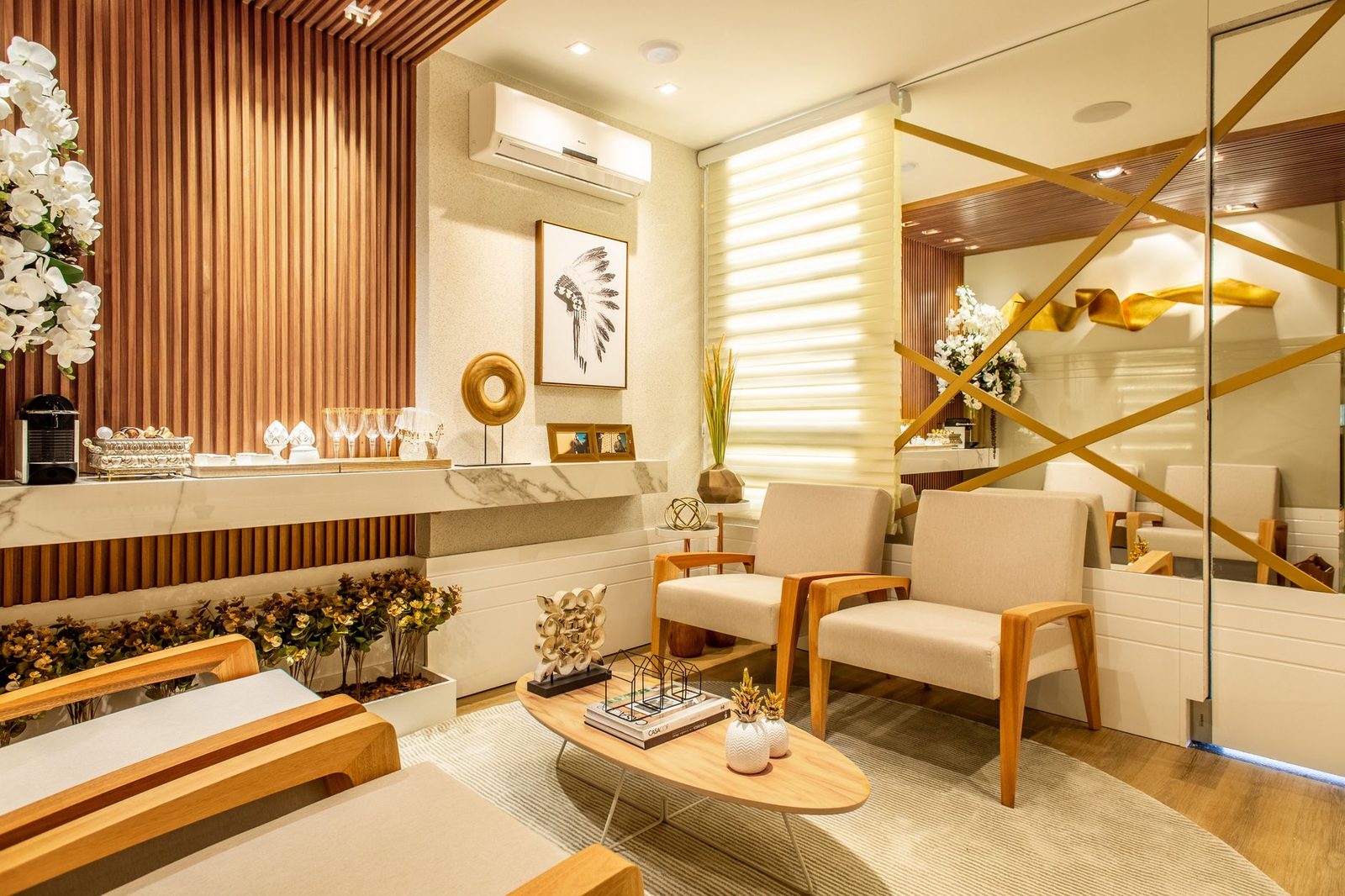
Why a rented room is not a lived-in room
An owner sleeping in their own home will tolerate a faint hum, a slight draught, a compressor restarting at 3 a.m. A guest paying €110 a night tolerates nothing and writes about it publicly the next morning.
The concrete technical differences between a home and a guest room:
- occupancy is night-time and dense: the air conditioning runs mainly between 10 p.m. and 7 a.m., exactly the window where neighbourhood noise rules are strictest and where the slightest whistling becomes unbearable;
- the setpoint is never yours: a guest will set 17 °C, leave the window open, or switch everything off. Control has to be constrained, not free;
- internal heat gains are low but solar gains are high: a top-floor room under a zinc roof in Paris climbs to 33-35 °C during the day while nobody is in it, and has to come back down within two hours of check-in;
- turnover demands higher hygiene standards: a musty smell in a hotel room is perceived as an overall hygiene failure, not an equipment fault;
- downtime is expensive: three days of breakdown in August across four rooms easily means €1,200 to €2,000 of lost revenue.
That is why an accommodation project is sized and contracted differently, even when the equipment installed is identical to that of an apartment.
Choosing the architecture: split per room, multi-split or ducted
All three solutions exist in the hospitality sector and none is universal. The deciding factors are the number of rooms, the available ceiling height and access to the façades.
| Architecture | Suited to | Advantages | Real limitations |
|---|---|---|---|
| One split per room (single split) | 2 to 6 rooms, B&Bs, tourist rentals | Faults stay contained, clear cost allocation, installation in batches | One outdoor unit per room: façades and courtyards fill up fast |
| Multi-split (1 outdoor, 2 to 5 indoor) | Small hotels, guest houses | Fewer outdoor units, lower cost per room | An outdoor unit failure takes several rooms out of service |
| Ducted with per-room return | Hotels with suspended ceilings or service corridors | Visually discreet, virtually inaudible in the room | Heavy construction work, per-room control needs care, central filtration |
| Cassette or floor-standing units | Breakfast rooms, reception, lounges | Wide air distribution, no free wall required | Unsuitable for bedrooms (air blown straight onto the bed) |
Two mistakes come up systematically in the quotes we review.
The first: a multi-split whose outdoor unit is undersized. The supplier advertises "up to 5 rooms", but the available capacity assumes that not all rooms draw at once. In a fully booked hotel on 14 July, they all draw at once and the unit maxes out. In hospitality, you size for the real peak occupancy rate, that is, 100%.
The second: ducted systems without per-room control. A single network for six rooms means a single setpoint. The north-facing room freezes, the room under the roof stays hot, and both guests complain. Ducted systems in hospitality require motorised dampers or separate zones — a line item to check explicitly on the quote, alongside the other points we detail in our guide to the 12 lines to check on an air conditioning quote.
Sizing a room: useful benchmarks
The general method remains the one we describe in our room-by-room kW calculation method, but accommodation adds three corrections.
Correction 1 — rapid cool-down. A room vacated at 11 a.m. and re-let at 3 p.m. has to go from 32 °C to 24 °C in less than two hours, often after housekeeping has worked with the windows open. That justifies a slight power margin on a heavily exposed room, without ever slipping into the oversizing that makes the machine short-cycle and creates cold draughts.
Correction 2 — exposure and roofing. In Île-de-France, top-floor rooms under zinc or slate, very common in Parisian hotels, behave like attic spaces. A 14 m² room there often needs the capacity of a 20 m² room on the second floor. We cover this phenomenon for private homes in the article on attics and upper floors that stay hot.
Correction 3 — humidity. In a July-August in the Paris region, a room at 25 °C with 65% humidity is judged "stifling" even though the temperature is fine. A slightly oversized machine dehumidifies poorly because it stops too soon. That is the strongest technical argument against the reflex of "let's go bigger to be safe".
As a rough guide, for a standard, well-insulated room in the Paris region: 2 to 2.5 kW for 12-16 m², 3 to 3.5 kW for 18-25 m², to be adjusted after a technical survey based on orientation, glazing and floor level.
Noise: the real breaking point
This is where accommodation projects fail most often, and for two distinct reasons.
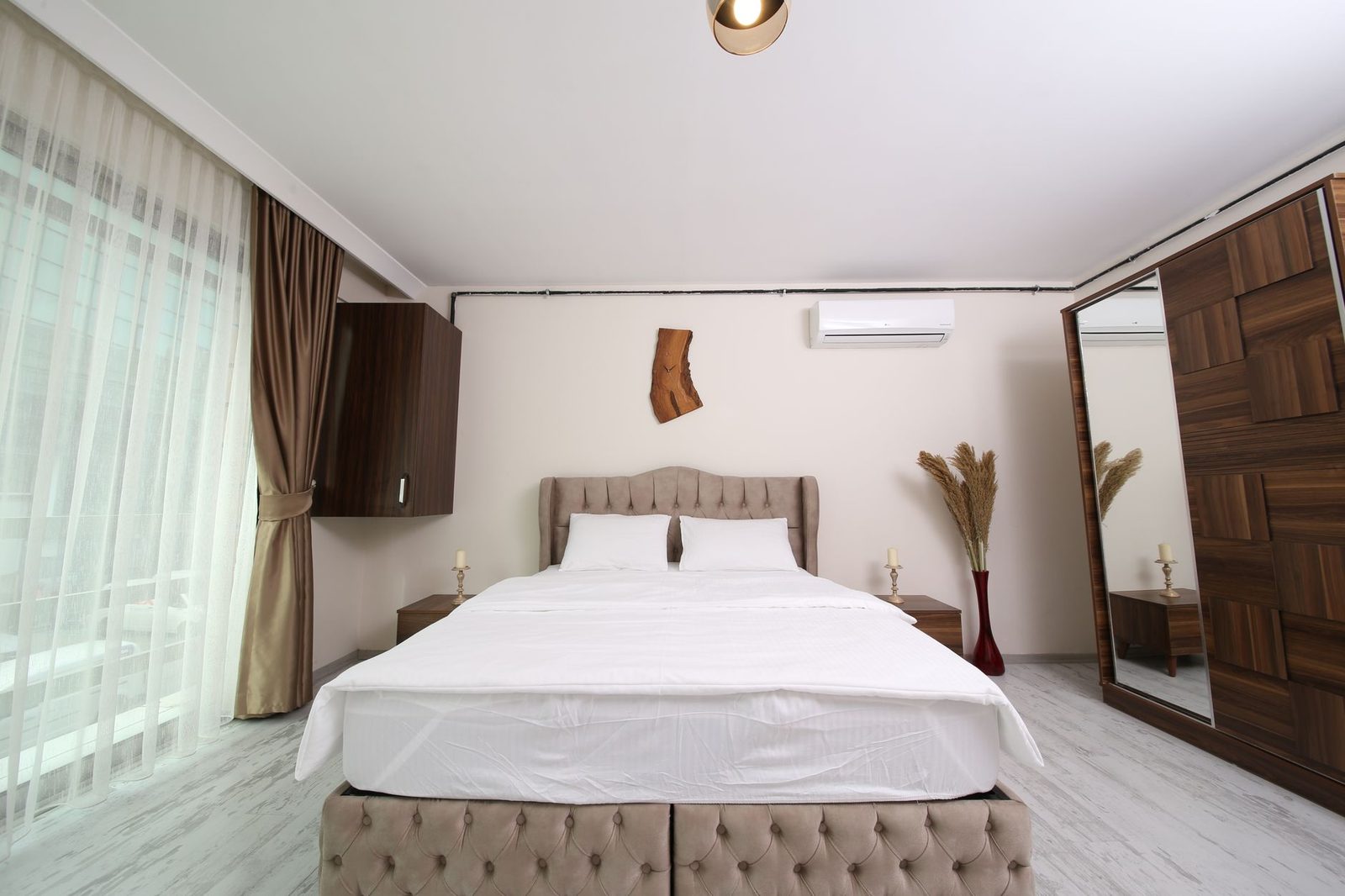
Indoor noise, as perceived by the guest. A wall unit is often rated at 19 to 22 dB(A) at minimum fan speed — but that figure is measured in a laboratory, at reduced output. In a bedroom, what wakes people up is not the average level: it is the variations, the clack of the motorised louvre, the gurgle of condensate and the compressor start-up transmitted through poorly isolated refrigerant lines. Three precautions are worth more than the data sheet: position the unit away from the axis of the bed, systematically decouple wall penetrations, and cap the maximum fan speed in night mode via the installer settings.
Outdoor noise, as perceived by the neighbours. Outdoor units run at night, the period when the permissible noise emergence under the French Public Health Code is at its lowest. A hotel in the heart of a Parisian block with six units in an inner courtyard stacks up emissions and creates an amplification effect between the façades. The subject is covered in detail in our article on air conditioning noise and neighbours: in hospitality, add to that the fact that the complaint often comes from a local resident, not a guest, and that it can lead to a formal notice in the middle of the season.
In the projects we oversee, the combination that works: anti-vibration mounts, a perforated acoustic screen rather than a closed enclosure, and above all a layout studied on plan before ordering the equipment, not afterwards.
Hygiene and odours: a professional requirement, not a comfort issue
In a home, a musty smell is an annoyance. In a rented room, it is a public review. The causes are well known and always the same: a fouled indoor heat exchanger, a condensate tray with a dried-out trap, saturated filters, and abrupt shutdown of the machine without drying the coil.
A realistic protocol for accommodation:
- at every turnover: wipe down the casing and grilles, visually check drainage;
- every 2 to 4 weeks during the season: filter cleaning by housekeeping staff. It is a ten-minute job per room, requiring nothing more than a soft vacuum brush and an air conditioner cleaning product suited to evaporator fins, rather than aggressive household cleaners;
- twice a year by a professional: heat exchanger disinfection, clearing of the condensate network, leak-tightness and pressure checks.
We detail the tasks you can do yourself and those to leave to a refrigeration engineer in the article on air conditioning filters, and the precise origins of odours in the one devoted to air conditioners that smell musty or like sewage.
One point that is often overlooked: traceability. A maintenance log per room, even kept in a simple paper technical maintenance logbook, serves as evidence in the event of a guest dispute, during a rating inspection or an official check. It also serves whoever buys the business: a hotel sold with a complete maintenance history negotiates better than one where nobody knows when the last leak check took place.
Rating, obligations and the regulatory framework
Three regulatory points to know before committing a budget.
Hotel star rating. The Atout France framework awards points for air conditioning and the thermal comfort of rooms. A hotel aiming for or keeping a rating would do well to check the current table on atout-france.fr before choosing its architecture: equipping 60% of rooms instead of 100% can change a criterion.
The maintenance obligation. Beyond commercial good practice, Decree no. 2020-912 requires a periodic maintenance visit for air conditioning systems and reversible heat pumps above 4 kW, at intervals of two to five years depending on capacity, carried out by a professional. For installations above 70 kW, the periodic inspection provided for by the French Energy Code applies as well. And above the refrigerant charge thresholds, the annual leak check under the F-Gas Regulation applies, to be performed by a company holding a certificate of competence. The framework is detailed in our article on mandatory maintenance.
The refrigerant. New equipment today is overwhelmingly R-32, and the HFC phase-down schedule under the F-Gas Regulation is making R410A increasingly expensive to recharge. A hotel whose equipment dates from 2010-2013 needs to factor this into its multi-year plan: see our analysis on repairing or replacing an air conditioner more than ten years old.
To this must be added, depending on the case, homeowners' association approval for hotels and rentals in multi-occupancy buildings, a prior declaration to the town hall for any unit visible from the public highway, and the requirements of any protected-area planning rules. For a public-access building, fire safety rules also mean you cannot drill through just any floor slab or duct: penetrations must retain their fire-resistance rating, a point your inspection body will verify.
Working without closing: phasing that works
A hotel does not close for three weeks. The rule we apply: work in batches of rooms, out of season, with drilling grouped together.
| Phase | Recommended period in Île-de-France | Content | Impact on operations |
|---|---|---|---|
| Technical survey and measurements | October-November | Drawings, outdoor unit siting, pipe routes, capacities | None |
| Administrative filings | November-January | Prior declaration, HOA general meeting, inspection body | None |
| Batch 1 (3-4 rooms) | February-March | Drilling, pipework, installation, commissioning | 3 to 5 days per room |
| Batch 2 onwards | March-April | Same | Same, remaining rooms still sellable |
| Handover and night-time settings | April | Fan speed capping, min/max setpoints, acoustic measurements | None |
Two pieces of field advice. Group the noisy work (core drilling, anchoring) into 9 a.m.-5 p.m. slots and block adjoining rooms from sale on those days: it costs less than a refund. And plan for temporary units during the works phase or as backup in case of breakdown: a quiet pedestal fan in each affected room avoids most goodwill refunds, for a trivial outlay. The full sequence of a typical project is set out in our article on the stages of an installation, from technical survey to commissioning.
Controlling setpoints: the most profitable saving of all
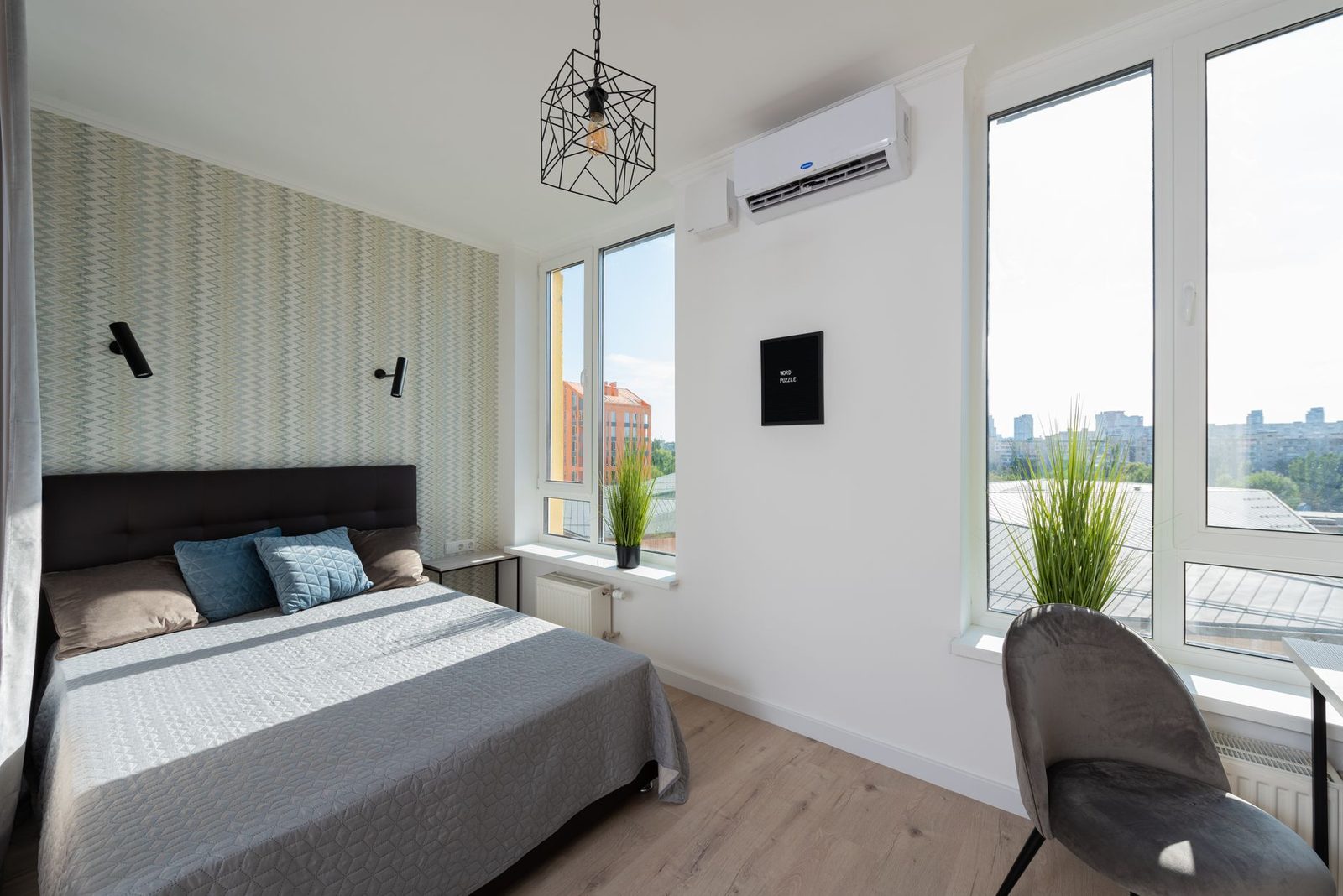
In the hospitality sector, most waste comes not from the equipment but from how it is used: air conditioning at 18 °C with the window open, a room cooled all day while it is empty, the machine left running after check-out.
Three measures that pay for themselves in a single season:
- Cap the setpoints in the installer settings (for example 21-26 °C): the guest keeps control, but not the ability to drop to 17 °C. Remember that the indoor-outdoor difference recommended by ADEME remains 5 to 7 °C, i.e. 26 °C when it is 33 °C outside.
- Shut down on window opening, via a frame contact linked to the unit, or at the very least a key-card switch that cuts the room when the guest is out.
- Monitor consumption per room or per floor. A simple DIN-rail electricity meter fitted by an electrician on the air conditioning circuit reveals within two weeks which rooms are drifting, and lets you put a figure on the "energy" line in the cost price of a room night. Typical consumption figures for an air-to-air heat pump are given in our article on the real cost of air conditioning on your electricity bill.
On the budget side, the ranges we see in Île-de-France for a careful installation in an accommodation setting, barring special cases: €1,600 to €2,600 per room for a single or multi-split wall unit, considerably more for a ducted system with zoning and suspended ceilings, plus any costs for an inspection body, scaffolding or a cherry picker in a narrow courtyard. On financing, the framework for reduced VAT and subsidies differs depending on whether the premises are residential or commercial: to be checked case by case, and the article on financing an air-to-air heat pump sets out how to read the rules.
The maintenance contract: what it must include for accommodation
A standard "one visit a year" contract does not protect a hotel. The clauses that matter:
- two visits a year, one of them in April-May before the load ramps up;
- a guaranteed response time during the summer, ideally 24 to 48 working hours, with weekend on-call cover for high-occupancy properties;
- a named list of machines by room, with serial numbers and refrigerant charges — essential for F-Gas records;
- heat exchanger disinfection and condensate network treatment explicitly included, not optional;
- a stock of wear parts, or a commitment from the contractor on the availability of boards and remote controls for the installed equipment.
In hospitality, the right question is not "how much does maintenance cost?" but "how much does a room out of service for three days in August cost?". The answer makes the contract look trivial.
Our dedicated pages set out the services in detail: air conditioning maintenance for businesses and, by area, the county-level hubs accessible from that same page.
In summary
Air conditioning a hospitality property in Île-de-France means balancing three rarely compatible constraints: the guest's night-time comfort, the quiet owed to neighbours, and business continuity. The projects that hold up share four habits: room-by-room sizing done on site, outdoor unit siting studied before buying the equipment, capped setpoint control, and a maintenance contract aligned with the tourist season rather than the calendar year.
If you are preparing works for the 2027 season, winter is the right window: technical survey in November-December, paperwork in January, installation in batches in February-March. Book a technical survey: we assess the rooms one by one and provide a costed phasing plan, batch by batch.
Need an air conditioning solution?