AC in Small Co-ops: Deciding Without a Pro Manager

L'équipe Proclimo
1 Nov 2026 - 09 min read
"There are six units of us in Asnières, in a building from 1962. No professional managing agent: I'm the one on the second floor who has served as volunteer syndic for the past four years. Two co-owners want to install reversible air conditioning, a third already put his in last August without asking anyone, and the ground-floor neighbour is threatening to go to court. I have to call the general meeting in February. I don't know what resolution to write, what majority applies, or what documents I should be asking for."
That is the kind of call we get from volunteer managing agents — and it has nothing in common with a call from a professional property management firm. In a small co-ownership with no professional managing agent, the sticking point is almost never legal: it is documentary and calendar-related. Nobody knows what to ask for, so nothing gets voted; since nothing is voted, installations happen "on the quiet"; and the building ends up with five outdoor units mounted any which way and no written record at all.
This article does not go back over the general rules on authorisation in a co-ownership — they are already covered on this blog. It describes the working method for the volunteer managing agent and for the co-owner making the request in buildings of 4 to 12 units in Paris and the inner suburbs: what file to assemble, what resolution to draft, what documents to archive, and how to deal with installations already in place without going to court.
Why small co-ownerships go off the rails more than large ones
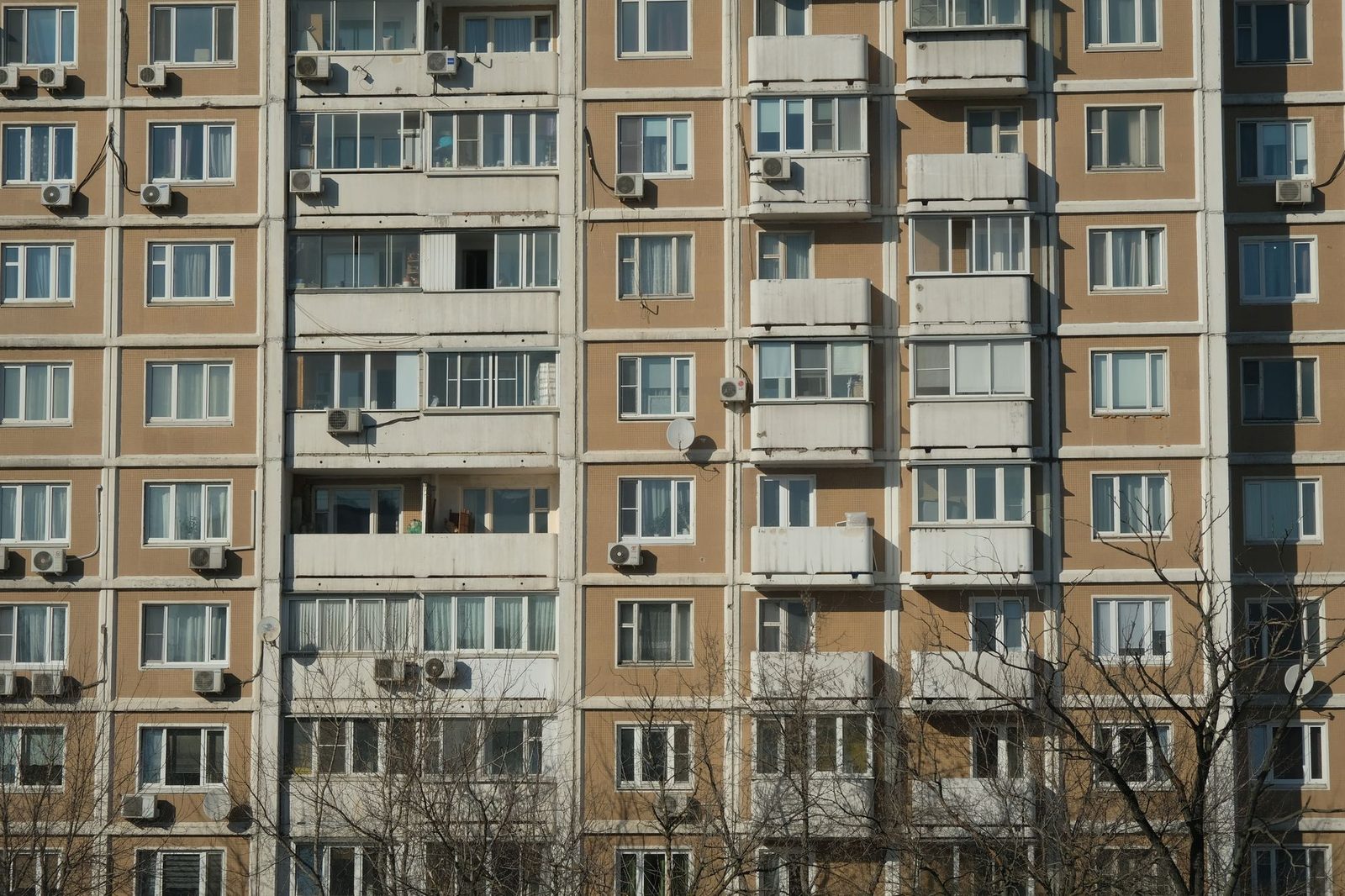
An 80-unit co-ownership with a management firm has a digitised set of by-laws, a maintenance logbook, a consulting architect and a properly structured annual general meeting. A six-unit co-ownership usually has:
- co-ownership by-laws dating from 1960–1980, on paper, sometimes to be found only at a single co-owner's home;
- no up-to-date maintenance logbook, even though it is mandatory (Decree no. 2001-477);
- one general meeting a year, sometimes held around a kitchen table, with no detailed agenda;
- direct neighbourly relations, where a refusal turns into a personal conflict.
The result: the air conditioning request arrives outside the general meeting, by email or from landing to landing. The applicant hears "it doesn't bother me" from three neighbours out of five and considers the matter settled. Legally, it is nothing of the sort: a neighbour's verbal agreement authorises nothing.
An agreement between co-owners has no value as an authorisation. Only a resolution voted at a general meeting and recorded in the minutes authorises works affecting the common areas or the external appearance of the building.
The "small co-ownership" regime does not remove the vote
Since Ordinance no. 2019-1101, co-ownerships with fewer than five main units (or whose average forecast budget is below €15,000) benefit from a lighter regime: no mandatory co-ownership board, and decisions can be taken unanimously by the co-owners present without heavy notice formalities. Two-unit co-ownerships enjoy an even more flexible regime.
What this regime does not remove: the need for a documented collective decision. Simplifying the form does not allow you to dispense with the substance. And in practice, it is precisely this relaxation that leads small buildings to write nothing down at all.
What requires a vote, and what does not
Before drafting a resolution, the request has to be categorised. Three very different cases come up in Paris-region buildings.
| Situation | Classification | Applicable majority (Act of 10 July 1965) |
|---|---|---|
| Outdoor unit mounted on a private balcony, not visible from the street, drilling through a façade wall | Works affecting the common areas and the external appearance | Article 25 — majority of the votes of all co-owners |
| Unit mounted on a common area (roof, courtyard, gable wall, landing duct) | Appropriation of a common area for private use | Article 26 — reinforced majority |
| Portable air conditioner on castors, with no drilling or external fixing | No alteration to the common areas | No vote — but nuisance and condensate drainage issues can still be raised against you |
| Like-for-like replacement of a machine already authorised | Maintenance of private equipment | No vote if the location, the mounting and the appearance do not change |
The last case is the one most often cited to us, sometimes wrongly. Replacing a 2012 R410A split with an R32 model frequently changes the outdoor unit's dimensions, its mounting position and its noise level: if the before and after photos cannot be superimposed, it is better to have the matter noted at a general meeting. The R410A → R32 switch is covered in detail in our article on repairing or replacing an air conditioner more than 10 years old.
The file the applicant must supply (and the volunteer managing agent must demand)
This is the heart of the problem. A volunteer managing agent doesn't know what to ask for, so they receive a three-line email and a one-page quote — impossible to put to the vote.
A usable file comes down to six documents:
- The detailed quote from the installer, with brand, model, output in kW, noise level in dB(A) of the outdoor unit at nominal speed and in night mode, and the length of the refrigerant lines. Our checklist of 12 points to check on a quote serves here as a reading grid for the managing agent.
- A dimensioned plan or sketch of the outdoor unit's location, with distances to boundaries, to neighbours' windows and to the ground.
- A photomontage, or simply a photo of the façade with the location marked on it. In a co-ownership, this is the document that unlocks the most votes: opponents always imagine the worst.
- The condensate drainage route: discharge point, slope, connection. This is the number one cause of damage claims and disputes between units.
- The company's certificates: refrigerant handling capability certificate (Article R.543-99 of the French Environment Code), professional public liability insurance and a valid ten-year structural warranty.
- A written undertaking from the applicant: full responsibility for maintenance, for restoring the façade if the unit is removed, and for any damage caused to the common areas.
A volunteer managing agent who circulates this list by email as soon as the first request comes in saves six months. An expanding file folder per unit, filed with the invoices and certificates, is enough to maintain the building's maintenance logbook; in small co-ownerships, we find that the technical memory rests entirely on one person, and disappears when that person sells.
Drafting the resolution: wording that holds up
A resolution that "authorises Mr X to install air conditioning" protects nobody. It sets no framework for the location, the model, the noise or what happens next.
Here is the structure that holds up, used by professional management firms and transposable to a volunteer managing agent:
Resolution no. X — Authorisation of private works affecting the common areas and the external appearance: installation of a reversible air-to-air heat pump, unit no. …
The general meeting authorises Mr/Mrs …, owner of unit no. …, to have installed at their sole expense a reversible air-to-air heat pump of brand …, model …, with an output of … kW, whose outdoor unit will be mounted … (precise location), in accordance with the quote from company … dated … and the plan appended to these minutes.
This authorisation is granted subject to the following conditions: — sound pressure level not exceeding … dB(A) at the property boundary, with night mode activated between 10 p.m. and 7 a.m.; — works carried out by a company holding the refrigerant handling capability certificate and covered by public liability and ten-year structural insurance, the certificates for which are to be provided to the managing agent before work begins; — condensate drainage connected in accordance with the appended plan, with no discharge onto a common area or onto a neighbouring unit; — annual servicing at the co-owner's expense, with proof provided to the managing agent on request; — like-for-like restoration of the façade if the equipment is removed; — the authorisation attaches to the unit and passes to its successive purchasers.
The last two lines are the ones that are systematically forgotten — and they are the ones the notary will look for on resale. An authorisation granted "personally to the co-owner" rather than attaching to the unit creates a legal vacuum at every change of ownership.
The trap of voting "for the whole building"
In small buildings, one idea comes up often: voting a blanket authorisation allowing any co-owner to install air conditioning in line with a shared set of specifications (same standard location, same bracket colour, same dB(A) range). This is excellent practice, on one condition: the specifications must be appended to the minutes and set a maximum number of units per façade or per courtyard.
We have seen 20 m² inner courtyards in the 11th arrondissement of Paris take five outdoor units, each individually compliant, producing an unmanageable cumulative noise level. Noise does not add up intuitively: two identical machines side by side add roughly 3 dB(A) to a single source. The applicable thresholds are discussed in our article on air conditioning noise and neighbours.
Units already installed without authorisation: regularise rather than remove
This is the most common situation after summer. A co-owner had a machine installed in July without asking anyone. There are three options, and the order matters.
1. Retrospective regularisation. The managing agent puts a regularisation resolution on the agenda of the next general meeting, with the same six-document file as for a new request. If the vote passes, the matter is closed and on record. This is the most frequent outcome in small co-ownerships, because the machine is often correctly installed.
2. Conditional compliance works. The general meeting regularises the installation but imposes corrective measures: relocating the unit, fitting anti-vibration mounts, redoing the condensate drainage, adding an acoustic screen. Typical budget in the Paris region for this kind of remedial work: €350 to €900 depending on access, excluding moving the machine itself.
3. Refusal and restoration. Legal action to have unauthorised works removed is subject to a ten-year limitation period (Article 42 of the 1965 Act). It requires the general meeting to authorise the managing agent to take legal action. In a six-unit co-ownership, that is a costly and socially destructive procedure: we almost only see it succeed where there is a real, measured nuisance.
One practical piece of advice for the volunteer managing agent: before calling something a nuisance, measure it. A domestic decibel sound level meter does not produce court-admissible evidence — only an acoustic measurement by an engineering consultancy can be relied on — but it does tell you whether you are dealing with a real problem or a perception. In half the cases, the reading shows that the machine is not the dominant source.
The timetable: the real cause of deadlock
One annual general meeting, called twenty-one days in advance, with an agenda set by the managing agent: that is all that separates a project approved in March from a project postponed by a year.
The rhythm that works in the Paris region:
| Period | Action |
|---|---|
| November – December | The applicant arranges the technical survey and obtains a detailed quote |
| December – January | Complete file sent to the volunteer managing agent; request for inclusion on the agenda by registered letter (Article 10 of the 1967 Decree) |
| January – February | Notice of meeting sent out with the appendices (plan, photomontage, quote) |
| February – March | Vote at the general meeting, minutes drafted with appendices |
| March – May | Works carried out outside peak season, with short installer lead times |
The tipping point is inclusion on the agenda. Any co-owner can require it by registered letter to the managing agent before the notice of meeting goes out; the volunteer managing agent cannot refuse. That is the lever to use when a request has been dragging on for two years.
On the technical preparation side, a proper technical survey prices the refrigerant lines, the duct routing and the condensate discharge point. The full sequence is described in our guide to the stages of an installation, from technical survey to commissioning.
What a volunteer managing agent should archive after the vote
In small co-ownerships, loss of information is risk number one. To keep, per unit:
- the minutes of the general meeting and their appendices (plan, quote, photomontage);
- the installation invoice and the commissioning certificate;
- the company's certificates (refrigerant handling capability, ten-year warranty);
- the equipment's technical data sheet, with the refrigerant type and charge in kg;
- proof of annual servicing.
One lever arch archive binder per financial year, backed up by a digitised folder shared between co-owners, is enough. For buildings with no plant room, a small waterproof storage box in the cellar saves you from finding warped manuals five years later. And if the building already has several machines, the inventory logic is the same as the one described for managing a portfolio of rented homes.
Three mistakes that come up in every case
Confusing absence of objection with authorisation. A neighbour who says nothing votes nothing. On resale, the notary will ask for the minutes.
Forgetting the façade beyond the co-ownership by-laws. In Paris and in municipalities with protective local planning rules, a unit visible from the public highway may require a prior declaration to the town hall, regardless of the general meeting vote. The two authorisations do not replace one another. The specific constraints of protected façades are set out in our article on Haussmann-era apartments in Paris.
Making no provision for maintenance. A resolution with no maintenance clause creates orphan equipment: fouling, blocked condensate lines, water running into the flat below. An air conditioner cleaning kit lets the co-owner keep the filters in order between visits, but it is no substitute for an annual professional service on the circuit and the drain pan.
What we actually do in cases like these
A volunteer managing agent does not have to become an HVAC expert. What they can delegate:
- the building-wide technical survey, which identifies once and for all the acceptable locations (rear façade, courtyard, roof terrace) and the condensate discharge points that can be shared;
- drafting a technical note to be appended to the notice of meeting, which co-owners read far more willingly than a quote;
- defining a set of building-wide specifications: maximum dimensions, colour, mandatory anti-vibration mounts, dB(A) ceiling, night mode required.
Ballpark figure for this support in the Paris region: €250 to €600 for a co-ownership of 4 to 12 units, often voted as a common charge since it benefits every unit — and more than paid for as soon as it prevents one installation being redone or one legal dispute.
If your building is preparing its early-2027 general meeting, now is the time to get projects priced: request a technical survey or tell us about your situation via the contact form. A complete file in January means an installation in April — not in July, when nobody is available any more.
Need an air conditioning solution?