How Much Does a Reversible Air Conditioner Really Cost on Your Electricity Bill in 2026?

L'équipe Proclimo
7 Sep 2026 - 07 min read
The quote promised €1,100 in annual savings compared with electric convector heaters. The first reconciliation bill, however, came in €340 higher than the previous year. This gap is nothing exceptional — it has become commonplace since the 5.5% VAT rate caused the number of reversible air conditioner installations in France to skyrocket. The problem is almost never the equipment itself. It comes down to three numbers nobody looks at when signing — the SCOP, the SEER and the actual price per kWh paid by the household — plus a handful of usage habits that can double or halve the consumption of the very same unit. Here's how to work out what your air conditioner will really cost you, and where the lost kilowatt-hours are hiding.

Rated output ≠ consumption: the initial confusion
On the label of a wall-mounted split unit you might read "3.5 kW". That is not the electrical power drawn: it is the thermal output delivered, i.e. the amount of cooling or heating the unit is capable of putting into the room. The electricity actually consumed is far lower, because a heat pump doesn't produce heat: it moves it.
The ratio between the two is called the coefficient of performance. Two seasonal indicators, standardised by the European ecodesign regulation and shown on the energy label, serve as the benchmark:
| Indicator | What it measures | Typical 2026 range |
|---|---|---|
| SEER | Efficiency in cooling mode across a full season | 6.1 (class A) to 8.5+ (A+++) |
| SCOP | Efficiency in heating mode across a full season, average climate zone | 3.8 (class A) to 5.2+ (A+++) |
In practical terms, a SCOP of 4.5 means that for every 1 kWh of electricity billed, the unit delivers 4.5 kWh of heat into the home. That is the heart of the economic case for an air-to-air heat pump against a convector heater, whose efficiency is capped at 1.
Worth remembering: the "average climate zone" mentioned on the label corresponds to Strasbourg. In a warm zone (the Mediterranean coast), the real-world SCOP is higher; in the Massif Central or the Ardennes, it is markedly lower than the stated figure.
The calculation formula, applied to a real case
The method fits on a single line:
Annual consumption (kWh) = Annual thermal demand (kWh) ÷ SCOP (or SEER)
Take a 70 m² apartment in Lyon, properly insulated (EPC rating D), fitted with a 5 kW multi-split system with a SCOP of 4.3 and a SEER of 7.0.
In heating mode (October to April)
- Estimated heating demand: around 70 kWh/m²/year over the area heated by the air conditioner, i.e. ≈ 4,900 thermal kWh
- Electricity consumption: 4,900 ÷ 4.3 = 1,140 kWh
In cooling mode (June to September)
- Cooling demand: around 15 kWh/m²/year in the Lyon climate, i.e. ≈ 1,050 thermal kWh
- Electricity consumption: 1,050 ÷ 7.0 = 150 kWh
Annual total: roughly 1,290 kWh. At the regulated electricity tariff (base option, around €0.20/kWh including tax in 2026, according to the schedules published by the Commission de régulation de l'énergie), the bill attributable to the reversible air conditioner works out at around €260 a year.
The same home heated with convector heaters would turn those 4,900 thermal kWh into 4,900 electrical kWh, i.e. close to €980. The gap is real — but it never reaches the amounts sometimes promised, because the real-world SCOP is almost always lower than the catalogue SCOP.
Why your real SCOP isn't the one in the brochure
Five factors erode the performance measured in the laboratory.
1. Outdoor temperature
The efficiency of an air-to-air heat pump drops when it gets cold: at −7 °C, the instantaneous COP of a good unit often falls to between 2.2 and 2.8, compared with 5 to 5.5 at +7 °C. Defrost cycles, which temporarily reverse operation to melt the frost on the outdoor heat exchanger, consume energy without heating.
2. Oversizing
This is the most costly and most frequent mistake. An overly powerful unit reaches the setpoint within a few minutes, shuts down, restarts: these short cycles prevent the inverter compressor from running at low speed, the regime where it is most efficient. A unit oversized by 40% can lose 15 to 20% of its seasonal efficiency.
3. The temperature setpoint
Every degree counts, far more than people think. ADEME points out that one extra degree of heating represents roughly 7% more consumption. In cooling mode the effect is of the same order: going from 24 °C to 22 °C in a living room can increase summer consumption by 15 to 20%.
4. Clogged filters
A saturated filter reduces airflow, strains the fan and degrades heat exchange. Field measurements show losses of 5 to 15% on filters that haven't been cleaned in a full season. A simple set of washable filters for wall-mounted air conditioners, rinsed every three weeks during periods of intensive use, is enough to recover most of it.
5. Heat loss from the building
A reversible air conditioner won't compensate for a thermally leaky home. In a property rated F or G, thermal demand explodes and the bill with it, whatever the SCOP.
Measure rather than estimate: the only reliable method
Theoretical estimates remain estimates. The only way to know what your installation really consumes is to measure it, and that costs less than €40.
Three levels of measurement
- Reading the Linky meter directly. Your supplier's portal (or the Enedis customer area) provides the load curve at hourly or half-hourly intervals. By comparing a day without the air conditioner and a day of normal use, the difference is immediately visible.
- The plug-in energy monitor. For a single-split unit plugged into a socket, a plug-in wattmeter displaying cumulative kWh and cost will give you the exact figure within a few weeks. Note: most fixed split units are hard-wired to a dedicated circuit at the consumer unit, which rules out this option.
- A clamp meter on the dedicated circuit. This is the method that works for all fixed installations. A DIN-rail energy metering module, fitted by an electrician on the air conditioner's circuit breaker, isolates the equipment's consumption and often reports it to an app.
Practical tip: record consumption over a full winter month and a full summer month. Multiplied by the length of each season, those two figures give a far more accurate annual estimate than any online simulator.
Seven levers that cut the bill without sacrificing comfort
Choose the right setpoint, once and for all
For heating: 19 °C in living areas, 17 °C in bedrooms — the values recommended by ADEME. For cooling, the goal isn't 20 °C but a maximum gap of 5 to 7 °C with the outside temperature. At 34 °C outside, aiming for 27 °C indoors is comfortable, healthy and twice as cheap as 22 °C.
Don't constantly switch it off and on again
Counter-intuitive but proven: an inverter air-to-air heat pump is more efficient running continuously at low output than in on/off cycles. For an absence of less than four hours, it's better to raise the setpoint by 3 °C than to switch the unit off.
Use scheduling and off-peak hours
Since the overhaul of off-peak time slots, several suppliers now offer midday windows in summer. Pre-cooling the home during those hours, then letting thermal inertia do the work, shifts a significant share of consumption to the cheapest kWh. A built-in timer or a smart thermostat compatible with air-to-air heat pumps automates these scenarios so you never have to think about them.
Close the shutters before the sun arrives
A home whose solar gains are blocked upstream needs 30 to 40% less cooling. Thermal blackout blinds fitted on the south and west sides cost a fraction of the price of an extra kW of cooling capacity, and work without electricity.
Clean both units twice a year
Indoor filters every three to four weeks during the season, and the outdoor heat exchanger cleared of leaves and dust in spring and autumn. An air conditioner coil cleaning spray, sprayed onto the powered-down outdoor unit, restores part of the lost efficiency. This does not replace the statutory servicing by a professional, which is mandatory every two years for equipment above 4 kW.
Keep the air moving
A ceiling fan drawing 20 to 50 W lets you raise the setpoint by 2 °C for identical comfort, thanks to the cooling effect of moving air on the skin. Its savings-to-consumption ratio is among the best in the home.
Check your contract and your subscribed power rating
An air-to-air heat pump draws a peak current on start-up. Many households stay on 6 kVA when switching to 9 kVA — or the other way round — would change the cost of the standing charge. Comparing offers with different kWh prices (base, peak/off-peak, tempo) is an annual exercise that often pays off more than any settings adjustment.
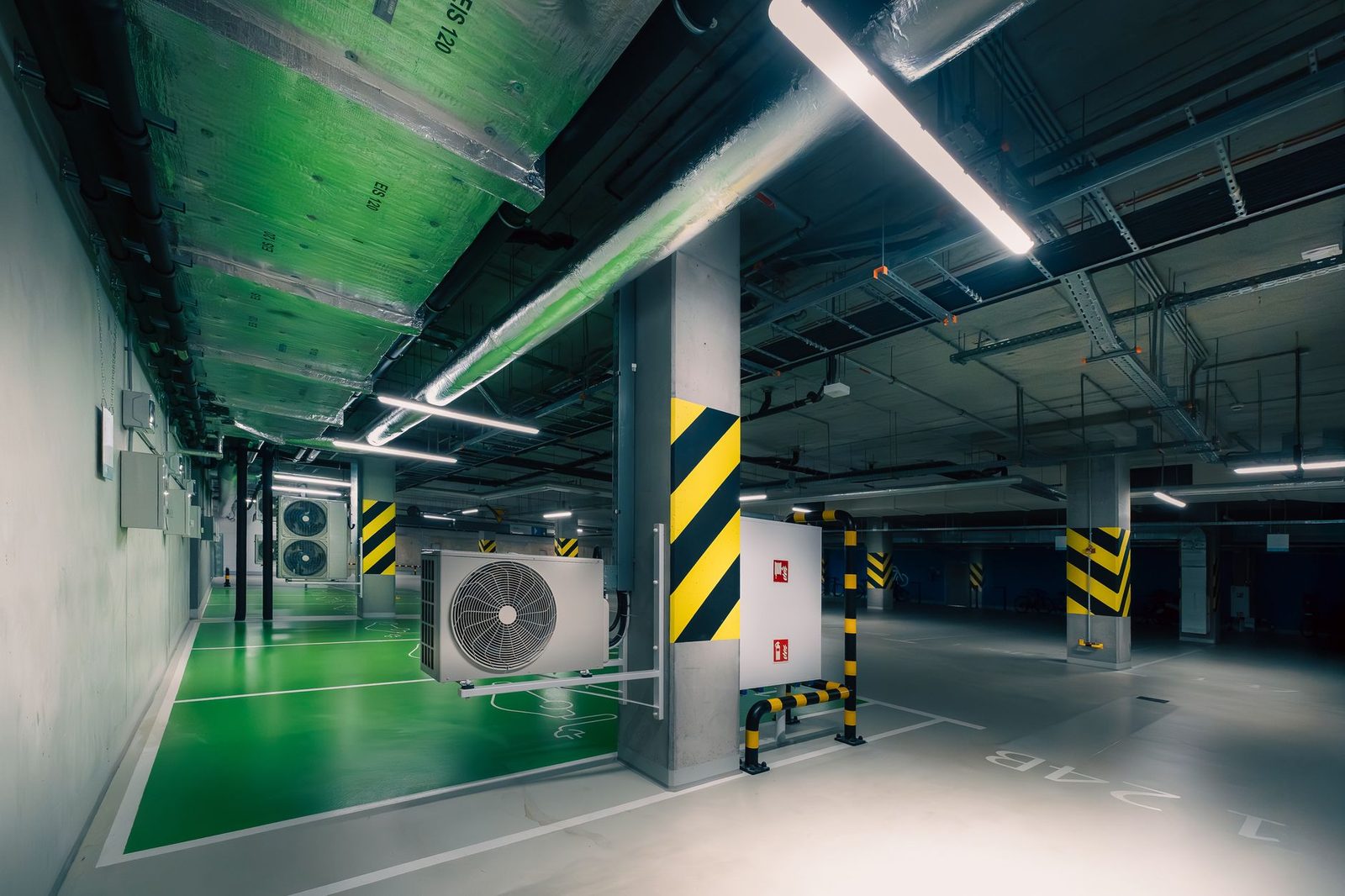
How much does a reversible air conditioner cost by property profile?
Estimates for mixed use (primary or supplementary heating + summer cooling), based on an average price of €0.20/kWh including tax in 2026.
| Profile | Area served | Estimated annual consumption | Annual cost |
|---|---|---|---|
| Studio, EPC C, single-split as backup | 30 m² | 450 – 700 kWh | €90 – €140 |
| Well-insulated 2-bed flat, primary heating | 65 m² | 1,100 – 1,500 kWh | €220 – €300 |
| 1990s house, 4-unit multi-split | 110 m² | 2,400 – 3,200 kWh | €480 – €640 |
| EPC F house, air conditioner as replacement | 120 m² | 4,500 – 6,000 kWh | €900 – €1,200 |
The last row says it all: in a poorly insulated home, a reversible air conditioner remains cheaper than direct electric heating, but it doesn't deliver the hoped-for miracle. A euro invested in loft insulation or replacement window frames pays off more there than a euro invested in an extra kW of heat pump capacity.
Three calculation errors that skew every quote
"I'm going to divide my bill by 4." No. The SCOP applies to the thermal demand, not to the total bill, which also includes domestic hot water, cooking, appliances and lighting. On an annual bill of €1,800, heating might account for €900: that share, and that share alone, is what gets divided.
"The air conditioner uses nothing in summer." In mainland France, cooling does indeed account for little — except during prolonged heatwaves, when it alone can represent more than half the consumption of an August month.
"My neighbour has the same unit and pays half as much." Probably true, and perfectly explainable: orientation, insulation, number of occupants, setpoints, daytime occupancy. Comparisons between households are worthless; only measurements taken on your own installation mean anything.
Key takeaways
- The rated output of an air conditioner is a thermal output, not an electrical one: actual consumption is 3 to 7 times lower.
- The calculation boils down to thermal demand ÷ SCOP (or SEER), and thermal demand depends first and foremost on insulation, not on the unit.
- A realistic budget lies between €90 and €300 a year for a well-insulated home, and can exceed €1,000 in a thermally leaky one.
- Oversizing, an overly low setpoint in summer and clogged filters are the three main causes of avoidable excess consumption.
- Measuring beats estimating: a plug-in energy monitor or a DIN-rail module turns a hunch into usable data.
To go further, ADEME's guides on heating and summer comfort, the regulated tariff schedules published by the Commission de régulation de l'énergie and the consumption data in your Enedis customer area are the three free, reliable sources to rely on before signing a quote — or before concluding that your installation uses too much.
Need an air conditioning solution?