Removing a Wall-Mounted Air Conditioner: Decommissioning

L'équipe Proclimo
26 Nov 2026 - 06 min read
Updated on
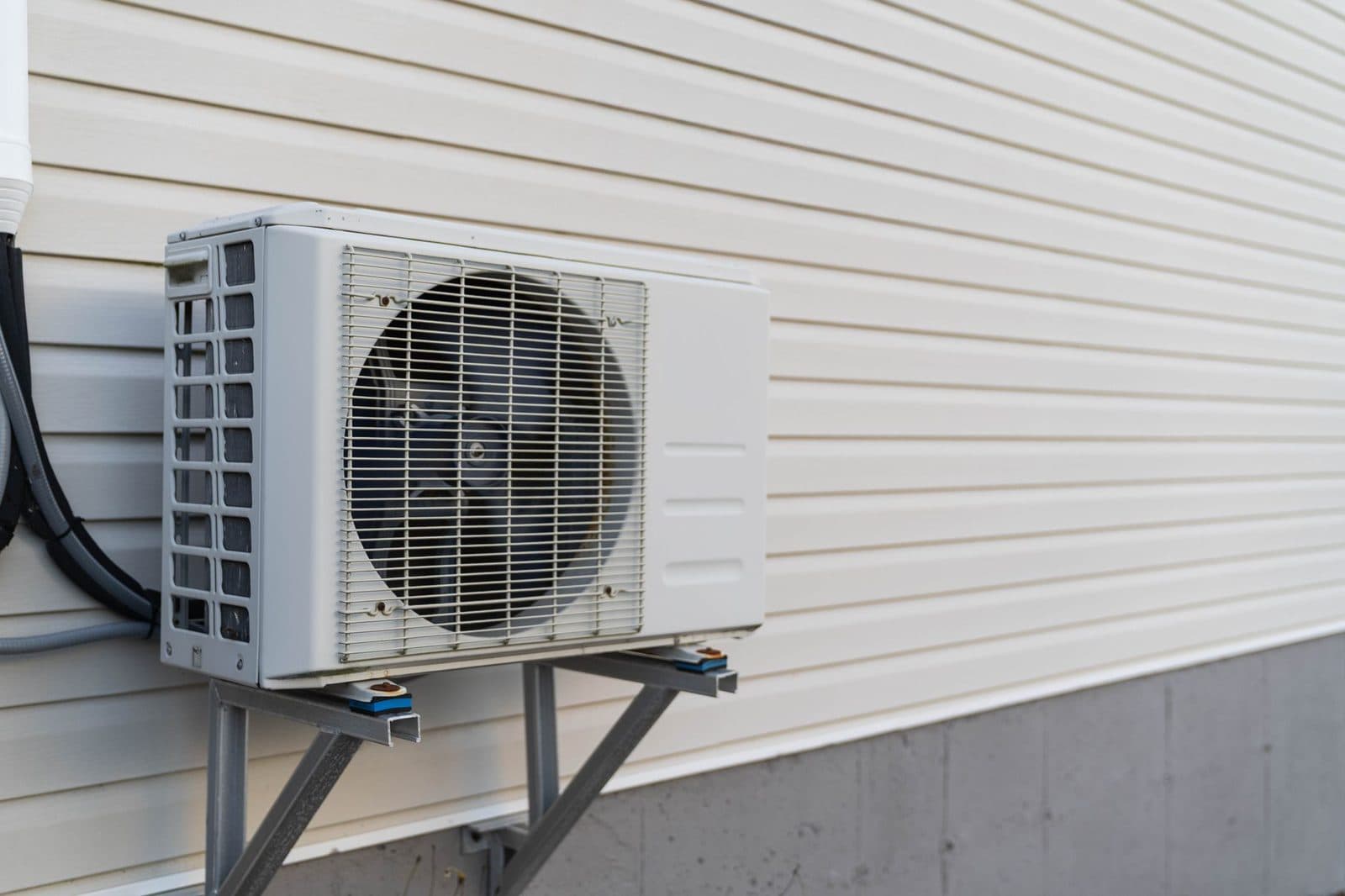
Removing a wall-mounted air conditioner is not a matter of mechanical dismantling: before the outdoor unit can be taken down, the refrigerant must be recovered by a company holding a certificate of competence (attestation de capacité) under articles R. 543-75 et seq. of the Code de l'environnement (French Environmental Code). Expect to pay roughly €250 to €600 for a simple split system in Île-de-France, excluding façade repair and excluding scaffolding or a cherry picker.
Why you can't simply unscrew the outdoor unit
Because the circuit still contains refrigerant, even on a machine that has been out of order for years. Cutting the copper lines with pliers or unscrewing the fittings releases R410A or R32 into the atmosphere: this is prohibited by European Regulation (EU) 2024/573 on fluorinated greenhouse gases and by the Code de l'environnement (French Environmental Code), and it is the most common source of disputes when an owner calls in a general-purpose contractor.
Three obligations govern the removal:
- refrigerant recovery into a dedicated cylinder, by a technician holding a certificate of aptitude (attestation d'aptitude), working for a company that is itself certified (category I for air conditioning equipment);
- traceability: the quantity recovered is recorded, and the company issues a service report;
- disposal of the equipment through the professional WEEE channel, not at a municipal recycling centre, since the appliance contains refrigerant.
warning
A plumber, a roofer or a "house-clearance" firm offering to take the unit down "for €80" almost never holds the certificate of competence (attestation de capacité). You remain the client who ordered the work: in a jointly owned building, the managing agent will come to you with questions about the wall repair and about where the refrigerant ended up.
When is a façade-mounted air conditioner removed?
The requests we receive in Île-de-France fall into five situations, and the technical answer differs in each case:
| Situation | Main issue | What to plan for |
|---|---|---|
| Appliance out of service for years | Refrigerant still present, corroded fixings | Recovery + WEEE disposal |
| Permission refused or withdrawn by the owners' association | Deadline set by the general meeting or by a court | Removal and like-for-like repair of the wall finish |
| Façade renovation of the building | Temporary removal, refitting after works | Coordination with the project manager's schedule |
| End of a commercial or residential lease | Clause requiring the premises to be restored | Before/after photos, invoice in your name |
| Replacement with a newer model | Whether brackets and wall penetration can be reused | Inspection of the lines and of the existing penetration |
The key difference: a permanent removal ends with a closed-up wall, whereas a temporary removal ends with an appliance pumped down and capped, ready to be refitted. If you are moving the appliance to reinstall it elsewhere, the subject is covered in detail in our guide on dismantling and reinstalling an air-to-air heat pump.
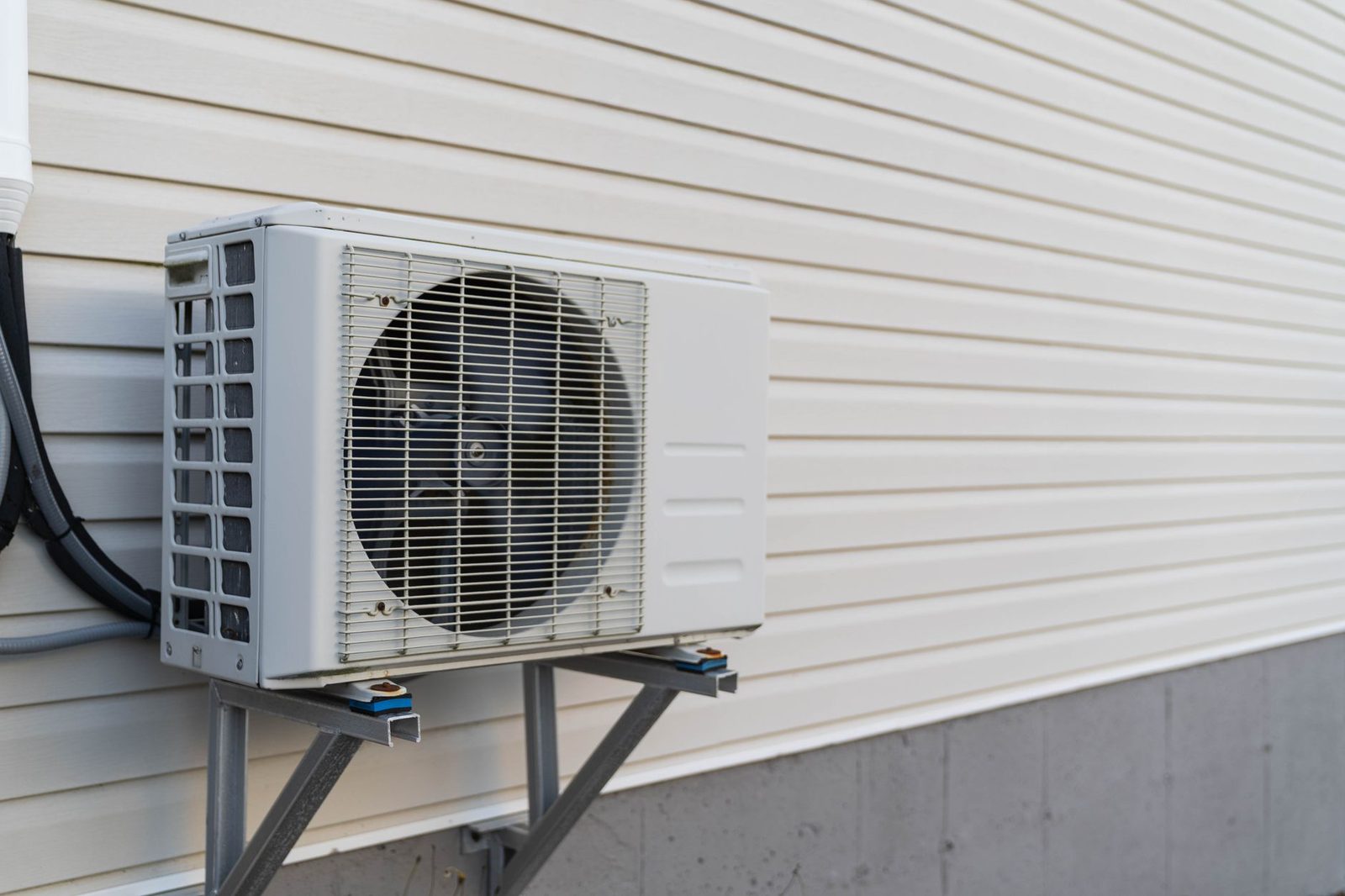
The 7 steps of a compliant removal
- Site visit or preliminary photos. Height, access, type of fixing (wall bracket, support frame, balcony slab), presence of cladding or dressed stone.
- Access check. Above the second floor with no balcony, a cherry picker or a work platform is required: this is often the biggest single cost, well ahead of the refrigeration labour itself.
- Refrigerant recovery using a transfer station, weighed and with the quantity recorded.
- Electrical disconnection at the dedicated circuit, removal of the control box or isolator switch.
- Removal of the unit and the lines, including trunking, the condensate drain pipe and the clips.
- Repair of the support: removal of the brackets, sealing of the drilled holes (mortar or foam plus render), filling of the line penetration on the inside.
- Handover of documents: itemised invoice, service report stating the quantity of refrigerant recovered, waste transfer note for the equipment.
Steps 1, 2 and 6 are the ones people underestimate. A unit fitted in 2008 on a painted wall has usually left a shadow mark and chipping around the anchors: if the general meeting demanded a "like-for-like" restoration, render alone will not be enough — the area will need repainting.
How much does removing an outdoor unit cost in Île-de-France?
Indicative ranges observed in 2026 for this type of job:
| Item | Typical range |
|---|---|
| Removal of an accessible single split (balcony, ground floor, terrace) | €250 – €450 |
| Removal of a multi-split system (2 to 4 indoor units) | €450 – €900 |
| Surcharge for a cherry picker or street scaffolding | €350 – €1,200 |
| Filling and render repair per drilled penetration | €60 – €150 |
| Temporary removal + refitting after façade works | €600 – €1,200 for both visits |
Three variables move the quote more than anything else: access (a Paris street often requires a permit to occupy public land for the cherry picker), the number of indoor units and the condition of the lines if the appliance is to be reused. As for VAT, removal alone in a dwelling completed more than two years ago counts as maintenance work at 10%; the 5.5% rate introduced in 2026 for air-to-air heat pumps applies to the supply and installation of high-performance equipment, not to a simple removal — ask for the rate to be stated explicitly on the quote.
Do you need the owners' association's approval to remove a façade-mounted air conditioner?
To remove the appliance, no: no general meeting authorisation is needed to return the building to its original state. But three habits will prevent conflict:
- notify the managing agent in writing of the intervention date, especially if a cherry picker will be parked in the courtyard or in front of the building;
- have the condition of the wall recorded after repair (dated photos, email to the managing agent): this is the only useful evidence if a later façade renovation uncovers defects at that spot;
- check whether a general meeting has already ruled on the matter: where an appliance was fitted without permission, the resolution or the managing agent's letter often sets a deadline and a precise standard of restoration.
If the original installation was never regularised and you would rather keep the machine, that is a different route: it runs through an authorisation request at a general meeting, set out in our article on installing air conditioning in a jointly owned building.
Tenant or landlord: who pays for removal at the end of the lease?
Whoever installed the appliance, unless there is a written agreement to the contrary. In residential lettings, an outdoor unit fixed to the façade is an alteration to the property: article 7 f) of the Act of 6 July 1989 allows the landlord to require restoration at the tenant's expense, or to keep the installation without compensation. In a commercial lease, the contract's "restoration of the premises" clause is almost always decisive — and it frequently covers filling the drilled holes and repairing the finish.
Two points to watch:
- the landlord's written permission for the installation changes everything: if it exists and states that the equipment is to remain in place, no removal is owed;
- the check-out inventory must describe the façade and not just the interior; a photo of the closed-up wall, attached to the inventory, settles the argument.
The respective rights of each party are set out in our guide on air conditioning in a rented home.
What to keep after the work is done
Keep these documents for at least five years, to cover any dispute with the owners' association or at the end of a lease:
- the itemised invoice describing the work as removal and stating the VAT rate applied;
- the service report stating the refrigerant type (R410A, R32, etc.) and the quantity recovered;
- proof of the company's certificate of competence (the number usually appears on the invoice or the quote);
- the collection note showing the equipment was sent to the WEEE channel;
- dated photos of the wall before and after repair, plus an email to the managing agent or landlord.
If you are keeping the appliance to resell or reinstall it, also ask for the lines to be pumped down and capped, and have the compressor's condition noted: a removed split whose circuit has been left open for several weeks loses most of its value. A set of refrigeration line caps and a breathable protective cover are enough to store it properly in a garage or cellar.
For an older appliance you are unsure about putting back into service, first compare the cost of removal with that of replacement: our article on a major breakdown on an air conditioner more than 10 years old gives the thresholds beyond which repair no longer makes sense.
Preparing your removal request
Before calling, gather: a photo of the outdoor unit taken from the street or the courtyard, a photo of the rating plate (make, model, refrigerant type), the floor and type of access, the number of indoor units and the approximate installation date. With these five elements, a removal quote can be drawn up without a site visit in most cases — and the "access" item holds no surprises on the day.
ProClimo works across Paris and the eight departments of Île-de-France, for both permanent removals and temporary removals ahead of façade renovation. You can describe your situation and your scheduling constraints through our booking form, or check the service areas to confirm that your town is covered.
Need an air conditioning solution?