AC in holiday rentals: the guide to letting in IDF

L'équipe Proclimo
12 Nov 2026 - 09 min read
Updated on
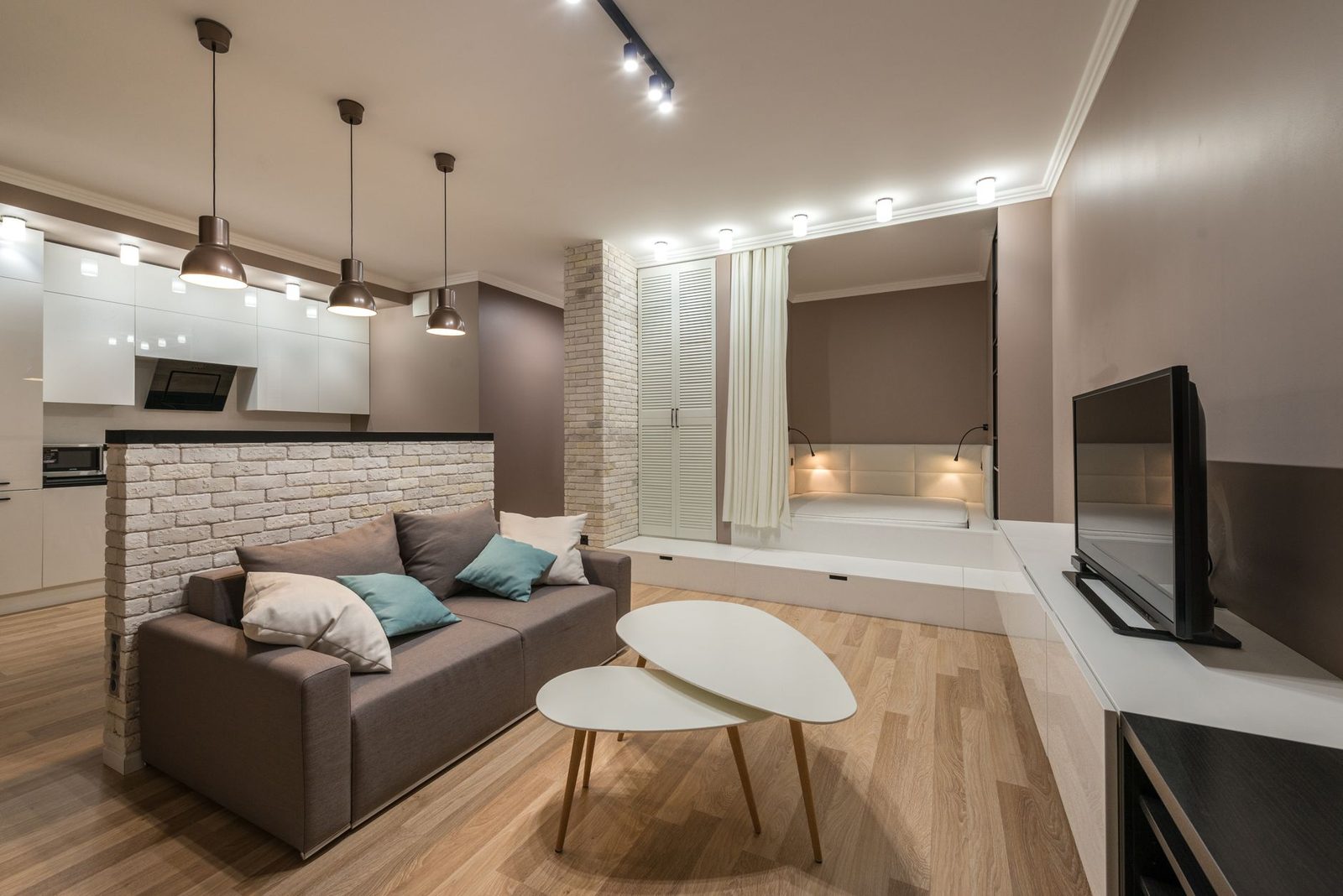
"We let out two flats as holiday rentals, a 32 m² in the 11th arrondissement and a 48 m² in Boulogne. Both have wall-mounted split units fitted in 2022. This summer I got four messages from guests in three weeks: 'the AC isn't cooling any more', 'there's water on the floor', 'it smells musty'. My electricity bill doubled in July and August. I'm not on site on a Saturday evening, nor on 15 August. People tell me my units are too small."
The units probably aren't too small. A holiday let is neither an ordinary home nor a hotel room: it's a flat where the air conditioning runs non-stop, set by people who don't pay the bill, with nobody around to hear the first abnormal noise. The equipment is the same as anywhere else; what differs is the operating regime, and that's what causes the breakdowns.
This article doesn't revisit topics already covered here — building-association consent, outdoor unit noise, the cost of a repair call-out, mandatory servicing, odours and disinfection, professional hotel installations. It describes the operating method specific to short-term rentals in Île-de-France: a holiday let registered with the local council, an aparthotel managed remotely, an urban guest house, a flat let on a mobility lease to executives on assignment, a studio let by the week near a hospital or business district. One and the same owner, one and the same constraint: it has to work without them.
The real problem: 2,000 operating hours where a home clocks up 400
In an Île-de-France flat occupied by its residents, a reversible air conditioner runs between 350 and 600 hours a year in cooling mode, essentially from 6 pm to 2 am over six to ten weeks. In a holiday let occupied 70 to 85% of the summer, the same appliance can exceed 1,500 to 2,000 hours, often continuously, sometimes with the windows open, with the setpoint at 18 °C.
The consequences are mechanical, not mysterious:
- fouling of the filter and the coil happens three to four times faster, so airflow drops and icing appears;
- the condensate tray stays permanently damp: the ideal environment for biofilms and odours;
- the condensate pump, where there is one, racks up tens of thousands of extra cycles per season;
- the compressor endures repeated full-load start-ups when the setpoint is unrealistic.
Put another way: a correctly sized unit ages roughly three times faster in a short-term rental than in a main residence. An appliance installed in 2022 has, by 2026, the mileage of a 2014 unit. It's this gap that explains the "premature" failures landlords complain about — and that changes the answer to the repair-or-replace question, covered in our article on a major breakdown on an air conditioner over 10 years old.
What this means for choosing equipment
Three criteria matter more than the brand:
- Tool-free access to the filters. Cleaning between stays takes 90 minutes: if the filter doesn't unclip in ten seconds, it will never be cleaned. A simple set of air conditioner cleaning brushes left in the cleaning cupboard changes everything, because the person doing the cleaning will actually use it.
- Native remote control, not an optional extra. A factory-fitted Wi-Fi module, connected to the manufacturer's app, lets you spot a 16 °C setpoint or a unit left running after the guests have checked out.
- Ducted or wall-mounted depending on the orientation of the façade, not on how it looks in the listing. The topic is developed in our comparison of ducted versus wall-mounted split systems.
Registration, building association and lease: what short-term letting adds
Letting a property as a holiday rental creates no additional right to install an outdoor unit. The rules are those of the building association: altering the external appearance = authorisation from the general meeting, under articles 25 and 26 of the Act of 10 July 1965. We set out the procedure in our guide to installing air conditioning in a shared building.
Two specific points are nonetheless worth anticipating:
- The building's bylaws may prohibit short-term letting (an exclusive residential-use clause, a ban on commercial activity). In that case, promoting the AC as a comfort selling point in a listing amounts to documenting a contested activity yourself. Several Île-de-France managing agents now use online listings to establish a change of use.
- In Paris and in municipalities of more than 200,000 inhabitants, letting a furnished holiday rental requires registration with the local council and, for a property that isn't your main residence, change-of-use authorisation (article L. 631-7 of the Code de la construction et de l'habitation (Construction and Housing Code)). The Act of 19 November 2024, known as the loi Le Meur (Le Meur Act), strengthened municipalities' powers and lowered the cap on letting a main residence to 90 days a year where the municipality so decides. Check your situation on service-public.fr before investing in equipment amortised over ten years.
Finally, a reminder that saves budgets: renovation grants and the reduced VAT rate on air-to-air heat pumps apply to residential dwellings completed more than two years ago. A property that has become a classified tourist rental, operated as a hotel-style business with services, may fall outside the scope. Have the rate applied written out in black and white on the quote — which is what we recommend among the 12 lines to check before signing.
Locking the settings: the only way to keep the bill in check
A guest sets an air conditioner the way they set a hotel shower: to maximum, straight away. The setpoints observed in let properties hover around 17-19 °C, against the 25-26 °C recommended by ADEME (the French Agency for Ecological Transition). Every degree below the 6 to 7 °C indoor-outdoor differential costs around 7% extra consumption on the appliance.
Three levels of lockdown exist, from the simplest to the most effective:
| Level | How | Real-world effect | Indicative cost |
|---|---|---|---|
| Information | Welcome sheet, pictogram on the remote | 10 to 20% of guests | €0 |
| Restricted remote | Wall-mounted wired controller with a limited setpoint range, or key lock | 50 to 70% | €80 to €250 fitted |
| Centralised control | Connected thermostat with min/max range and window-opening detection | 80 to 95% | €150 to €400 per zone |
Most manufacturers offer a setpoint range limitation on their recent ranges, configurable by the installer in the service menu: it's free, it's almost never activated, and you only have to ask. Failing that, a compatible connected thermostat for the installed unit does the job, provided you check protocol compatibility before buying — an interface module is sometimes needed.
The complementary step, trivial but profitable: a wireless window-opening sensor fitted to the living-room window and linked to the thermostat shuts the unit down when the room is being aired. This is the number one cause of abnormal consumption in holiday lets, well ahead of sizing. For the detailed arithmetic of what all this means on the bill, see our article on the electricity consumption of air conditioning.
Servicing between stays: who does what, and how often
This is where short-term letting calls for a different protocol from a main residence. We distinguish three levels.
At every changeover (cleaning contractor, 5 minutes)
- Check the unit is switched off and the setpoint reset to 25 °C.
- Vacuum the air intake grille with the filters in place.
- Look under the indoor unit: a damp mark on the wall = the start of a condensate problem.
Every 4 to 6 weeks in high season (manager, 20 minutes)
- Remove and rinse the filters in lukewarm water, drying them flat before refitting.
- Clean the front panel and the discharge louvres.
- Note the supply air temperature with a small non-contact infrared thermometer: in cooling mode, a differential of 8 to 12 °C between return air and supply air is normal. Below 6 °C, the unit has a problem.
This 30-second reading is the best indicator of an emerging fault available to a remote landlord, because it comes several weeks before the "it's not cooling any more" message. Our article on air conditioning filters sets out the cleaning protocol.
Once a year, without fail before June (refrigeration engineer)
- Leak-tightness check of the circuit where the charge requires it, in accordance with articles R. 543-75 et seq. of the Code de l'environnement (Environmental Code) and European Regulation 2024/573 on fluorinated gases.
- Disinfecting clean of the coil, the tray and the fan wheel: in short-term rentals, this is annual, not optional. The permanent moisture load and the circulation of suitcase dust make holiday lets prone to odours.
- Check of the condensate pump and of the drainage gradient.
- Check of electrical connection tightness and current draw.
An annual service contract is negotiated at between €150 and €250 excl. VAT per unit in Île-de-France for a holiday let, with an intervention slot in April-May. ProClimo offers this service through air conditioning servicing and cleaning; for an owner managing several properties, the framework is servicing for private individuals. A useful reminder: in short-term letting, the servicing obligation never transfers to the guest, unlike in a standard residential tenancy.
The Saturday-night breakdown: build a procedure, don't just hope
A guest sitting in a 29 °C bedroom at 10 pm won't leave you a lukewarm review: they'll ask for a partial refund or alternative accommodation. In Île-de-France, the average cost of an untreated AC incident in high season ranges from one refunded night (€80 to €250) to a complete cancellation of the stay.
The procedure that works comes down to four points.
1. A remote diagnosis in three questions. Is the outdoor unit running? Is there water on the floor? Is a code flashing on the indoor unit? Those three answers already let you distinguish between a tripped breaker, a blocked condensate drain and a refrigeration fault. Our reading guide is in the article on air conditioning error codes.
2. An emergency kit left in the property. A quiet pedestal fan, ideally a tower model with a remote, turns an unbearable night into an acceptable one, and buys you 48 hours. It's the most profitable €60 to €120 you can spend on an Île-de-France holiday let. Add a set of thermal blackout curtains on west-facing windows and you halve the late-afternoon solar gain — cutting the unit's running hours at the same time.
3. A contractor lined up before the season. On 15 August, a refrigeration engineer won't travel out for a non-customer. A service contract signed in April gives you access to on-call cover and lead times of 24 to 72 hours instead of "call back in September". Ballpark figures for emergency call-outs appear in our breakdown of the cost of an air conditioning repair in Île-de-France.
4. A spare set of keys and written access consent. A technician who can't get in because the guests are out means a call-out billed for nothing. Provide a secure key box and a clear clause in your terms.
What air conditioning actually earns in a short-term rental
You have to look at the revenue line as much as the cost line. On the platforms, "air conditioning" has become, in Île-de-France, a massively used search filter between June and September, on a par with a lift or Wi-Fi.
The effects observed by Île-de-France managers fall into three categories:
- a higher summer occupancy rate, especially for loft-conversion or top-floor properties, which otherwise lose bookings in July and August;
- a nightly rate uplift of around 5 to 12% in hot weather;
- a reduction in negative reviews linked to heat, which weigh on a listing's ranking for a long time.
Against that, the full cost of a quality wall-mounted reversible split, fitted in a Paris flat, runs from €2,000 to €3,500 for a single split and €3,500 to €6,000 for a twin split, plus €150 to €250 of annual servicing per unit and summer consumption of €60 to €180 per property per season in a small holiday let. The equipment also works as heating in winter, which changes the balance when the property is electrically heated: see our feature on replacing electric radiators with an air-to-air heat pump.
One final point, often overlooked: reversible air conditioning alters a property's conventional energy consumption and therefore, in some cases, its energy performance rating. For a holiday let intended to be resold or reclassified, the effect isn't neutral — we explain it in the article energy performance certificates and air conditioning.
The six mistakes we see most often
- Sizing as if for a main residence, without allowing for continuous operation or late-afternoon solar gain.
- Leaving the setpoint unrestricted and discovering the bill in September.
- Handing filter cleaning to the cleaning contractor with no written protocol: everyone assumes the other party is doing it.
- Not disinfecting annually, then dealing with an odour complaint in the middle of the season, when the call-out costs the most.
- Installing the outdoor unit on the courtyard side without authorisation, then receiving a formal notice from the managing agent the year the bylaws get re-read.
- Having no plan B on the night the unit stops.
Before the 2027 season: what's left to do this winter
November is the right month. Refrigeration engineers are available, parts lead times are short, and the unit can be tested in heating mode — which instantly reveals the faults that will resurface in June. Three actions, in order of priority:
- have a full service with disinfection carried out and ask for the supply air temperature readings in both cooling and heating;
- have the setpoint range limitation activated on every unit, and fit a connected thermostat wherever that isn't possible;
- write a one-page operating sheet: filter cleaning frequency, the refrigeration engineer's contact details, the breakdown procedure, the location of the dedicated circuit breaker.
An air-conditioned holiday let is no more fragile than any other property. It's simply worked three times as hard, by people who don't know how to use it. The whole job consists of taking the decisions out of the guests' hands and planning for the only thing that matters: that the unit works on a Saturday in a heatwave, without you.
Do you manage one or more holiday lets in Île-de-France and want to get servicing sorted before the 2027 season? Book an appointment directly online from the booking page, or tell us about your set-up via the contact page.
Need an air conditioning solution?