Air conditioning in a rented home: what the landlord can impose, what the tenant can demand in 2026

L'équipe Proclimo
21 Oct 2026 - 09 min read
"It's been 34 °C in the bedroom for ten days, I asked my landlord for air conditioning and he said no." And on the other side, a landlord: "My tenant installed a split system on his own, and I only found out from the photo in the move-out inventory. Who repairs the wall?"
We get these two calls every summer, and they both say the same thing: in the vast majority of cases, air conditioning in a rented home is governed neither by the lease nor by the 1989 law. There is no obligation on the landlord, and no automatic ban on the tenant. A legal vacuum in which everyone improvises — and which often ends in a dispute over the return of the security deposit.
This guide sets out the real framework in 2026, then describes the three arrangements that actually work in the Paris region rental market, with who pays what at each stage.
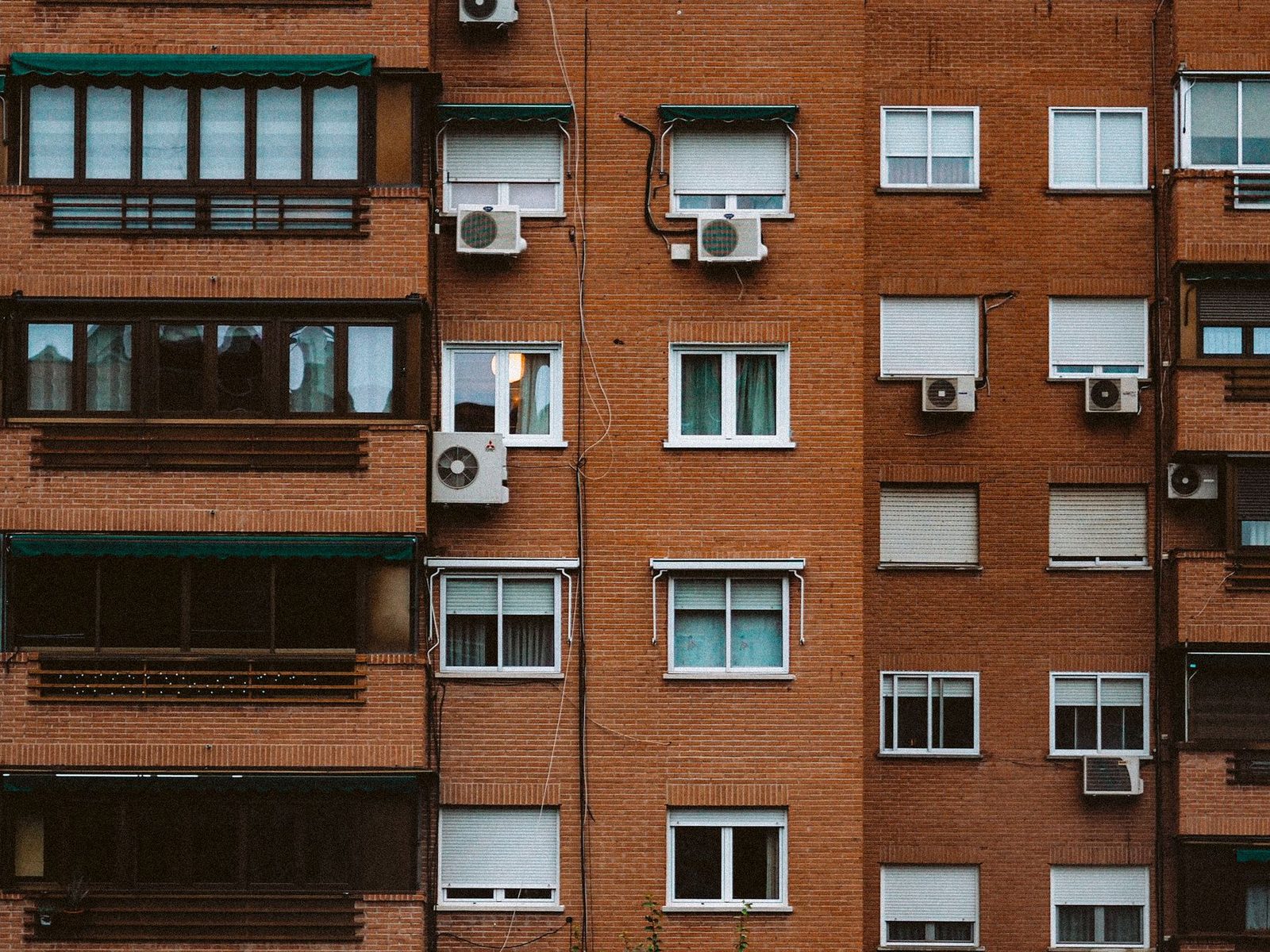
First point to clarify: the landlord is not required to provide air conditioning
There is no legal obligation to provide air conditioning in a residential dwelling in France.
The criteria for decent housing are set by decree no. 2002-120 of 30 January 2002, supplemented since then by energy performance requirements. That decree requires, in particular, a heating installation, sufficient ventilation, airtightness, and the absence of any risk to the health and safety of occupants. It makes no mention of any maximum summer temperature threshold, unlike heating, for which case law has long held that a dwelling that cannot be heated to 18–19 °C in winter is substandard.
In other words: as the law currently stands, a tenant cannot require their landlord to install an air conditioner on the grounds that it is too hot.
The two exceptions worth knowing
1. Heat that makes the dwelling objectively uninhabitable. If indoor temperatures result from a defect in the building attributable to the landlord — an uninsulated roof on a top floor, converted attic space with no insulation, an unshaded glass roof, a ventilation defect — the tenant can act on the grounds of decency and the obligation to deliver the premises (article 6 of law no. 89-462 of 6 July 1989). The judge will not order "air conditioning": they will order works. Insulation, shutters, blackout solutions, sometimes ventilation. Active cooling is only one of the possible answers, and rarely the one a court chooses.
2. Dwellings with existing air conditioning. If the air conditioning appears in the lease or in the move-in inventory as part of the dwelling's equipment, it becomes an element of the leased property. The landlord then owes peaceful enjoyment of it: a unit broken down all summer amounts to a reduction in the service provided, and in such cases case law accepts a rent reduction or works ordered under penalty payments. This is the point most often overlooked by landlords who advertise a furnished rental "with air conditioning".
Remember the distinction: no obligation to install, but an obligation to maintain and repair what has been leased.
Second point: can the tenant install air conditioning on their own initiative?
Yes, subject to conditions — and these conditions are cumulative.
The landlord's written consent
Article 7 f) of the 1989 law prohibits the tenant from altering the dwelling or its equipment without the owner's written consent. The line between fitting-out (free) and alteration (subject to consent) is drawn by the nature of the works.
A split air conditioning system involves:
- drilling through a wall for the refrigerant line (55 to 80 mm in diameter, often a load-bearing wall or a façade);
- fixing an outdoor unit to a wall, balcony or terrace;
- a new condensate drain;
- sometimes a dedicated electrical circuit at the distribution board.
This is very clearly an alteration. Without written consent, at the end of the lease the landlord may either keep the installations without compensation, or require the property to be restored at the tenant's expense — filling holes, redoing render, repainting. On a Parisian façade, restoration alone commonly costs between €400 and €1,500, including scaffolding or a cherry picker if the unit is high up.
Authorization from the homeowners' association
The landlord's consent is never enough in a multi-unit building. The outdoor unit is fixed to a common area (façade, railing, roof terrace), which requires authorization from the general meeting. The landlord is the co-owner: it is they, not the tenant, who must put the request on the agenda. We set out the procedure, the applicable majorities and the documents to provide in our guide to installing air conditioning in a co-owned building.
Local planning rules
In Paris and in most densely built municipalities of the Île-de-France region, an outdoor unit visible from the public highway requires a prior declaration and, in a protected area or near a listed monument, the opinion of the Architecte des Bâtiments de France. The Paris bioclimatic PLU regulations are particularly restrictive regarding technical equipment on street-facing façades.
Here again: the applicant is the owner, not the occupant.
Practical conclusion
A tenant who wants a fixed air conditioning system needs three green lights: landlord, homeowners' association, planning authority. That takes time (an annual general meeting, two months to process a prior declaration), which explains why the vast majority of tenants in the Paris region fall back on portable units — with the limitations we set out in our analysis of the portable monobloc air conditioner for tenants.
The three arrangements that work in the Paris region rental market
Arrangement 1: the landlord installs and builds it into the rent
The owner has the equipment installed, declares it in the lease as part of the dwelling's equipment, and passes the investment on. Two routes:
- A higher initial rent when re-letting. In the Parisian furnished rental market, a reversible air conditioning unit in a studio or one-bedroom flat translates into rent that is €30 to €60/month higher depending on the neighbourhood, and above all into shorter vacancy periods.
- The contribution for sharing savings on charges, provided for by article 23-1 of the 1989 law and decree no. 2009-1438. After energy improvement works and subject to strict conditions (consent of the sitting tenant, demonstration of the savings, a cap at half the estimated saving, a maximum duration of 15 years), it allows an extra line to be added to the rent receipt. A reversible air-to-air heat pump replacing electric convector heaters can fall within this framework — provided the case is properly documented, with before/after assessments to back it up.
This is the most legally robust arrangement. It also makes the most sense when the dwelling has electric heating: the gain comes from the heating, not from the cooling. The detailed calculation can be found in our article on replacing electric radiators with an air-to-air heat pump in a flat.
Arrangement 2: the tenant pays, the landlord gives written authorization
The tenant pays for the equipment and the installation, and the landlord authorizes it through an addendum to the lease. The addendum must settle five points, otherwise the debate will reopen three years later:
| Point to settle | Wording to include |
|---|---|
| Ownership of the equipment | Who owns it during the lease, and who owns it afterwards |
| Fate at the end of the lease | Removal at the tenant's expense, or left to the landlord without compensation |
| Restoration of the property | Filling holes, façade repairs: who pays, based on which quote |
| Annual servicing | Who is responsible, with an obligation to pass on the invoices |
| Insurance | Declaration to the tenant's comprehensive home insurer |
Always attach, as an annex, the equipment's technical data sheet and the installer's certificate of competence: these are the documents the landlord will ask for, and the ones the manufacturer will require in the event of a warranty claim.
Arrangement 3: the solution without major works
When neither the general meeting nor the planning rules allow it, what remains are solutions that do not touch the façade: a wall-mounted monobloc unit with two 160 mm grilles through the wall, cooling through night-time ventilation, and proper blackout. A framed window insect screen lets you sleep with the windows open without insects, and an indoor thermometer-hygrometer provides the figures that replace impressions in a discussion with a landlord. We compared these options in our feature on cooling a flat without an outdoor unit.

Who pays what, year after year
This is the second biggest source of disputes, after authorization. The allocation stems from decree no. 87-712 of 26 August 1987 (tenant repairs) and decree no. 87-713 (recoverable charges).
At the tenant's expense — routine upkeep and minor repairs:
- cleaning and replacing the filters of the indoor units;
- cleaning the grilles and accessible casings;
- keeping the condensate drainage flowing freely (tray, accessible trap);
- replacing the remote control batteries, and replacing a lost remote control.
A foam cleaner for air conditioners and a set of compatible replacement filters are enough to cover this share. The full protocol is described in our maintenance guide on air conditioning filters.
At the landlord's expense — major maintenance and wear and tear:
- replacing the compressor, the control board, the fan motor;
- locating and repairing leaks on the refrigerant line, recharging the refrigerant;
- replacing the condensate pump;
- replacing the equipment at the end of its service life.
The grey area: the annual servicing contract. For residential air conditioning, nothing requires the annual visit to fall on one party or the other. The lease may assign it to the tenant (the most common practice in rented detached houses) or to the landlord (common in furnished lettings and managed residences), provided it is put in writing. But be careful: the mandatory leak check for equipment containing 2 kg or more of refrigerant, or 5 tonnes of CO₂ equivalent, falls on the operator of the equipment, within the meaning of articles R.543-75 et seq. of the French Environmental Code — in practice the owner, for equipment integrated into the dwelling. This point is developed in our article on mandatory air conditioning servicing.
And above all: the manufacturer's warranty lapses without a documented servicing record. A landlord who lets the tenant handle maintenance alone without collecting the invoices will lose any recourse when the compressor fails in year 4.
Heatwave: what the tenant can do when the existing air conditioning breaks down
A frequent scenario in August: the air conditioning is in the lease, it no longer cools, and the landlord does not respond.
The steps to follow, in order:
- Report it in writing — an email, then a registered letter with acknowledgement of receipt. The date of notification is what starts the clock in the event of proceedings.
- Allow a reasonable period. Two to three weeks in normal times; far less is defensible in the middle of a heatwave, if the dwelling houses an elderly person, an infant or a vulnerable person (Santé publique France issues reminders every summer about the health risks of prolonged heat exposure).
- Refer the matter to the departmental conciliation commission for your département — free of charge, and competent for rental disputes concerning the condition of the dwelling and repairs.
- Bring the matter before the juge des contentieux de la protection to obtain enforcement of the works, if necessary under penalty payments, plus a rent reduction for the period of deprivation.
What not to do: stop paying the rent. Unilateral offsetting without a court decision exposes you to lease termination proceedings. And never call in a refrigeration engineer yourself for a structural repair in the hope of deducting it from the rent: in practice, the bill will stay with whoever ordered the work.
For their part, the landlord has every interest in moving quickly. A diagnosis within 72 hours costs less than litigation: see the price structure in our comparison of repair costs in the Île-de-France region, and the emergency reflexes on our emergency air conditioning repair page.
Property inventory: the four lines not to forget
For landlord and tenant alike, the air conditioning must appear in both the move-in and the move-out inventory, with four precise entries:
- brand, model, serial number of the indoor and outdoor units, and the commissioning date;
- operating condition observed on the day of the inventory (cooling and heating modes tested, supply air temperature);
- cleanliness of the filters and the condensate tray;
- servicing invoices from previous years, attached as annexes.
A simple non-contact infrared thermometer pointed at the supply grille gives an objective figure, time-stamped by the photo: a difference of 8 to 12 °C between the return air and the supply air in cooling mode is the sign of a machine that works. Thirty seconds that save you a €1,200 argument two years later.
What we recommend, depending on your situation
| Your situation | The most effective course of action |
|---|---|
| Tenant, very hot dwelling, long-term unfurnished lease | Ask in writing, offer to pay for it, aim for the spring general meeting |
| Tenant, short-term or mobility lease | Forget the fixed split system: monobloc unit, blackout, night-time ventilation |
| Landlord, electrically heated dwelling | Install a reversible air-to-air heat pump: the selling point is the heating, not the cooling |
| Landlord, furnished or holiday rental | Install it, include it in the lease, keep control of the annual servicing |
| Landlord with air conditioning in the lease that has broken down | Intervene within 72 hours in summer, keep every invoice |
In every case, the document that protects both parties is not the standard lease: it is the air conditioning addendum, two pages, signed before the first hole is drilled.
Planning an installation in a rented home, or dealing with broken air conditioning at your tenant's place in the Île-de-France region? Our technicians, certified to handle refrigerants, carry out the technical survey, the application file for the homeowners' association, and documented annual servicing. Book an appointment online or discover our commitments.
Need an air conditioning solution?