Heating a whole Paris-region flat with a reversible air conditioner this winter: what it really delivers from November to March

L'équipe Proclimo
22 Oct 2026 - 08 min read
"I've had a reversible air conditioner in the living room for two years. This winter I'd like to switch the electric heaters off completely. Is that realistic?"
It's one of the most common questions we get in October, and the answer is neither yes nor no: it depends on one piece of information that almost nobody looks at when buying — the number of indoor units relative to the number of rooms to be heated, and what circulates between them.
A reversible air conditioner heats very well. But it heats where it blows. That is the whole difference with a radiator network, which puts a heat source in every room. A 65 m² Paris-region flat fitted with a single split in the living room will not get through winter without back-up heating in the bedrooms, whatever SCOP figure is printed on the label.
This article describes what we concretely observe in our customers' homes between November and March: how far air-to-air heat pump heating goes in a flat, what needs adjusting, when it starts to fall short, and the three configurations that genuinely work.
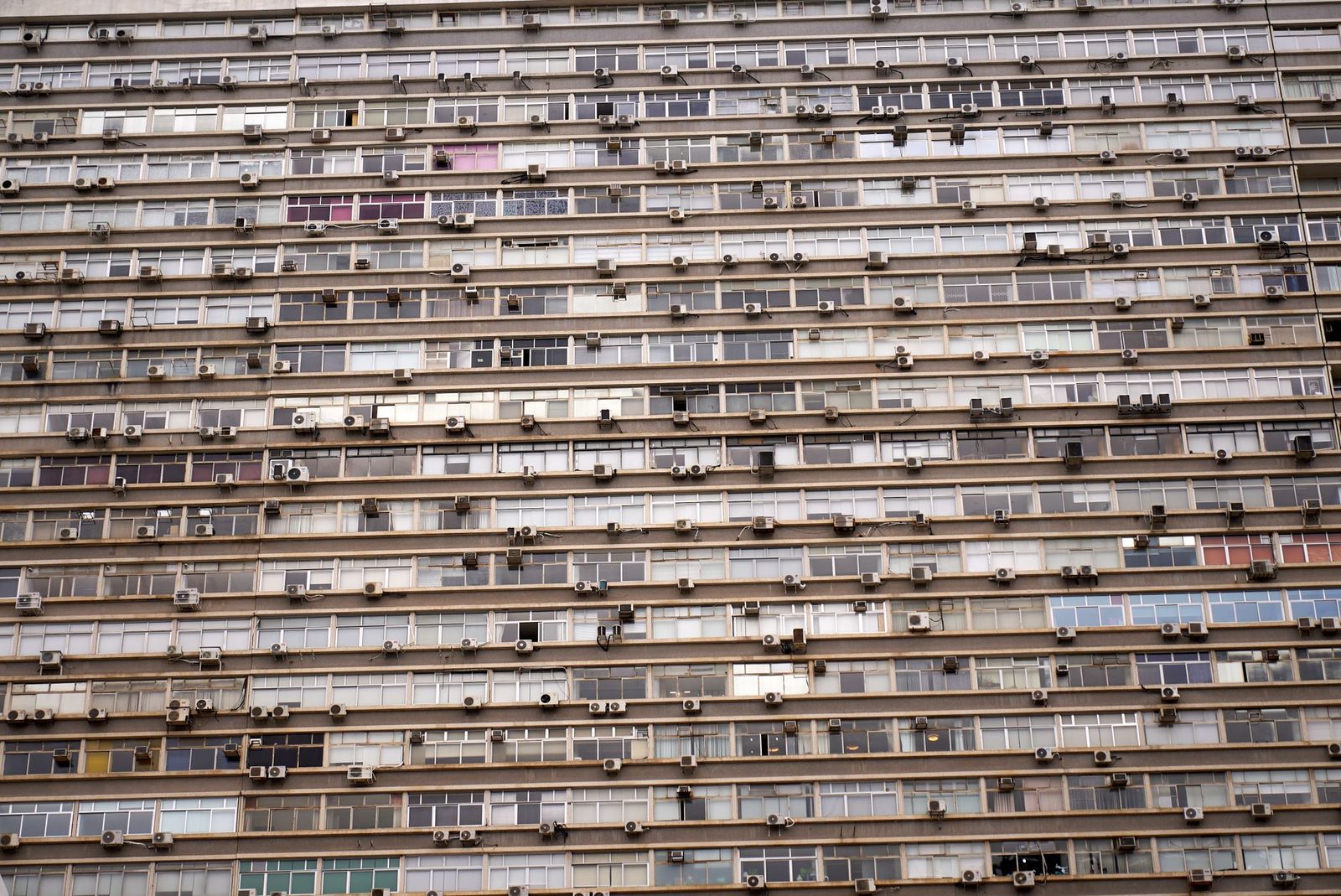
The real issue isn't output, it's distribution
Take a very common case: a three-room flat of 65 m² in Montrouge, a 3.5 kW wall-mounted split in the living room, electric convector heaters in the two bedrooms and the bathroom.
In raw output terms, 3.5 kW would almost be enough to heat the whole home if it were a single well-insulated volume. The problem is that it isn't a single volume: it's four volumes, separated by doors, with different needs and different schedules.
Here is the concrete result, measured in this type of home:
| Room | Temperature reached one morning at 2 °C outside |
|---|---|
| Living room (where the split is) | 20-21 °C with no difficulty |
| Hallway / entrance | 18-19 °C |
| Bedroom with door permanently open | 17-18 °C |
| Bedroom with door closed at night | 14-16 °C |
| Bathroom | 14-15 °C |
In other words: the living room is perfectly heated, and the rest of the home lives off the leftovers. 16 °C in a bedroom is acceptable for sleeping; 14 °C in a bathroom first thing in the morning is not. And that is exactly what makes people switch the convectors back on — often at the worst possible time of day, during the morning peak.
Why heat travels poorly between rooms
Three mechanical reasons, always the same ones:
- Warm air rises and stagnates. A wall-mounted split placed high up creates a cushion of warm air under the living room ceiling. Without air movement, it won't cross a doorway, even an open one.
- Interior doors in Paris-region flats are often tight-fitting. No transfer grille, and sometimes not even a 1 cm gap under the door in recent renovations.
- The mechanical ventilation pulls heat towards the damp rooms. In a flat with single-flow mechanical ventilation, extracted air leaves via the kitchen and bathroom — rooms the air conditioner almost never heats.
That is why, right from the technical survey, we advise counting one indoor unit per room occupied more than two hours a day in winter, rather than relying on an overall kW calculation. The room-by-room sizing logic is set out in our room-by-room kW calculation method, and it matters twice as much in heating mode.
The three configurations that work (and the one that never does)
1. A multi-split with one unit per bedroom: the only genuine primary-heating solution
One outdoor unit, three or four indoor units: living room, bedroom 1, bedroom 2. This is the configuration that really allows you to switch off the convectors, because each room has its own setpoint and its own schedule.
An often underestimated advantage: room-by-room control. You heat a bedroom to 17 °C from 9 pm to 7 am and let it drift down during the day — which a convector also does, but with a coefficient of performance of 1 instead of 3.
Installing a 3-unit multi-split in a Paris-region flat commonly costs between €6,000 and €9,500 including VAT, fitting included, depending on the length of the refrigerant lines and the routing constraints. This is a proper job, not an afternoon's work: the real stages of an installation give an honest idea of what it involves in your home.
2. A living-room split + convectors kept as targeted back-up
This is the most common set-up, and it is perfectly defensible provided you own it: the air conditioner takes 80 to 90% of the home's heating hours (living room, open-plan kitchen, the whole day), and the convectors now only serve two specific moments — the bathroom in the morning and a bedroom during a cold snap.
For that back-up to stay marginal, it has to be controlled rather than left on "just in case": a wireless programmable thermostat on each convector is enough to avoid the 12 hours of pointless heating that nobody ever notices.
3. Ducted or a low-level console in the hallway: the renovation compromise
When you can't drill through three façades (strict building management rules, Haussmann-era building, ground-floor commercial premises), a small ducted system with two or three outlets in a false ceiling along the hallway redistributes the air. The comfort is less precise than one split per room, but the heat reaches everywhere. We compare the two approaches in our feature on ducted air conditioning versus wall-mounted splits.
And the configuration that never works
A 5 or 6 kW split in the living room, pushed to 26 °C with the doors open, to "spread heat through the whole flat". Three systematic consequences:
- The living room becomes uncomfortable (air feels dry, hot draught blowing on the occupants).
- The bedrooms gain 1 to 2 °C, no more.
- The unit, oversized for the room it sits in, runs in short cycles: compressor starting and stopping, efficiency collapsing, accelerated wear.
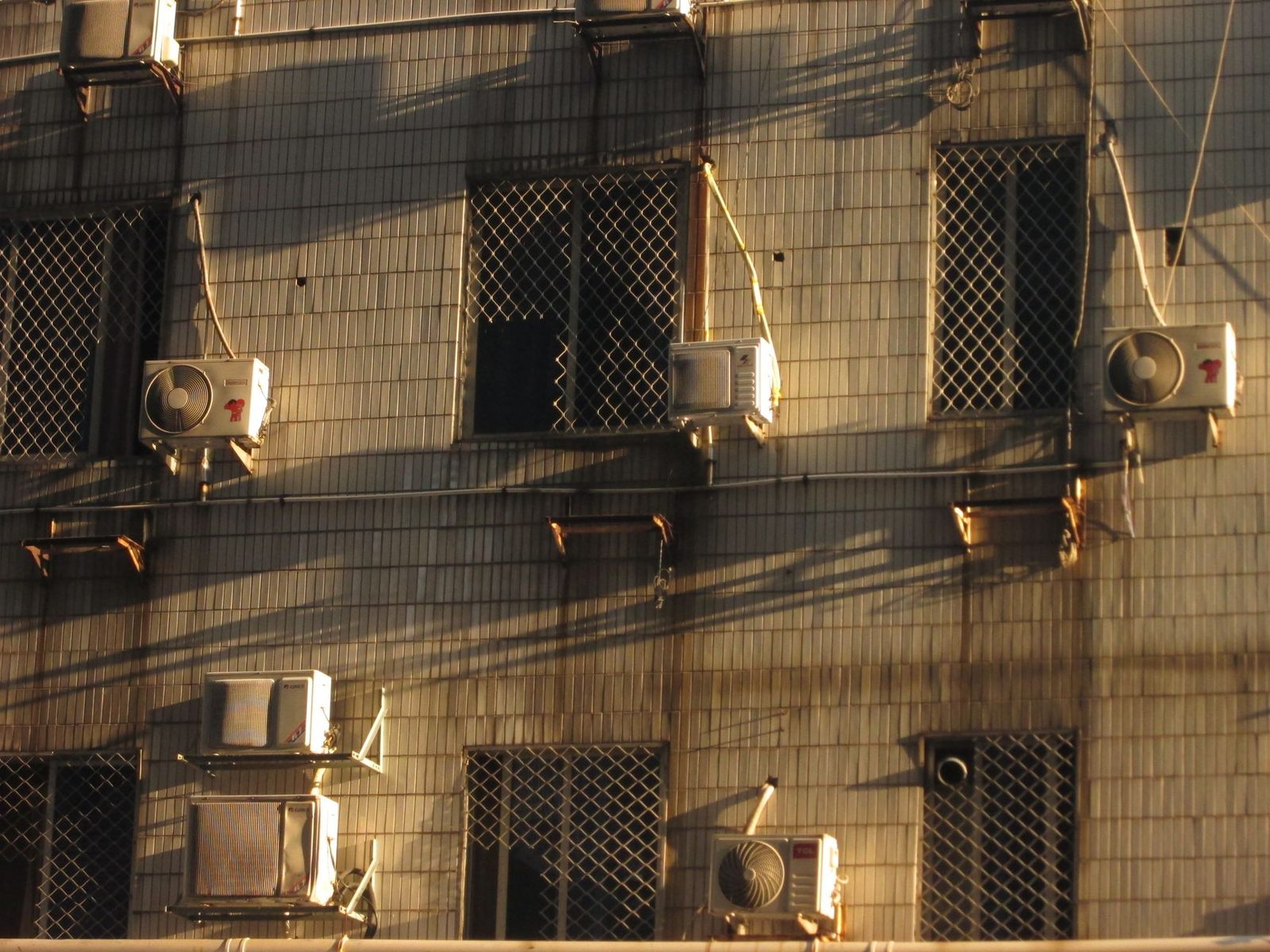
What the machine actually does when it's cold outside
Two phenomena transform the behaviour of an air-to-air heat pump between 10 °C and -5 °C outside. Understanding them prevents 90% of the "my air conditioner has stopped heating" calls.
The COP drops — but stays well above 1
The coefficient of performance of a modern R-32 air-to-air heat pump is around 4 to 5 at +7 °C outside, falls towards 3 to 3.5 around 0 °C, and generally sits between 2 and 2.5 at -7 °C. Even at the worst point of a Paris-region winter, it remains twice as efficient as an electric convector.
That is the heart of the economic calculation, and it is measurable: a real seasonal COP (SCOP) of 3.2 over a Paris winter means that 1 kWh billed by your supplier produces 3.2 kWh of heat. The classes and the stated SCOP figures are explained in our guide to the new energy label for reversible air conditioners.
Defrost cycles are normal
Between roughly +7 °C and -2 °C with humidity, frost forms on the outdoor heat exchanger. The unit then reverses its cycle for a few minutes to melt it: the indoor fan stops, the outdoor fan goes quiet, vapour comes off the outdoor unit, and sometimes you hear the 4-way valve click. This is nominal operation, not a fault. It typically happens every 40 to 90 minutes in damp weather.
What is not normal: a defrost every 15 minutes, an outdoor condensate tray turned into a block of ice, or a unit that never gets back up to temperature after defrosting. These symptoms resemble those we detail in the faults that show up when restarting in autumn, and they justify a call-out.
The six settings that change everything between November and March
In the field, the difference in bills between two identical homes with the same equipment almost always comes down to how the system is run. Six points, in order of impact:
- Never switch off at night — set back instead. An air-to-air heat pump is poor at raising temperature quickly. Going from 16 to 20 °C in the morning uses more than holding 18 °C. Night setpoint: 17-18 °C in the living room, 16-17 °C in the bedrooms.
- Fan on automatic, never permanently on "quiet". Night mode throttles the airflow: the heat stays stuck to the ceiling. In heating mode, it's the setting that penalises comfort the most.
- Louvres angled downwards. The exact opposite of summer. In heating, the vanes must send air towards the floor; in the raised position, you're heating the ceiling.
- Explicit "heating" mode, not "auto". Automatic mode can switch to cooling on a sunny mid-season day and yo-yo expensively.
- Clean filters. A clogged filter cuts airflow by 20 to 30%, and therefore heating capacity. The subject sounds trivial; yet it is the number one cause of lost performance we record, as explained in our article on air conditioner filters.
- An independent measuring point. The indoor unit's sensor sits 2.20 m above the floor, in the machine's airflow: it reads 2 to 3 °C higher than your sofa. An indoor thermometer-hygrometer placed at seated height in each room lets you set the temperature on real data rather than on an impression.
The humidity question, often reversed in winter
In summer, people complain that the air conditioner doesn't dehumidify enough. In winter it's the opposite: heating cold outside air makes indoor relative humidity plunge, sometimes below 35%. Dry throat, static electricity, timber moving.
The right reflex isn't to lower the setpoint but to monitor the level: between 40 and 60% relative humidity, comfort is far better at 19 °C than at 21 °C in air at 30%. An evaporative air humidifier in the bedroom solves the problem for negligible consumption — and avoids raising the setpoint by 2 °C, which represents roughly 14% more energy use.
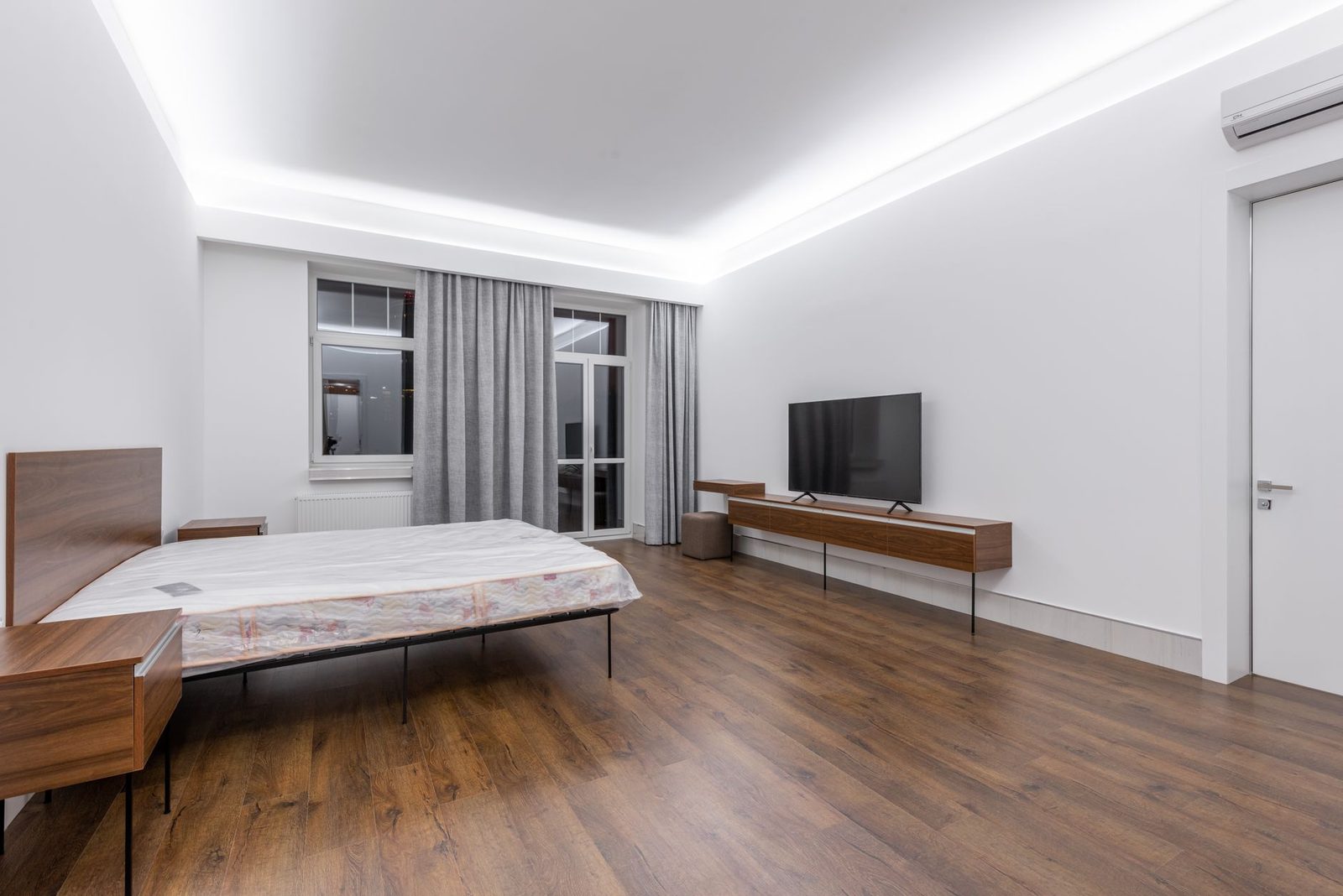
What it really costs over a Paris-region winter
Ballpark figures, for a properly insulated 65 m² flat (energy rating C or D), heated from 1 November to 31 March, at the regulated tariff observed in 2026:
| Solution | Estimated consumption over the winter | Indicative cost |
|---|---|---|
| Electric convectors alone | 6,500 - 8,500 kWh | €1,400 - €1,900 |
| Living-room split + convectors as back-up | 3,500 - 5,000 kWh | €750 - €1,100 |
| 3-unit multi-split, convectors switched off | 2,200 - 3,200 kWh | €480 - €700 |
These ranges are deliberately wide: insulation, orientation, the number of occupants and household habits can double the result. They do, however, give you the ranking, and that ranking is consistent from one home to the next. To refine the figures with your own kWh, our detailed calculation method can be found in the article on the real cost of air conditioning on your electricity bill.
Worth noting: switching from direct electric heating to an air-to-air heat pump often changes your peak power draw, and therefore sometimes the suitability of your current supply contract. A plug-in electricity consumption meter connected to a convector for a week gives you a concrete basis for comparison before committing to work.
The limits you have to accept
To stay honest, there are three situations where a reversible air conditioner should not become the main heating:
- A poorly insulated home (energy rating F or G, single glazing, cold walls). A heat pump doesn't compensate for heat loss: it pays for it. The order of works remains insulation first, as we wrote regarding the synergy between insulation and air conditioning.
- Rooms where an indoor unit isn't possible (bathroom, WC, utility room). An electric towel rail remains the right answer there, for a few tens of euros of electricity over the winter.
- Domestic hot water needs. An air-to-air heat pump only produces air. It replaces neither a water heater nor a boiler on that front.
And a reminder that comes round every autumn: heating with a machine installed for summer means a leak-tightness check and a heating-mode test before the season. An installation slowly losing refrigerant still works in cooling but collapses in heating, because the thermal output demanded is higher. That's why an October or November check is more useful than an April one.
In practice: if your air conditioner held 24 °C in August without breaking a sweat but tops out at 18 °C in November with a noisy outdoor unit, the problem is almost always an insufficient refrigerant charge — not a sizing error.
Key takeaways
- A reversible air conditioner heats efficiently, but only in the rooms where an indoor unit is blowing.
- Count one unit per room occupied more than two hours a day in winter; anything else is the illusion of distribution.
- Set back at night rather than switching off, fan on automatic, louvres pointing down, clean filters: four habits worth several hundred kWh.
- Regular defrosting is normal; frequent defrosting is not.
- Even at -7 °C, an air-to-air heat pump remains twice as efficient as a convector. But it will never make up for poor insulation.
Torn between adding one or two indoor units and keeping your convectors? A technical survey settles the question on the basis of your home's actual heat losses, room by room, rather than a calculation per m². Our team covers the whole of the Île-de-France region for servicing and inspecting installations; for a pre-winter assessment, you can book an appointment directly online.
Need an air conditioning solution?