How to cool your home during the 2026 heatwave without (or with) air conditioning

The Proclimo Team
19 Jul 2026 - 07 min read
After a start of the summer marked by repeated orange heatwave alerts and new peaks of 36–40 °C expected over France in early August, Météo France is clear: heatwaves last longer, start earlier and now concern the whole of mainland France, including the Paris region. For the 12 million people living in Île-de-France who have not yet had air conditioning installed — or who want to limit its use for budget, environmental or co-ownership reasons — there are proven solutions to keep a home livable, without depending entirely on a unit. Here is the Proclimo 2026 guide, built from feedback from ADEME, the National Heatwave Observatory and our field experience with hundreds of clients in the Paris region.
Why air conditioning alone is no longer enough
France experienced in 2025 its third hottest summer on record, and 2026 is following the same trajectory. Sales of residential air conditioners have jumped 30 % in two years, but three limits are now clear:
- Cost: an installed AC is €1,500 to €6,000 depending on the surface area, and €200 to €600 of electricity per year in heavy summer use.
- The power grid: RTE has shown that an entire department that sets its AC to 22 °C instead of 26 °C drives consumption up by 15 to 25 % at peak hours.
- Mismatch: in a poorly insulated flat, an AC runs at overheating, clogs its filters faster, and eventually breaks down at the worst possible moment — which is precisely what explains the lengthening repair lead times in 2026.
The right approach therefore combines passive prevention (stop the heat from coming in), night-time evacuation (store the cool of the night) and, as a last resort, properly sized and serviced air conditioning.
1. Block the sun: the most effective gesture
ADEME says it: 90 % of the heat that enters a home comes through the windows and the roof. Sun shades are therefore your first investment.
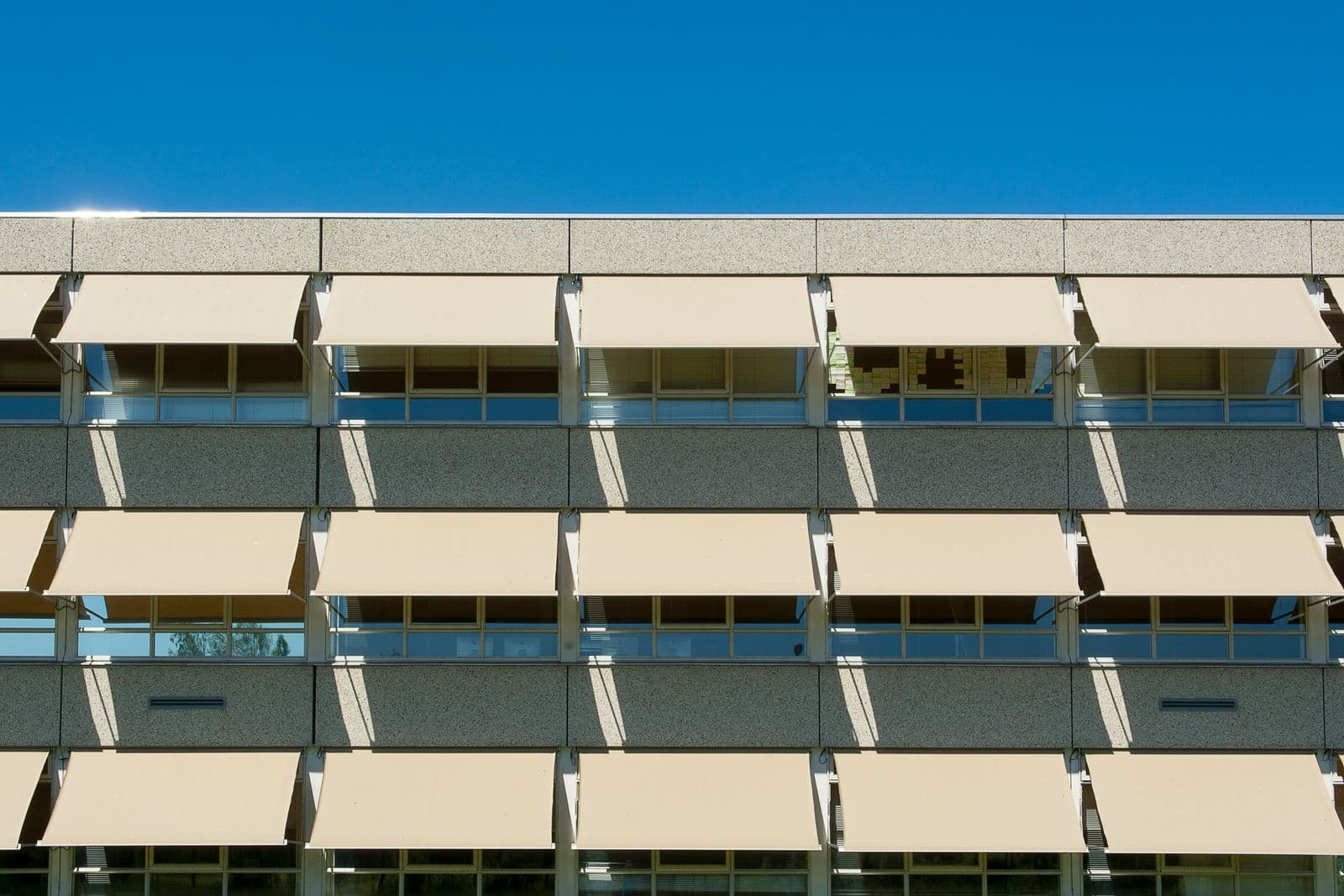
- Adjustable sun shades (BSO) on south and west bays: they cut 90 % of direct radiation while letting light through. It is significantly more effective than an indoor blind, which lets the heat in before trapping it. Average cost: €300 to €800 per bay installed.
- Roller shutters on the most exposed facades. A closed shutter in full heatwave blocks 70 to 90 % of the solar flux.
- Canopies and awnings above south-facing windows: a 30 % projection of the height of the window stops the summer sun without darkening the winter.
- Anti-heat films on glazing: they halve the heat gain, but beware the "greenhouse" effect if the room is very exposed.
- Greening: a deciduous tree planted on the south or west side provides shade in summer and lets the sun through in winter. A deciduous trellis on the west facade has the same effect.
tip
Close shutters, blinds and curtains at sunrise (before 7-8 a.m. in July), not in the middle of the morning when the heat is already in the home. It is the difference between 26 °C and 30 °C indoors at 2 p.m.
2. Insulate the roof and the walls: the fastest ROI
The roof can account for 30 to 50 % of the heat gains in summer. It is also the most cost-effective area to insulate, both in summer and winter.
- Highly insulated lost attic space (≥ 30 cm of cellulose wadding, wood fibre or rock wool): ROI 5 to 8 years, gain of 3 to 5 °C in summer.
- Sarking (external roof insulation): the high-end solution for renovations, gain of 4 to 6 °C in summer, removes thermal bridges.
- External wall insulation (ITE) in wood fibre, cork or cellulose wadding: gain of 2 to 4 °C, adds value to the facade, eligible for the MaPrimeRénov' comprehensive renovation aid.
- Thermal bridge treatment: floor edges, window surrounds, wall-ceiling junctions. Without this treatment, attic insulation alone is almost useless in summer.
For a home classified E, F or G on the DPE, this work can be integrated into a MaPrimeRénov' comprehensive renovation programme with an aid of up to 80 % of the pre-tax amount for very low-income households.
3. Cross ventilation and night cooling
The idea is simple: store the cool of the night in the walls and the floor, then close everything at dawn. It is the most effective and least expensive technique.
- Open the windows wide on opposite facades after 10 p.m., creating a cross breeze.
- Programme a solar extractor (e.g. BATICIMO) that switches on automatically when the outside temperature drops below the indoor one.
- Keep the shutters closed on the street side for security, open on the garden side at night.
- Switch the MVHR to low speed at night to evacuate the accumulated heat — one of the right reflexes to have during a heatwave.
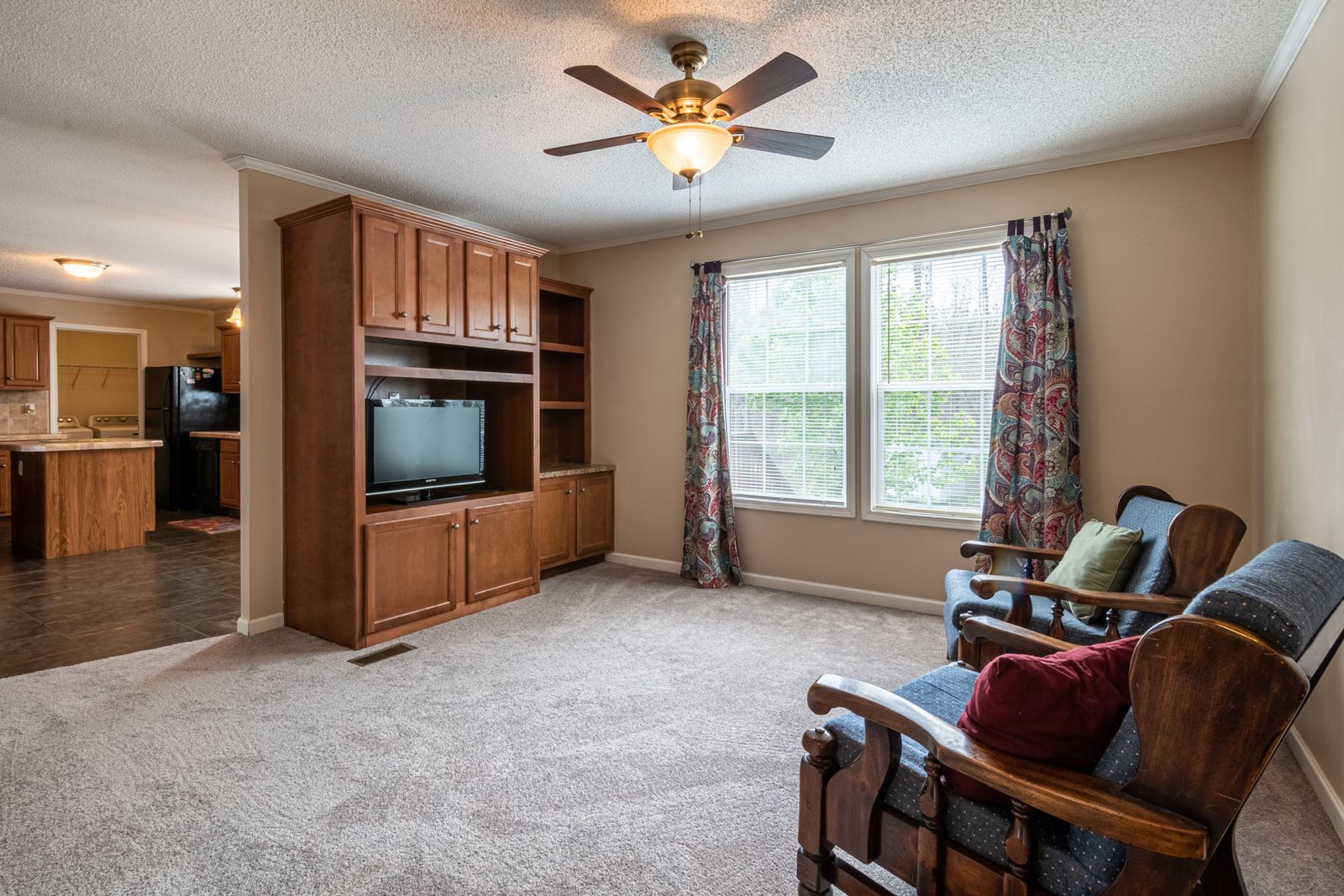
- Ceiling fan in summer mode (reverse rotation): it pushes the cool air down to the floor without noise and consumes 25 to 70 W, i.e. €3 to €8 per month in intensive use.
4. Misting, thermal mass and Provençal well
To go further:
- Outdoor misting on a terrace or a fan: a fine water mist (osmosed water to avoid limescale) drops the perceived temperature by 3 to 5 °C through evaporation. Mist your floor slabs at night too so they store the cool.
- Internal thermal mass: raw earth, rammed earth, concrete, terracotta tile walls. They absorb the heat peaks and release them at night, with a thermal phase shift of 6 to 12 hours. This is the principle of the bioclimatic house.
- Canadian or Provençal well: at -2 to -5 m depth, the soil stays at 12-14 °C all year round. The blown-in air arrives between 16 and 20 °C in summer. Near-zero running cost, ROI in 8 to 12 years.
- Roof greening: a green roof keeps the terrace up to 7 °C cooler in full heatwave, with a half-day thermal phase shift.
5. When AC becomes necessary: choose and size it correctly
In some cases, passive solutions are not enough: top floor under the roof, poorly insulated attic, large south-facing picture windows, single-storey home in the south of France, elderly or fragile person at home. Air conditioning then becomes a health choice — heatwaves kill several thousand people every year in Europe, and France has strengthened its obligations for employers but also for private individuals.
To make the right choice:
- Size the power with a professional (count on 100 to 130 W/m² for a well-insulated home, up to 180 W/m² for a poorly insulated attic). An oversized unit consumes more and lasts less long.
- Choose a reversible air-to-air heat pump (heating + cooling): you consume less in summer and in winter, with the 5.5 % VAT and the CEE Coup de pouce premium if you are eligible, and up to ×5 with a PAC approved under the "industrial quality and resilience" label from 1 September 2026.
- Choose the right energy label: a SEER ≥ 6.0 consumes 15 to 20 % less than a previous-generation unit.
- Have it installed by a certified refrigeration technician: mandatory for refrigerants, and it guarantees a compliant sizing and a long-lasting installation.
- Service annually: servicing is required by law and a clogged filter loses 15 to 30 % of performance.
info
For co-ownerships, installing air conditioning on a facade is often subject to authorisation. Anticipate by consulting the property manager and consulting our article on AC maintenance and installation in co-ownership before starting the work.
6. Daily gestures that make all the difference
- Close unused rooms during the day and concentrate the AC on the living room, keeping doors and shutters closed.
- Avoid internal heat sources: ovens, hobs, halogen lights and computers each give off 1,000 to 2,000 W. Postpone cooking to the cool hours.
- Stay hydrated: 1.5 to 2 L of water per day per adult, even without feeling thirsty. Elderly people are particularly at risk: offer them fresh water regularly.
- Lukewarm (not cold) shower before bed: the body releases heat more easily.
- Damp laundry hung in front of an open window at night: the evaporation cools the air passing through.
- Limit physical activity to the cool hours (before 11 a.m. and after 6 p.m.).
Frequently asked questions
Can you really live without AC in a heatwave in the Paris region? Yes, in the majority of properly insulated homes equipped with sun shades and effective night-time ventilation. Elderly people, infants and fragile people must, however, benefit from a cool room (AC or double-flow MVHR with bypass).
How much does an adjustable sun shade cost? Between €300 and €800 per bay installed, supply and fitting included. It is eligible for the 10 % VAT on renovation, but not for MaPrimeRénov' under the per-gesture route.
Is a Provençal well worth it in the Paris region? Yes, provided you have an accessible plot (garden, basement) and a water table that is not too high. It cools the air by 6 to 8 °C compared with the outside in mid-summer, free of charge.
Is a reversible AC really cost-effective? Yes: it replaces a summer AC + winter heating, for a total cost often lower. With the 5.5 % VAT and the CEE premium, the return on investment drops to 4-6 years in many cases.
How to cool a rented flat without any work? Close shutters and curtains from the morning, air at night, install a ceiling fan (with the landlord's consent) or a pedestal fan, and stay hydrated. For a more durable solution, talk to the landlord: an AC installed in a rental can be shared between the two parties.
How to help an elderly relative during a heatwave? Visit them morning and evening, offer them fresh water, check that their home stays cool (shutters closed during the day, night-time ventilation), and in the event of a malaise (confusion, dizziness, fever), call 15 without delay.
Act with Proclimo
Do you want to keep your home cool this summer, or move on to the air-conditioning stage in good conditions? Proclimo works in the Paris region for:
- Installation of reversible air-to-air heat pumps: free thermal study, quote within 48 h, installation by certified refrigeration technicians, ten-year guarantee.
- Annual maintenance of your air conditioner: complete cleaning, leak-tightness check, electrical check, before or after the high season.
- Emergency repair: 7 days a week in the Paris region, within 24 to 96 h depending on the period.
- Energy audit of your home: we identify the most cost-effective areas (insulation, sun shades, ventilation) before considering AC, to save you money in the long run.
Contact Proclimo for a personalised assessment, or book your service online before the high season saturates the schedules.
Need an air conditioning solution?