National heat adaptation plan 2026: what the 2nd wave of RE 2020 relaxations changes for summer comfort and air conditioning

The Proclimo Team
28 Jul 2026 - 09 min read
On 18 June 2026, halfway through a summer that once again looks set to be heatwave-ridden, the government presented its national heat adaptation plan — a far-reaching scheme that marks a major doctrinal turning point: for the first time, the State is assuming that air conditioning is no longer a luxury but a public health necessity, and that it must be combined with a wide-ranging programme of passive cooling of the building stock. Co-led by Monique Barbut (Ambassador for the Environment) and Vincent Jeanbrun (Minister for Urban Affairs and Housing), this plan opens the door to a 5.5% VAT rate on high-performance reversible air-to-air heat pumps, prepares a 2nd wave of RE 2020 relaxations on summer comfort, eases works in co-ownerships and publishes a national guide for rehabilitating heritage buildings. Here is the Proclimo analysis of a reform that reshuffles the cards for adapting the French property stock to heatwaves by 2030.
The context: a French property stock under pressure
France facing the "wall of heat"
Summer 2025 was marked by three successive heatwaves (June, July, August) with night-time temperatures above 20 °C for 18 nights in the Paris region, and a peak of 42.1 °C in Bordeaux on 12 August. The RTE electricity grid recorded a summer consumption record of 76.8 GW on 8 August, mainly linked to the use of air conditioners and fans — a rise of +18% compared with summer 2024. According to ADEME, 12,000 to 15,000 premature deaths are attributed every year to heatwaves in France, of which 80% concern people living in unsuitable homes ("thermal kettles").
The "thermal kettle": a concept that takes hold
The term "thermal kettle", popularised by ADEME and picked up in the plan, refers to a home that accumulates heat during the day and releases it at night, preventing natural night-time cooling. In France, an estimated 4.5 million homes (i.e. 13% of the residential stock) are concerned, mainly:
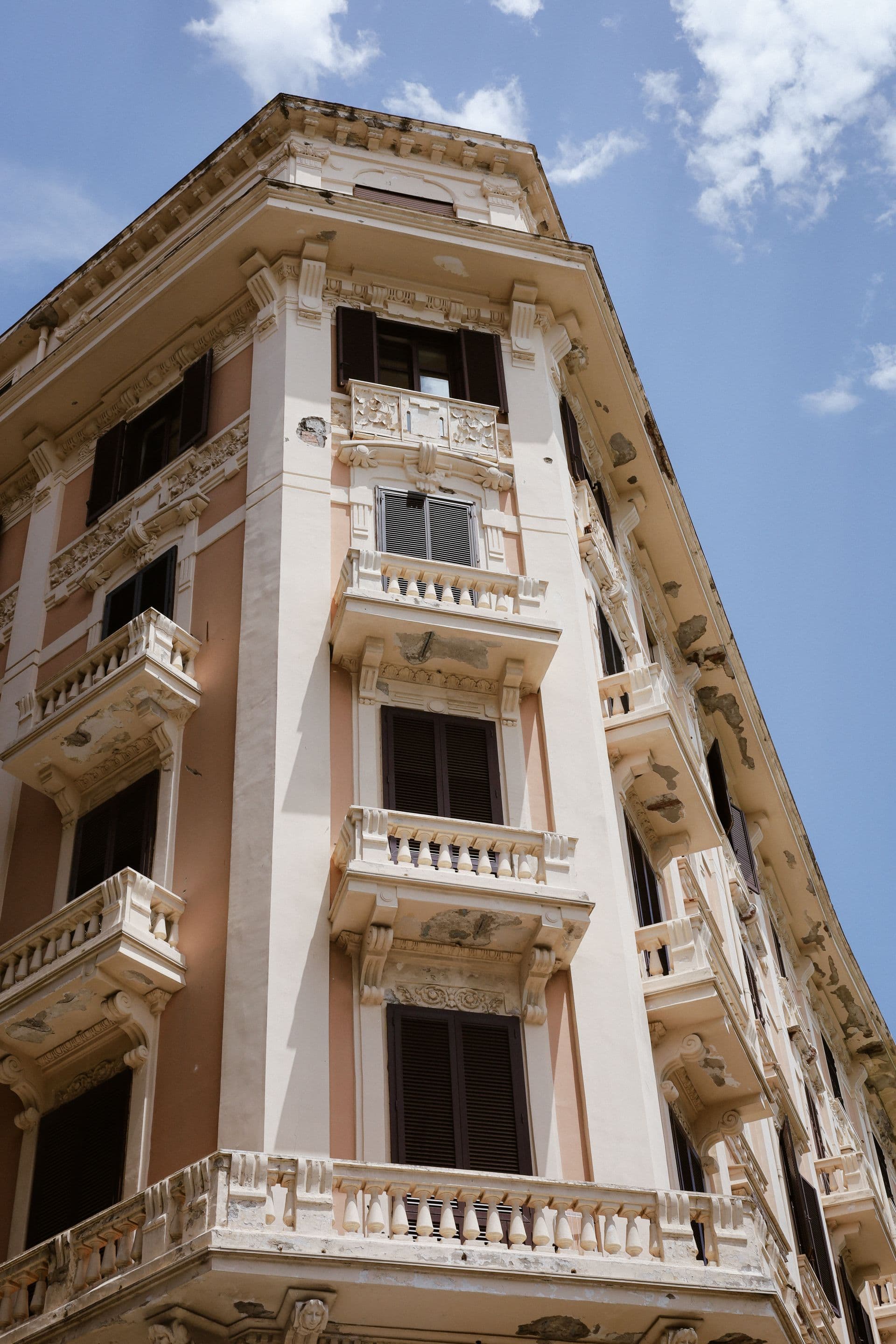
- Haussmannian buildings in cut stone, without external insulation,
- Terrace roofs from the 1960s-1980s that are uninsulated,
- Terraced town houses facing south-west,
- Tertiary offices built before RT 2012 (without solar protection).
info
According to the 2026 barometer of the Observatoire de l'immobilier durable (OID), 68% of thermal sieves (F or G rating on the DPE) are also thermal kettles (≥ 30 °C for more than 15 nights per year). Tackling overheating therefore automatically aligns with the overall energy renovation of the home.
The 5 flagship measures of the 2026 national heat adaptation plan
1. The assumed opening to air conditioning and 5.5% VAT
This is the most symbolic measure: after years of hesitant discourse, the government is acting on the fact that air conditioning is now a public health facility in areas exposed to heatwaves. The plan provides for:
- Extension of the 5.5% VAT (against 20% currently) to reversible air-to-air heat pumps with a SEER ≥ 5.0 and a SCOP ≥ 4.0 (SEER ≥ 4.5 for mono-split ≤ 2.6 kW), from 1 September 2026;
- Eligibility of external solar protection (awnings, motorised roller shutters, adjustable sun screens) at the same 5.5% VAT rate;
- Eligibility of ceiling fans (up to 50% of the quote) at the reduced VAT rate, for homes classified in climate zone H2 or H3.
The amount of the indirect aid is estimated at between €800 and €1,500 for a reversible air conditioning installation of 2.5 to 4 kW, and between €400 and €900 for a complete solar protection setup.
2. The 2nd wave of RE 2020 relaxations on summer comfort
The plan confirms the commitment to a second wave of RE 2020 adjustments by the end of June 2026, targeting the DH indicator (degree-hours of discomfort) which penalises buildings exceeding 26 °C in summer. The avenues mentioned by the Direction générale de l'aménagement, du logement et de la nature (DGALN) and ADEME:
- Revision of the DH algorithm to better value mobile solar protection,
- Modulation of the cooling requirement according to the climate zone (H1, H2, H3),
- Cep,nr bonus for constructions incorporating air-mixing ventilation (ceiling fans),
- Easing of constraints for rooftop extensions of less than 30% of the initial surface area,
- Targeted easing for buildings connected to a district cooling network.
A decree and an order are expected in the Journal officiel before 1 July 2026, with immediate application for building permits filed from that date.
3. Easing works in co-ownerships
The vote at the general meeting for solar protection and thermal insulation works is now possible at a simple majority (article 24 of the 1965 law), instead of the double majority (article 26) previously required for facade modifications. In concrete terms:
- Installation of awnings on facades: simple majority (art. 24),
- External thermal insulation (ITE): simple majority (art. 24) provided it does not alter the external appearance,
- Replacement of windows: simple majority (art. 24) except for changes to colour or material,
- Installation of collective reversible air conditioning (ducted or VRV): simple majority (art. 24) subject to agreement from the ABF in protected areas.
Collective loans at a subsidised rate (0.5% over 15 years) are also being rolled out through the France Rénov' Copropriété network, with an average amount of €25,000 per lot.
4. The national guide for rehabilitating heritage buildings
Long awaited by the ABF (Architectes des Bâtiments de France) and the DRAC, the national guide on the energy rehabilitation of heritage buildings was published at the beginning of July 2026. It has the status of a circular for the DREALs and DRACs, and sets out:
- Insulation materials compatible with cut stone, timber framing, wattle and daub, fired brick,
- Internal insulation techniques (ITI) so as not to disfigure listed facades,
- High-performance double-glazed joinery compatible with old openings,
- Reversible external solar protection (shutters, slatted shutters, wooden shutters) acceptable on protected buildings,
- Discreet reversible air conditioning (ducted indoor units, ultra-slim splits) compatible with heritage constraints.
5. The bonus for the CEE "Coup de Pouce Summer Comfort"
The plan provides for the creation of a new CEE sheet "Coup de Pouce Summer Comfort" (BAR-TH-180 according to initial leaks) which bonuses energy savings certificates for diagnosed thermal kettles. The amounts envisaged:
| Type of works | "Coup de Pouce Summer Comfort" CEE amount |
|---|---|
| Motorised awnings (≥ 4 windows) | €200 to €400 |
| Insulating motorised roller shutters | €300 to €600 |
| Motorised adjustable sun screens (BSO) | €400 to €800 |
| Reversible air-to-air heat pump (SEER ≥ 5.0) replacing obsolete air conditioning | €500 to €1,000 |
| Hybrid ventilation by air mixing | €300 to €500 |
The final CEE sheets will be published by ADEME by 30 September 2026 at the latest.
Impact for households: air conditioning becomes a health facility
Should you equip your home with air conditioning in 2026?
The answer is nuanced according to ADEME and the DGALN:
- First cool passively: solar protection + roof insulation + night-time ventilation (see our guide to cooling a home without air conditioning in a 2026 heatwave).
- Then equip with air conditioning if necessary: for homes classified in zone H2 or H3, converted attics, bedrooms under the roof, south-facing offices.
A reversible air-to-air heat pump has the triple advantage of:
- Cooling in summer (with a SEER of 5.0 to 8.6 depending on the model),
- Heating in winter (with a SCOP of 4.0 to 5.1),
- Dehumidifying (a crucial point for summer comfort, often overlooked).
The net cost of an assisted air-to-air heat pump in 2026
For a 65 m² Parisian 3-room flat (zone H2):
| Item | 2026 cost ex-VAT | VAT | Aid | Net cost |
|---|---|---|---|---|
| Reversible air-to-air heat pump (Daikin Perfera 2.5 + 3.5 kW) | €3,200 | 5.5% (-€464) | Coup de Pouce Summer Comfort €500 | €2,236 |
| Fitting by RGE QualiPAC | €800 | 5.5% | - | €800 |
| Commissioning + leak-tightness check | €250 | 5.5% | - | €250 |
| Annual maintenance contract (3 years) | €540 | 20% | - | €540 |
| Total | €4,790 | - | €964 | €3,826 |
That is a net cost of about €59/m², half the price of an air-to-air heat pump installation in 2024 (before the grants).
tip
To maximise the grants, combine the 5.5% VAT (2026 heat plan), the Coup de Pouce Summer Comfort (CEE), the regional Île-de-France grants (up to €500) and the eco-PTZ (up to €15,000 at 0% over 10 years). Proclimo prepares the whole file for you.
Impact for co-ownerships: simple majority changes everything
A decisive lever for Haussmannian buildings
The move to a simple majority vote (article 24) for insulation and solar protection works is a discreet revolution: until now, the opposition of a single co-owner representing 26% of the shares could block a project. From now on, a 51% majority is enough to vote:
- The installation of awnings or roller shutters on facades,
- External thermal insulation (ITE) when it does not alter the appearance,
- The replacement of single-glazed windows with high-performance double-glazing,
- The installation of collective air conditioning (ducted or VRV).
The role of the property manager
The co-ownership property manager becomes a delegated project owner for heat adaptation works. Proclimo supports property managers in Île-de-France with:
- The thermal audit of the building (thermographic camera + dynamic simulation),
- The preparation of the ABF file in protected areas,
- The consultation of RGE QualiPAC companies,
- The site supervision and works acceptance,
- The collective maintenance contract with connected monitoring (see our article on air conditioning maintenance in co-ownerships).
Impact for the tertiary sector: BACS, tertiary decree and class A GTB
Coupling with the tertiary decree and the BACS decree
The 2026 heat plan is articulated with the tertiary decree (Éco Énergie Tertiaire) and the BACS decree to form a coherent regulatory triptych:
| Text | Objective | Audience |
|---|---|---|
| Tertiary decree | -40% final energy consumption by 2030 | Buildings over 1,000 m² |
| BACS decree (see our BACS 2026 analysis) | Class A GTB mandatory to control air conditioning | Buildings over 70 kW (2027 deadline) or 290 kW (since January 2025) |
| 2026 heat plan | Adapt the building stock and open up air conditioning | All buildings |
A class A GTB notably enables:
- Automatic control of air conditioning based on outside temperature and occupancy,
- Optimisation of cooling hours (night-time activation in free-cooling),
- Quarterly reporting on the Operat platform,
- RE 2020 compliance monitoring on the DH indicator (degree-hours of discomfort).
The BACS guide of January 2026
The BACS decree application guide, published by the Ministry for Ecological Transition in January 2026, sets out the technical requirements for tertiary buildings. It was followed by a partial postponement of the deadlines for buildings from 70 to 290 kW (alignment with the European EPBD directive at 2030), but buildings over 290 kW remain subject to the obligation since 1 January 2025.
The 2026-2027 schedule
| Deadline | Measure | Audience concerned |
|---|---|---|
| 1 July 2026 | Publication of the decree and order on the 2nd wave of RE 2020 relaxations | Builders, developers |
| Early July 2026 | Publication of the national guide for rehabilitating heritage buildings | ABF, DRAC, property managers, owners |
| 1 September 2026 | Entry into force of the 5.5% VAT on reversible air-to-air heat pumps (SEER ≥ 5.0) | Households, businesses |
| 30 September 2026 | Publication of the "Coup de Pouce Summer Comfort" CEE sheets | CEE obliged parties, tradespeople |
| 31 December 2026 | End of the RE 2020 / TRACC consultation, decree expected before 1 January 2027 | Building sector |
| 1 January 2027 | Application of RE 2020 adjustments on the DH indicator (summer comfort) | Builders, design offices |
| 1 January 2030 | BACS deadline for 70-290 kW buildings (EPBD alignment) | Tertiary facility managers |
Proclimo's view: adapting without distorting
Our approach to heat adaptation
Proclimo, a multi-qualified RGE QualiPAC + QualiPV + QualiSol installer in Île-de-France, supports households, co-ownerships, shops, offices and hotels in their heat adaptation projects, while respecting the building, the regulation and energy performance. Our integrated offering for the 2026 heat plan:
- Thermographic audit: thermal camera + dynamic simulation to identify thermal kettles and prioritise works.
- Passive cooling: installation of awnings, insulating roller shutters, BSO, hybrid ventilation by air mixing, external roof insulation.
- High-performance reversible air conditioning: installation of air-to-air heat pumps with SEER ≥ 5.0, ultra-slim splits for heritage buildings, ducted units for the tertiary sector, VRV for large volumes.
- Grant file preparation: 5.5% VAT + Coup de Pouce Summer Comfort + standard CEE + MaPrimeRénov' + eco-PTZ + regional Île-de-France grants.
- Annual maintenance contract: connected monitoring, leak-tightness check, actual SEER verification, quarterly reporting.
A concrete case: the Haussmannian residence on rue de Rivoli (Paris 4th)
Proclimo supported in 2025-2026 the Haussmannian residence of a Parisian client (45 lots, 1,800 m²) in a heat adaptation project:
- Thermographic audit: identification of 38% heat losses on the south facade,
- Works voted at the GM by simple majority: installation of 92 motorised insulating roller shutters (street facade) and 64 motorised awnings (courtyard facade),
- Collective air-to-air heat pump: 8 outdoor units + 45 ultra-slim splits,
- Stacked grants: €145,000 (CEE + reduced VAT + Île-de-France regional grants + collective eco-PTZ),
- Net cost per lot: €1,850 on average,
- Indoor temperature lowered by 6 °C at the heatwave peak, measured by connected sensors.
A question, a project?
Contact Proclimo for a free thermographic audit of your home or building, and a personalised study of your 2026 heat adaptation project. To go further, check out our articles on 5.5% VAT on reversible air conditioning, air conditioning regulations in a heatwave, mandatory maintenance of air conditioners, the reversible air-to-air heat pump, the BACS 2026 decree and class A GTB, the 2026 tertiary decree, air conditioning maintenance in co-ownerships, the new 2026 range of air conditioners and the NF PAC 2026 label. Our team operates in Île-de-France in compliance with the objectives of PNACC 3 and RE 2020.
Sources: Ministry for Ecological Transition — National heat adaptation plan 2026 (18 June 2026) · Direction générale de l'aménagement, du logement et de la nature (DGALN) — RE 2020 summer comfort orientation note (June 2026) · ADEME — Opinion "Thermal kettles: diagnosis and cooling solutions" (April 2026) · Observatoire de l'immobilier durable (OID) — 2026 barometer of thermal sieves · RTE — Summer 2025 electricity review and 2026 outlook (published March 2026) · AEF info — "Heatwave: the government adopts a more open discourse on air conditioning" (June 2026) · Banque des Territoires — "RE 2020: new relaxations for summer comfort from July 2026" (March 2026) · Quotidiag — "Thermal kettles: government announcements" (June 2026) · Légifrance — Law no. 2018-1021 of 23 November 2018 (Élan law), art. 182, as amended by the 2026 heat plan · Météo-France — Summer 2025 climate review (published September 2025) · France Rénov' — Guide to energy renovation in co-ownerships (2026 edition) · Cerema — "Energy rehabilitation of heritage buildings" reference framework (July 2026) · egreen.fr — "Postponement of the BACS decree to 2030: alignment with the EPBD" (June 2026).
Need an air conditioning solution?